Castillo Gibralfaro
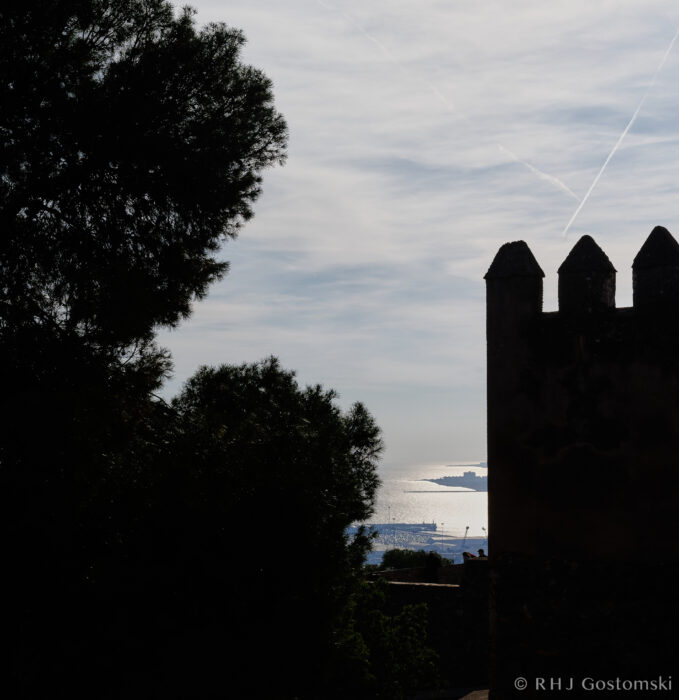
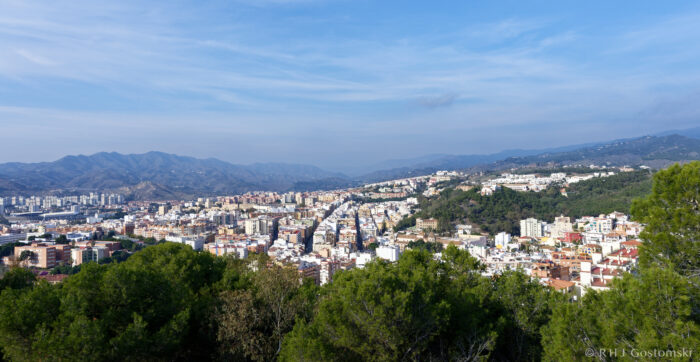
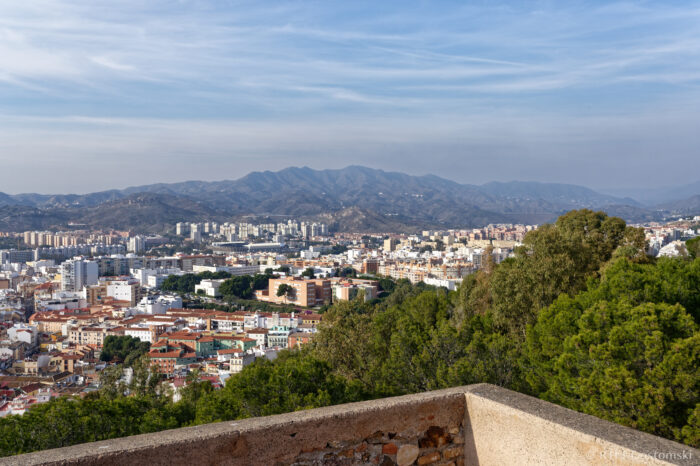
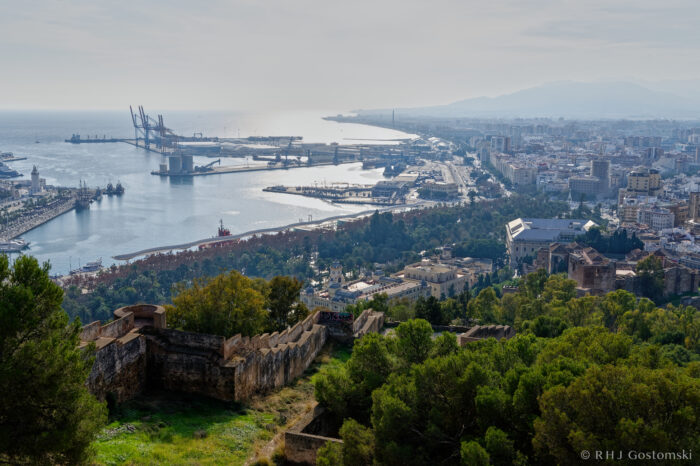
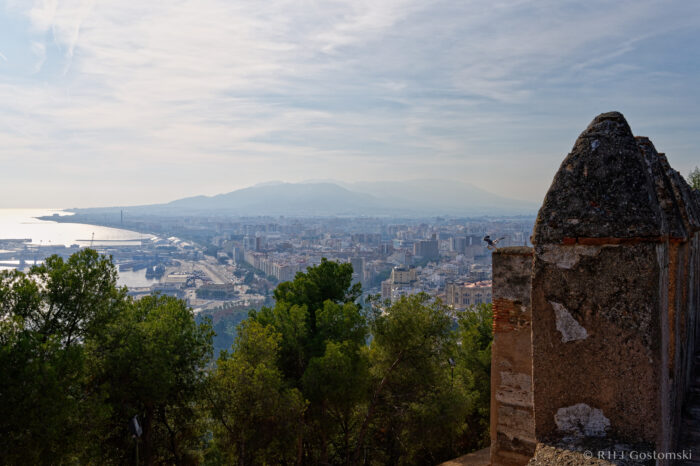
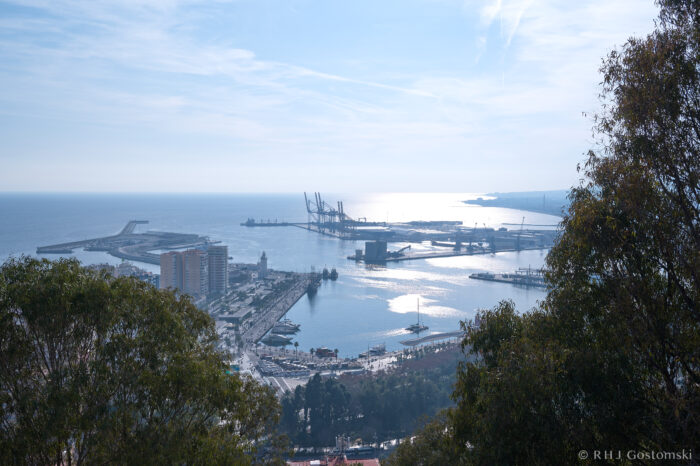
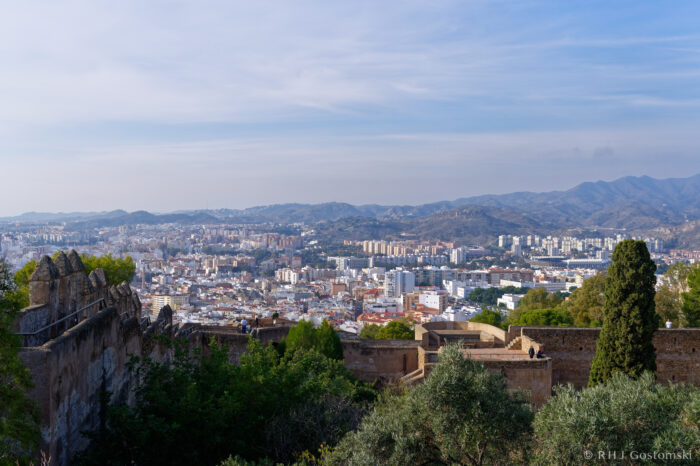
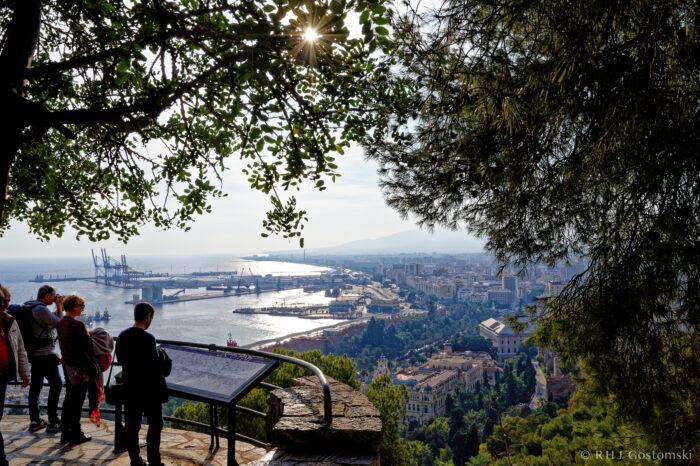
Castillo Gibralfaro stands on Mount Gibralfaro on the southern coast of Spain, overlooking the city of Malaga, the Alcazaba , and the Mediterranean Sea. The views are amazing! You’ll be taking loads of photos!
The Castillo de Gibralfaro in Málaga, Spain, is a 14th-century fortress built by Yusuf I of the Nasrid dynasty to protect the nearby Alcazaba and the city’s port. Perched on a steep hill, it offers commanding views over Málaga and the Mediterranean, making it a key military stronghold for centuries. The castle is best known for its massive defensive walls and towers, which once housed soldiers and even a small mosque. After the Catholic Monarchs conquered Málaga in 1487, it served as a military garrison until the 20th century.
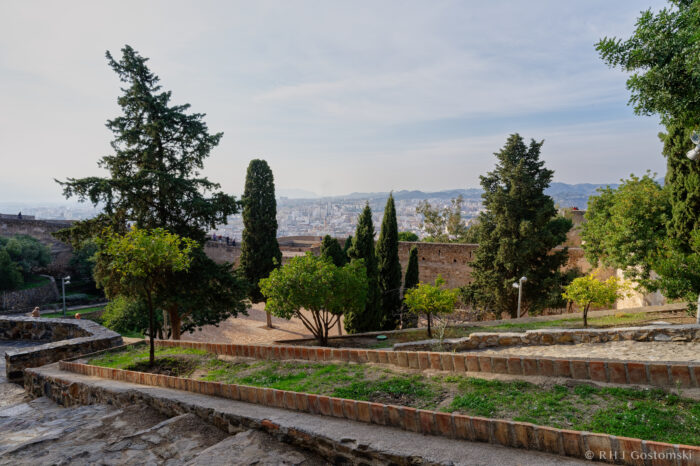
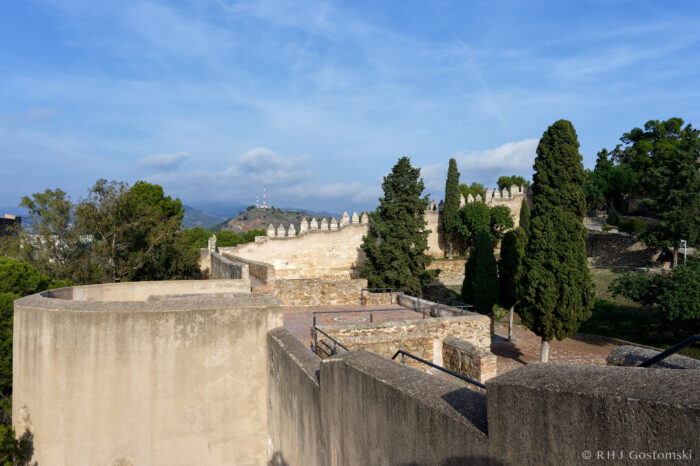
The surrounding hills are a forest of pines and eucalyptus trees. These are relatively recent, planted in 2005. The ramparts of the Castillo rise majestically above the pines.
Construction
The current fortress was built in the 14th century by the Nasrid ruler Yusuf I, Sultan of Granada (reigned 1333–1354). It was built as a base for the troops and to protect the nearby Alcazaba of Málaga, a palatial fortress located lower on the hill, and to provide a stronghold for military defence.
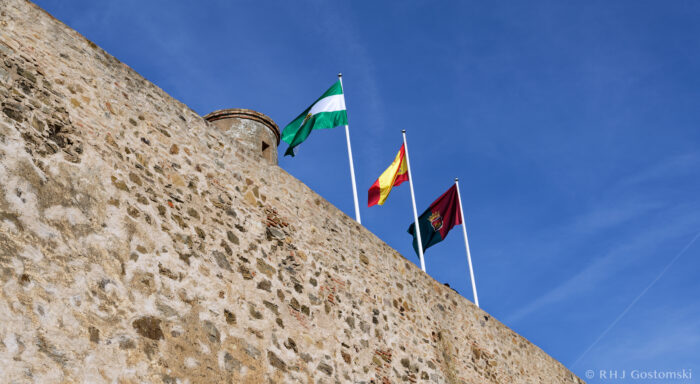
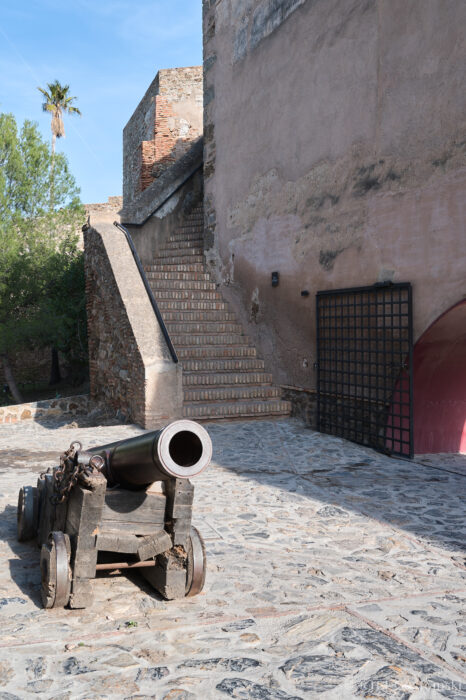
The fortress was designed as a military stronghold with massive walls and towers, connected by a double wall to the Alcazaba. Inside, it housed barracks, cisterns, and storage facilities to withstand prolonged sieges.
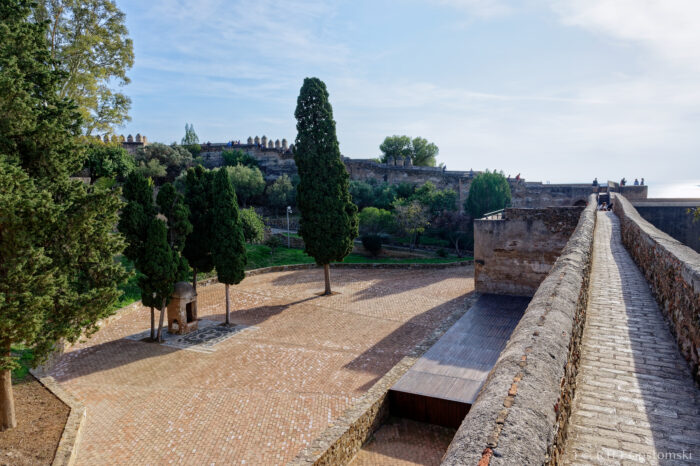
Castillo Gibralfaro has eight towers; the largest is 17 meters high and is known as the Torre Mayor. Inside the fortress itself, there are remnants of buildings and courtyards reminiscent of those in the Alhambra.
Restoration
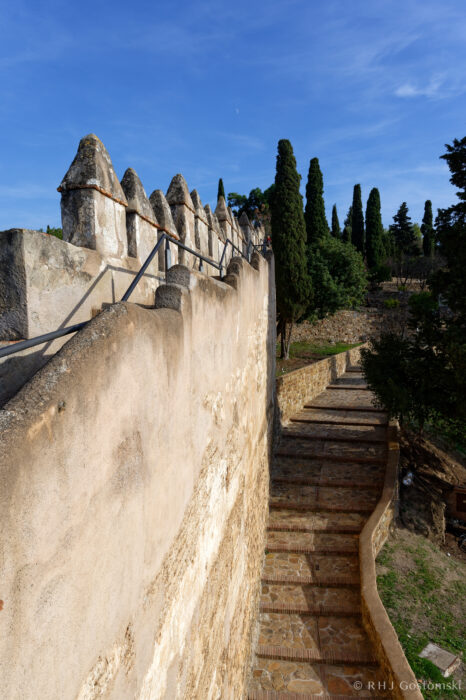
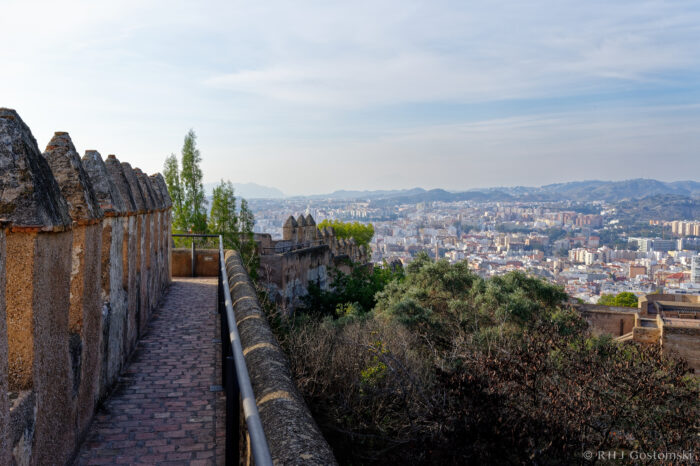
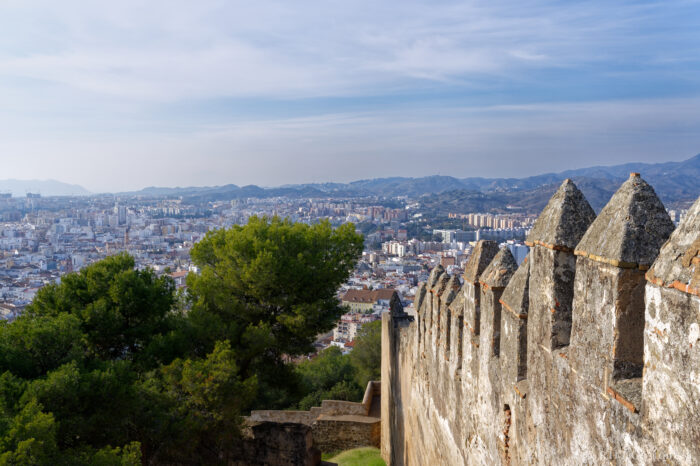
In the 20th century, the fortress was restored to preserve its historical value. The site is now open to the public as a museum and tourist attraction. The ramparts are well-restored, and you can walk most of the way around the site on them (a short section was closed for maintenance at the time of my visit).
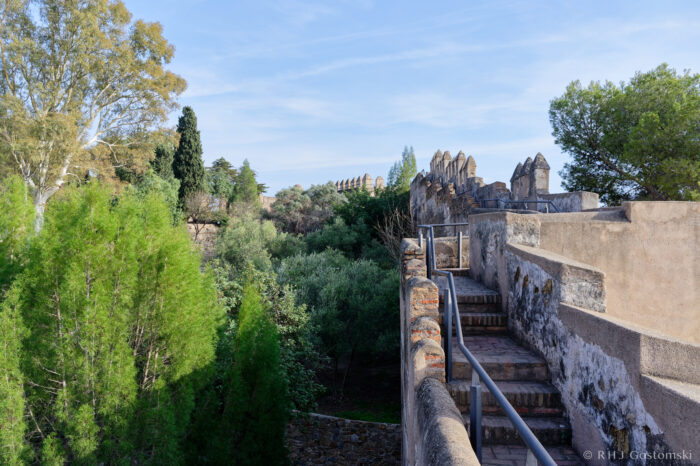
Castillo Gibralfaro Today
Today, visitors can explore the castle’s defensive structures, walk along its ramparts for stunning views of Málaga, and learn about its history through interpretive displays.
Near the entrance of the Gibralfaro castle complex is a small museum with a model of Málaga, including the Alcazaba and Castillo Gibralfaro, and an exhibition of weapons and military uniforms dating back to the sixteenth century.
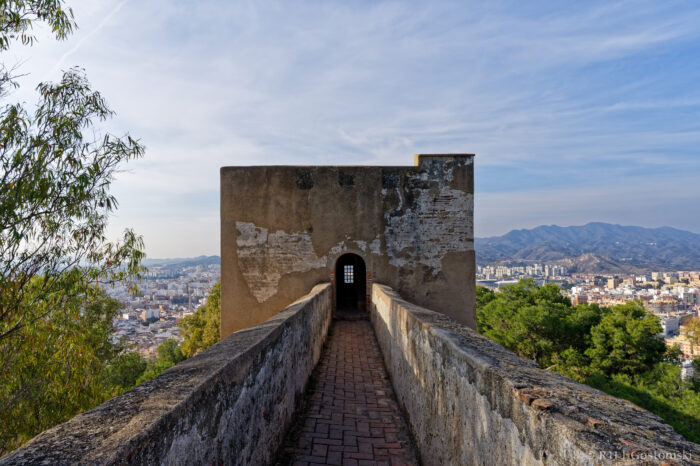
How to get to Castillo Gibralfaro
To reach the Castillo de Gibralfaro in Málaga, you have several options:
On Foot
If you enjoy walking and want to experience the scenic route, then this is the best option.
From the Alcazaba, follow the Camino de Gibralfaro, a steep but well-paved path lined with trees and offering stunning views of Málaga. However, be warned, the path is very steep in places. During the summer months, take water with you as there isn’t a shop till you get to the top; although, there is usually an enterprising person or two selling water along the path.
Near the top, you pass a viewing platform, Mirador de Gibralfaro, with great views of Málaga and out to sea. The views are no better than from the path, but it’s an excellent excuse to stop for a short rest and take some photos.
Public Transport
If you prefer a quicker and less strenuous option, you can take the bus (route 35) from the Alameda Principal or Paseo del Parque. The drop-off point is near the entrance of the castle.
Alternatively, you can take a taxi.
Admission
The standard ticket price in 2024 was €3.50
Here’s a tip to save queuing and also a few cents. If you plan to visit the Alcazaba and Castillo de Gibralfaro (they are close together and I recommend you visit both), there is a joint ticket for both monuments. The standard ticket price for both monuments in 2024 was €5.50.
You can buy a joint ticket at either location. When I visited, there was a long queue at the Alcazaba but no queue at the Castle. If that is the case, go to the castle first and buy the ticket, then you can walk straight past the long queue at the Alcazaba!
I have heard that there is a strong likelihood of a substantial price increase in 2025:
- Standard ticket for a single monument from €3.50 to €7.00
- Combined ticket for both monuments from €5.50 to €10.0