El Retiro Park
El Retiro Park (Parque del Buen Retiro) is a historic garden and public park in Madrid, Spain. It is also often referred to as the “green heart” of Madrid. Renowned as one of the city’s premier tourist attractions, it is one of the largest parks (350 acres) in Madrid and was originally established as a retreat for the Royal Family. The park was transferred to public ownership in 1868. The Retiro Park was designated a Historical-Artistic Monument in 1935 due to its cultural and historical significance.
The park features an eclectic fusion of architectural and landscape elements from the 17th to the 21st centuries. Prominent landmarks include the Monument to Alfonso XII, the Crystal Palace, the Palacio de Velázquez, the Grande Layhold, the Parterre, the Gate, the Royal Astronomical Observatory, and the Fountain of the Alachichfa. The park also hosts various events, including a Book Fair, concerts, and art exhibitions.
The Lake
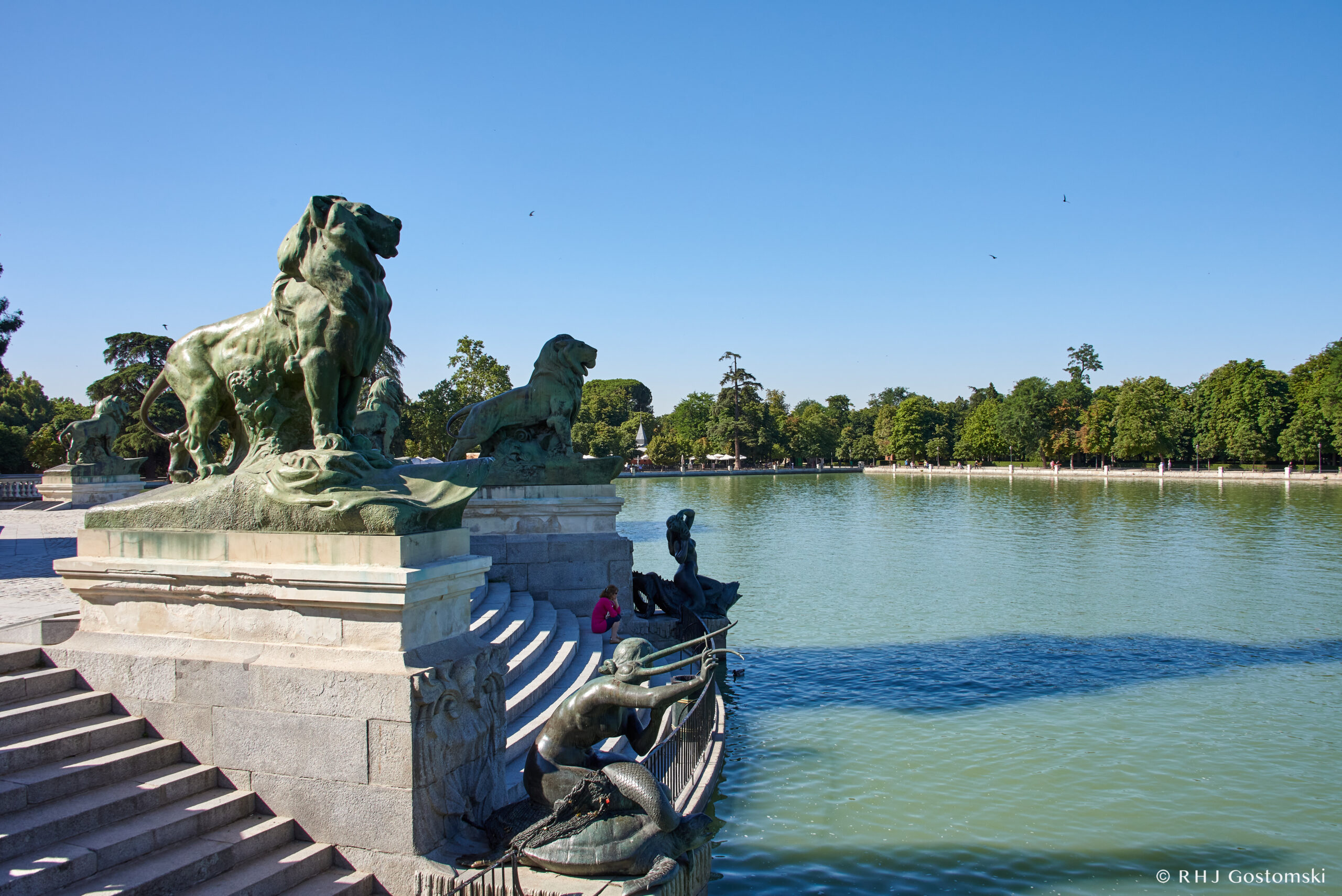
The Estanque del Retiro (Retiro Lake) is one of the most iconic features of El Retiro Park. Located at the southern end of the park, it covers an area of approximately 28,000 square meters, making it one of the largest ornamental lakes in Madrid.
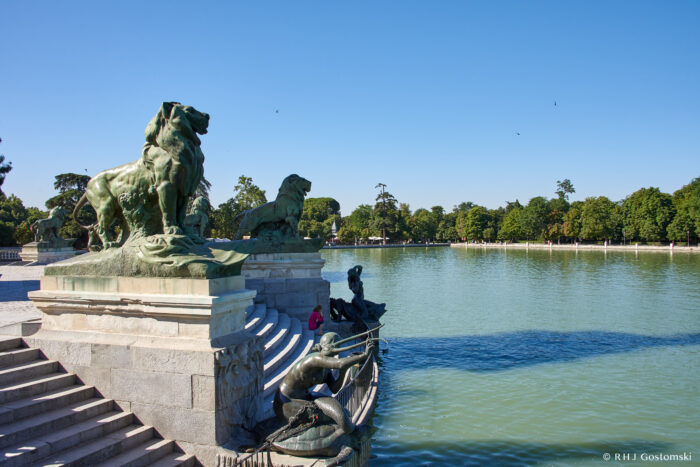
The lake was constructed in the early 17th century during the reign of Philip IV. It was originally designed as part of the royal gardens of the Palacio del Buen Retiro, which served as a royal retreat for the Spanish monarchy.
Currently, one of the most popular activities at the Estanque is boating. Visitors can rent small rowboats to paddle around the tranquil waters, providing a serene experience with breathtaking views of the park and its surrounding areas.
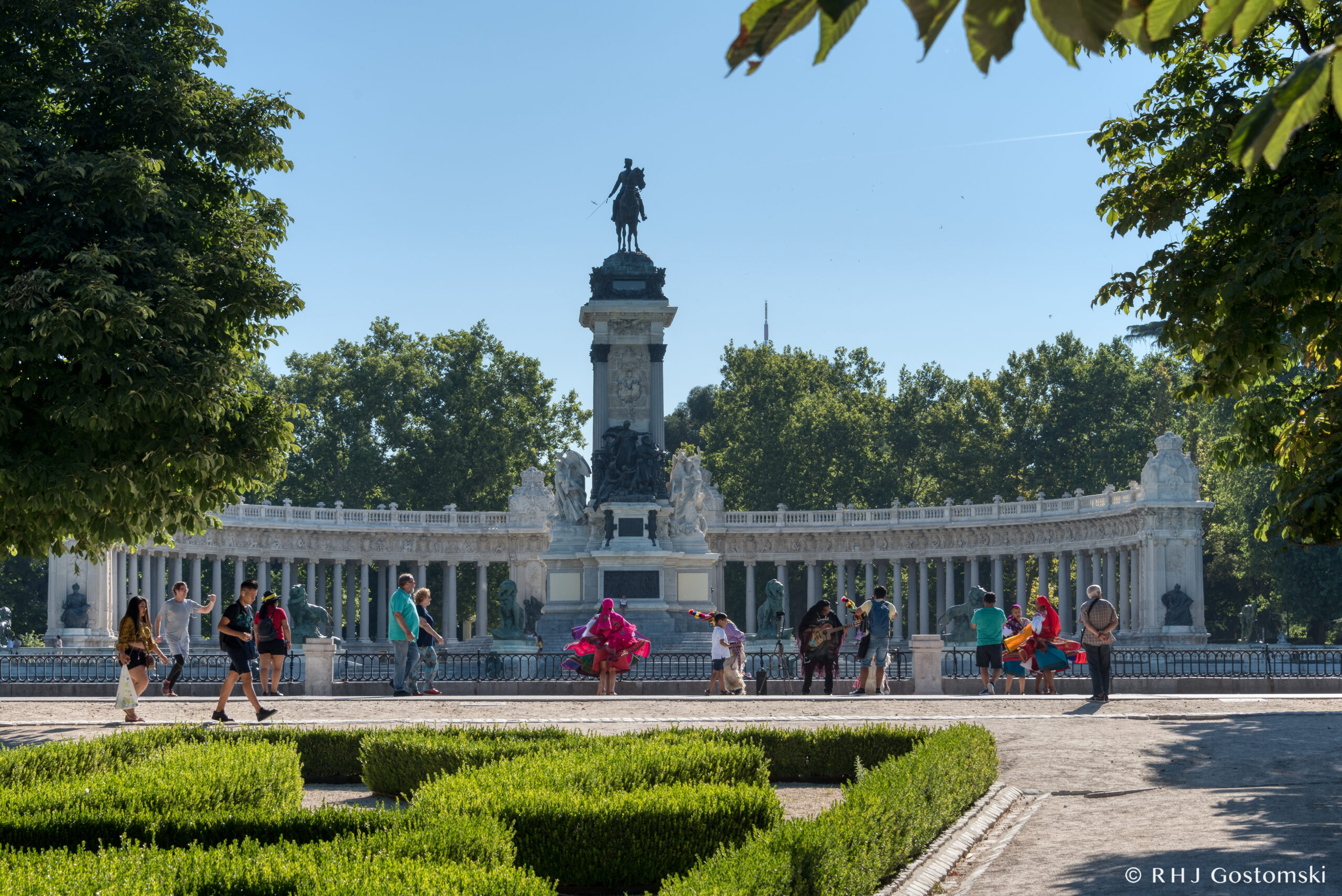
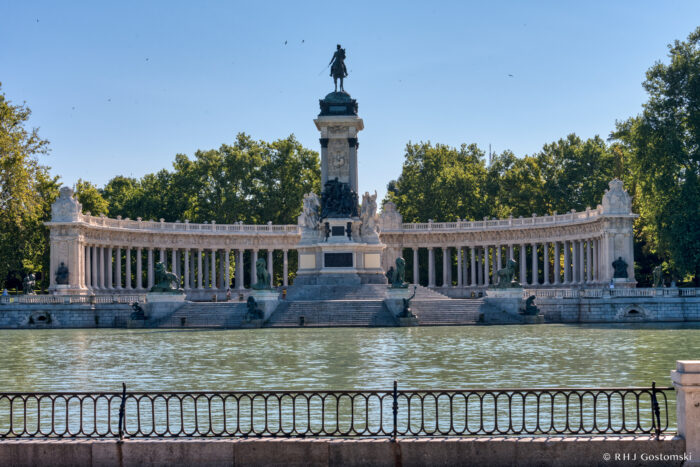
On the eastern edge of the pond stands the Monumento a Alfonso XII, a grand monument dedicated to King Alfonso XII. This monument features an impressive colonnade and an equestrian statue of the king, making it a prominent landmark and a favoured spot for photography enthusiasts.
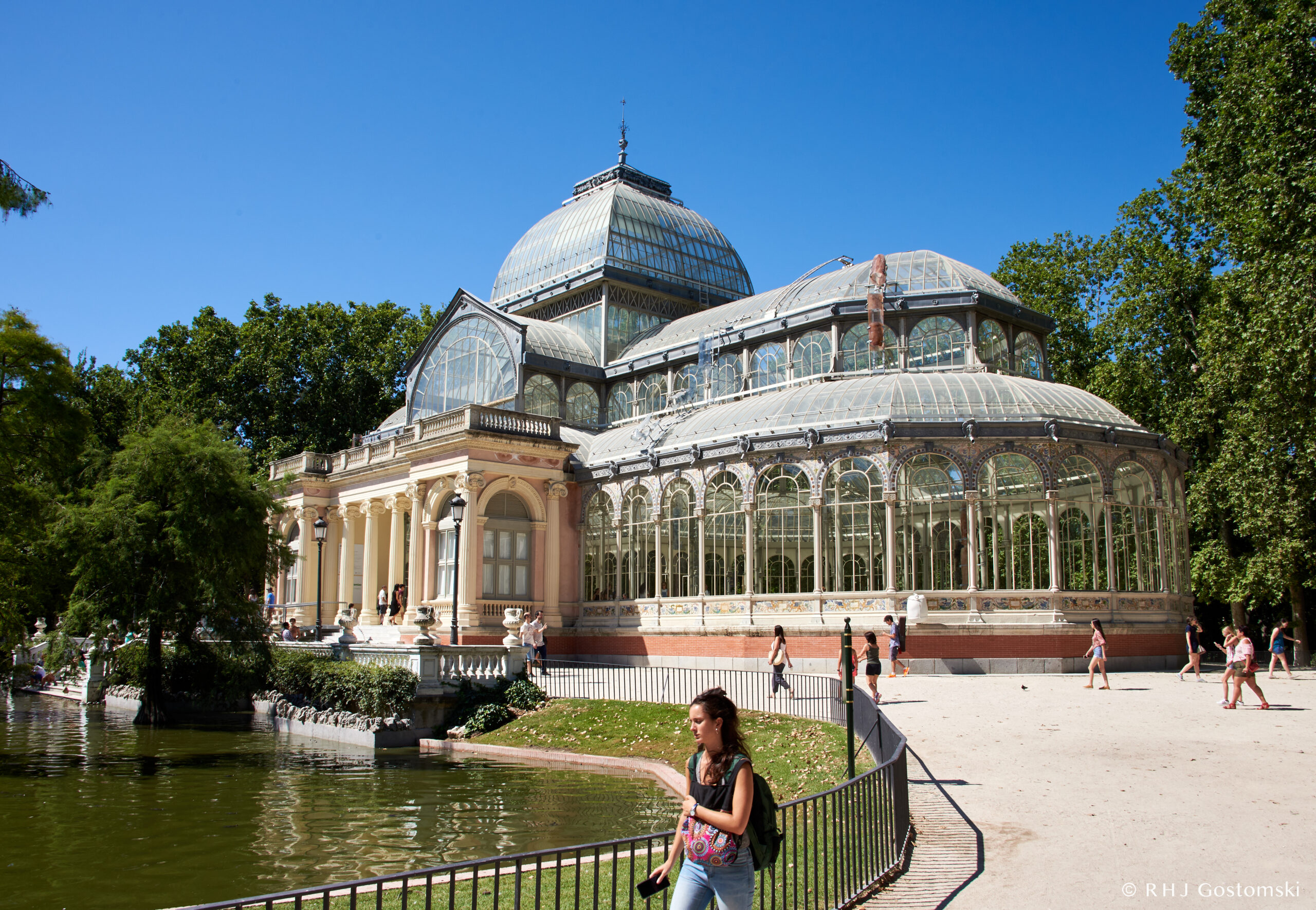
Palacio de Cristal
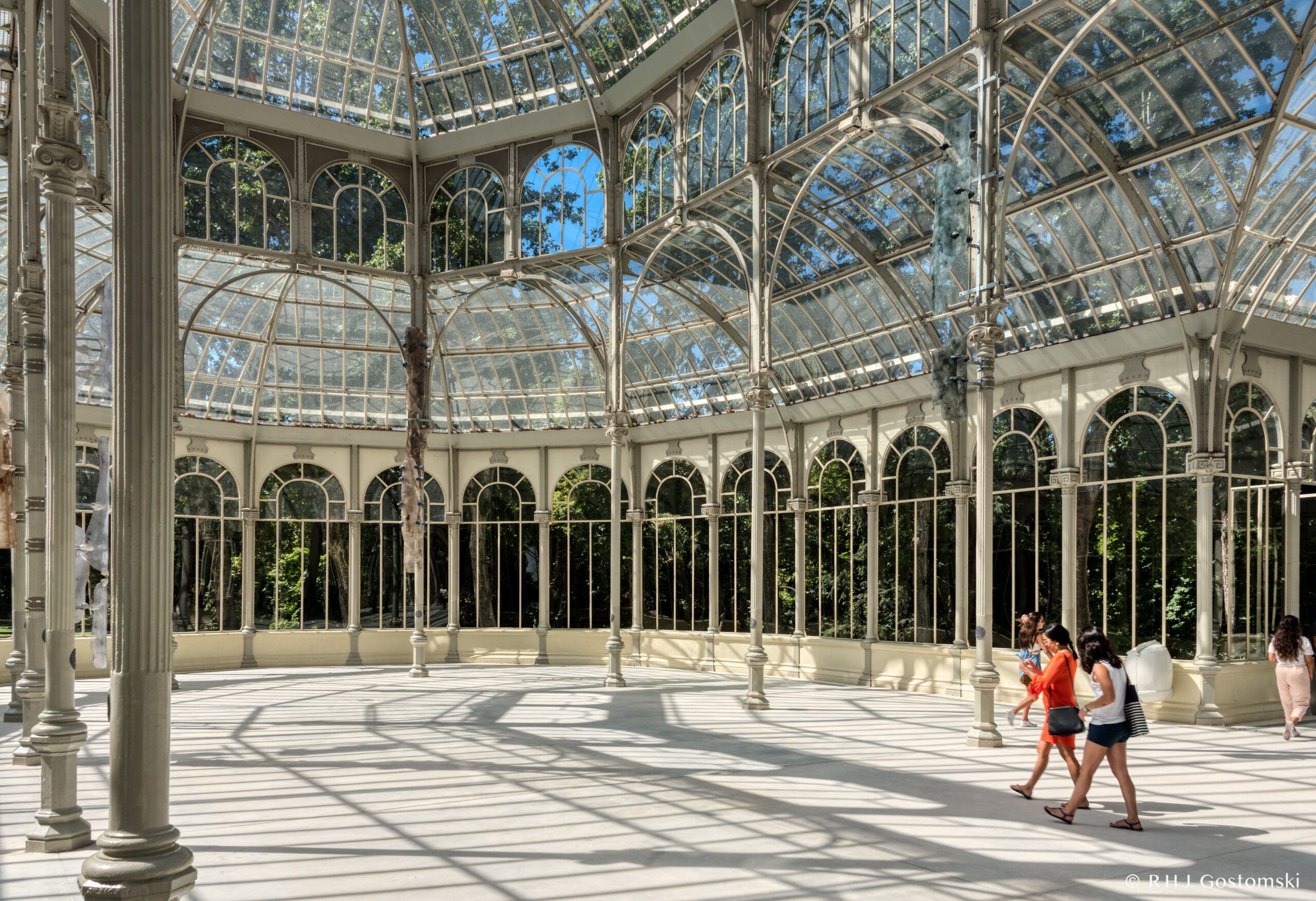
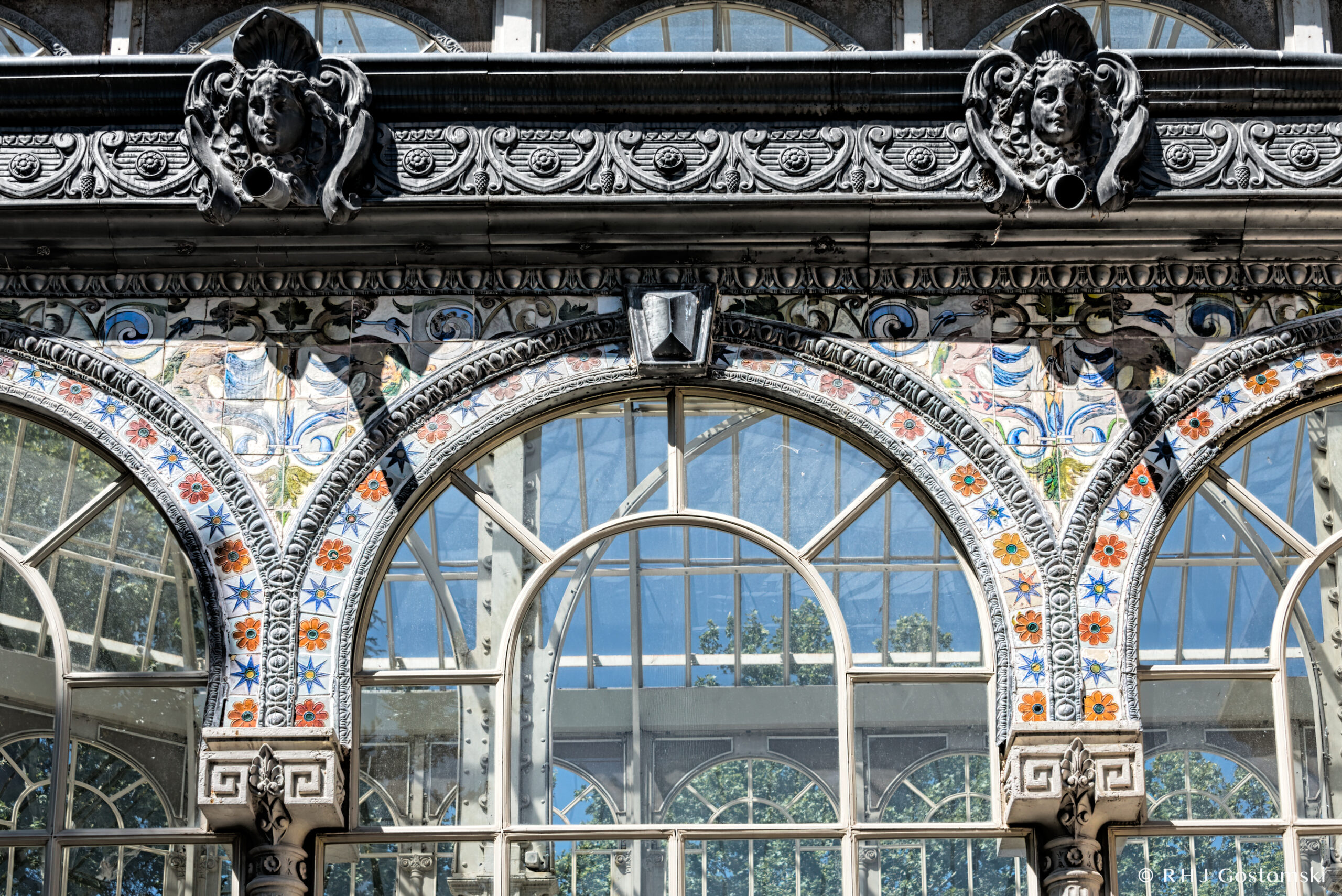
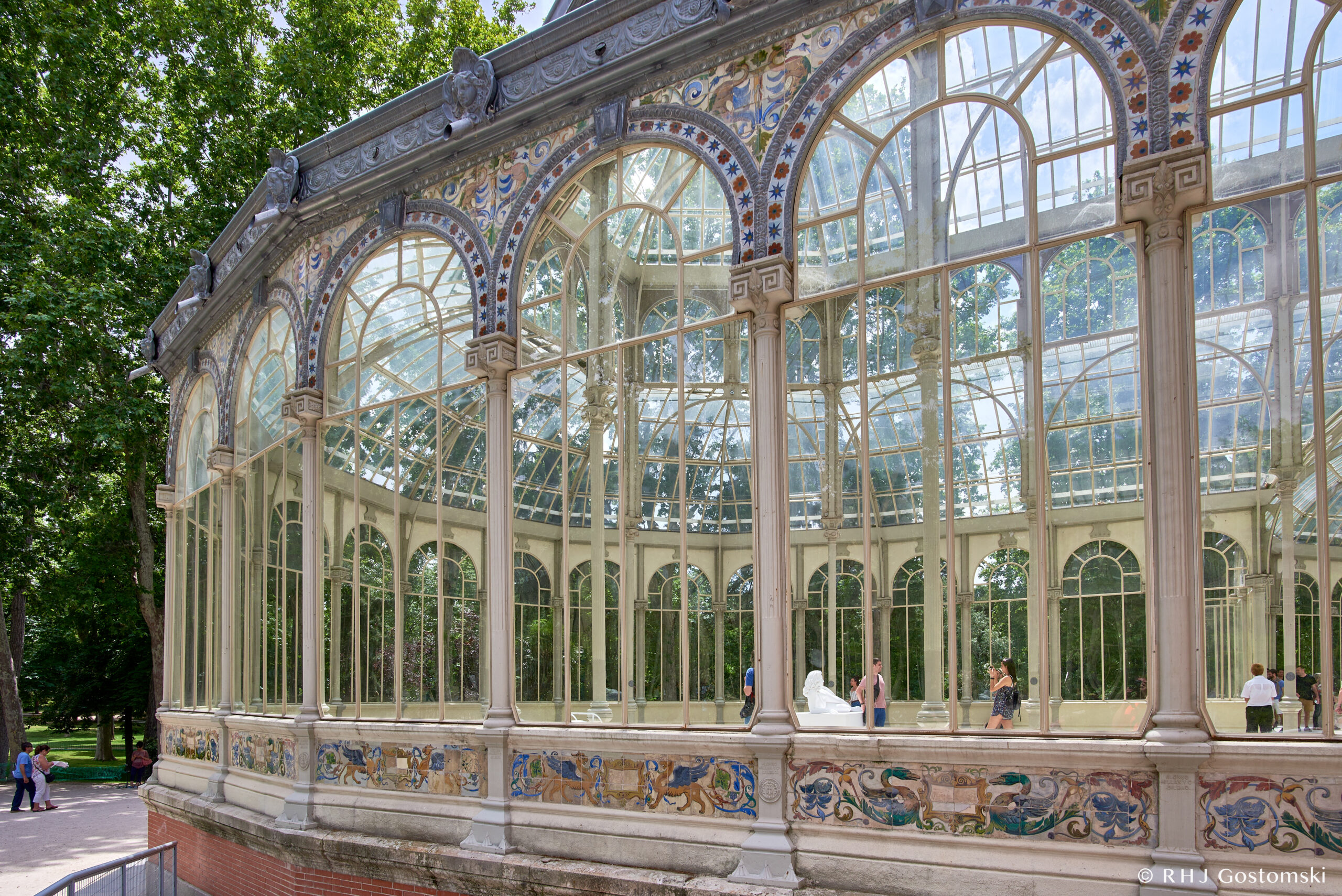
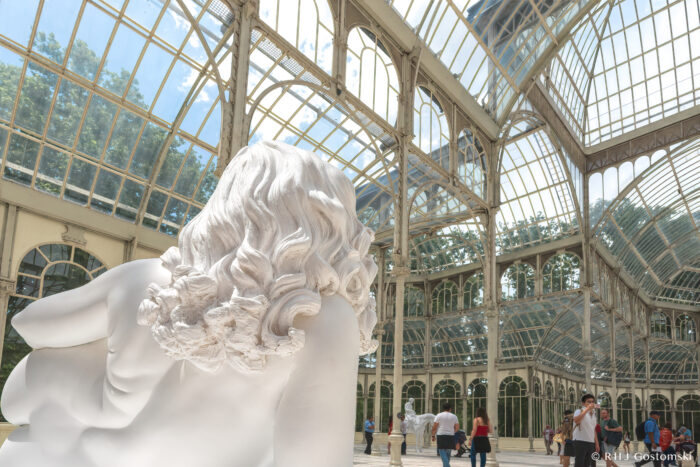
The Palacio de Cristal is celebrated for its exquisite iron and glass structure, which draws inspiration from the glasshouses of the 19th century. Its design was influenced by the Crystal Palace in London, constructed for the 1851 Great Exhibition.
Designed by architect Ricardo Velázquez Bosco, the palace was completed in 1887. Its transparent and almost ethereal appearance arises from its large glass panes supported by a delicate iron framework, allowing natural light to illuminate the interior.
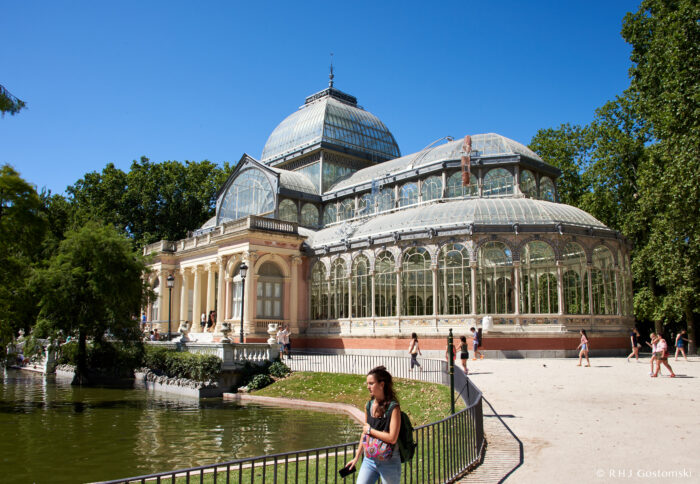
Originally constructed to house an exhibition of tropical plants from the Philippines, the Palacio de Cristal was built as part of the Philippine Islands Exposition of 1887. This colonial exposition showcased the economic and cultural connections between Spain and the Philippines.
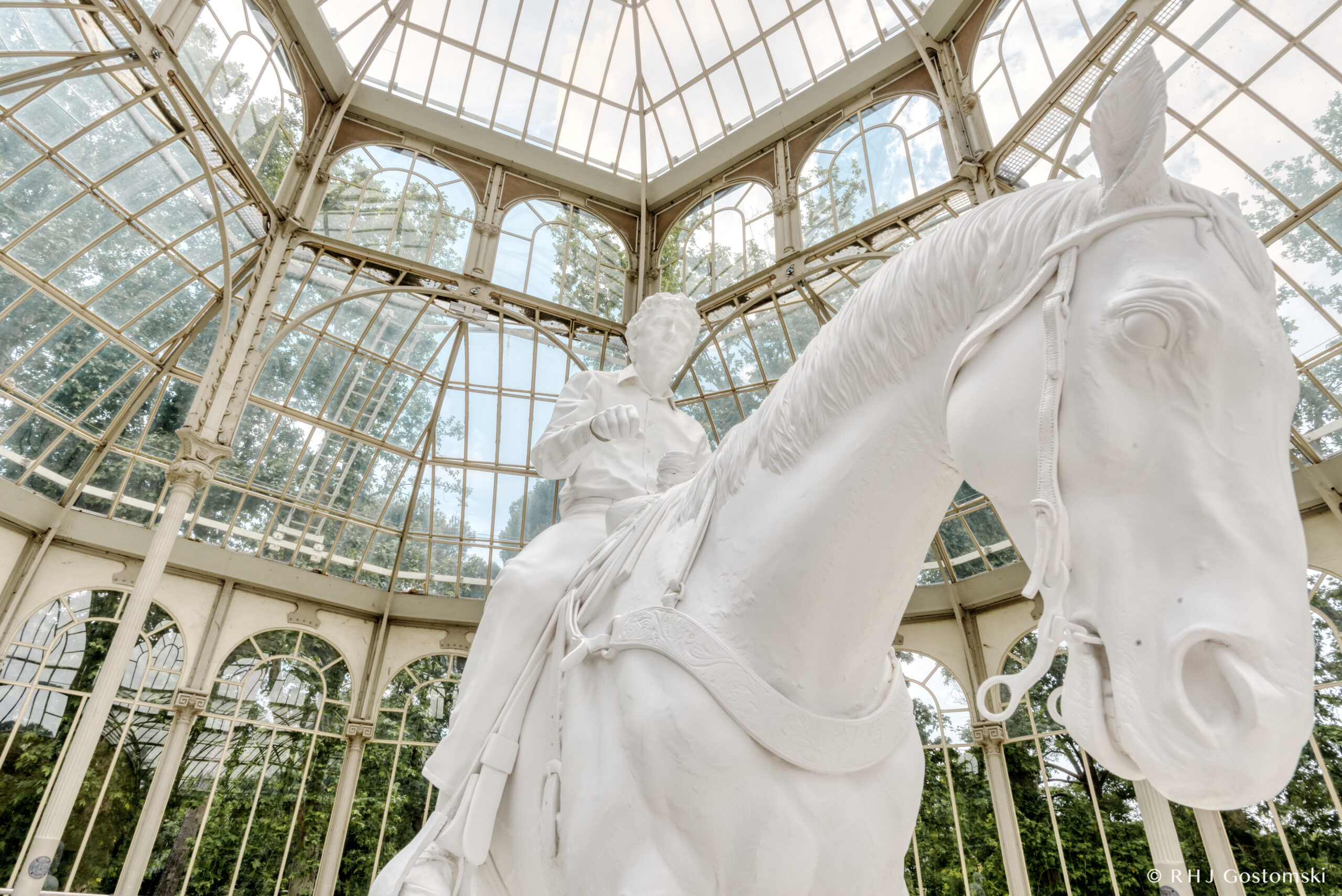
Today, the Palacio de Cristal is part of the Reina Sofía Museum (Museo Nacional Centro de Arte Reina Sofía), one of Spain’s premier contemporary art institutions. It is used as a venue for temporary exhibitions, primarily focusing on modern and contemporary art.
Palacio de Velázquez
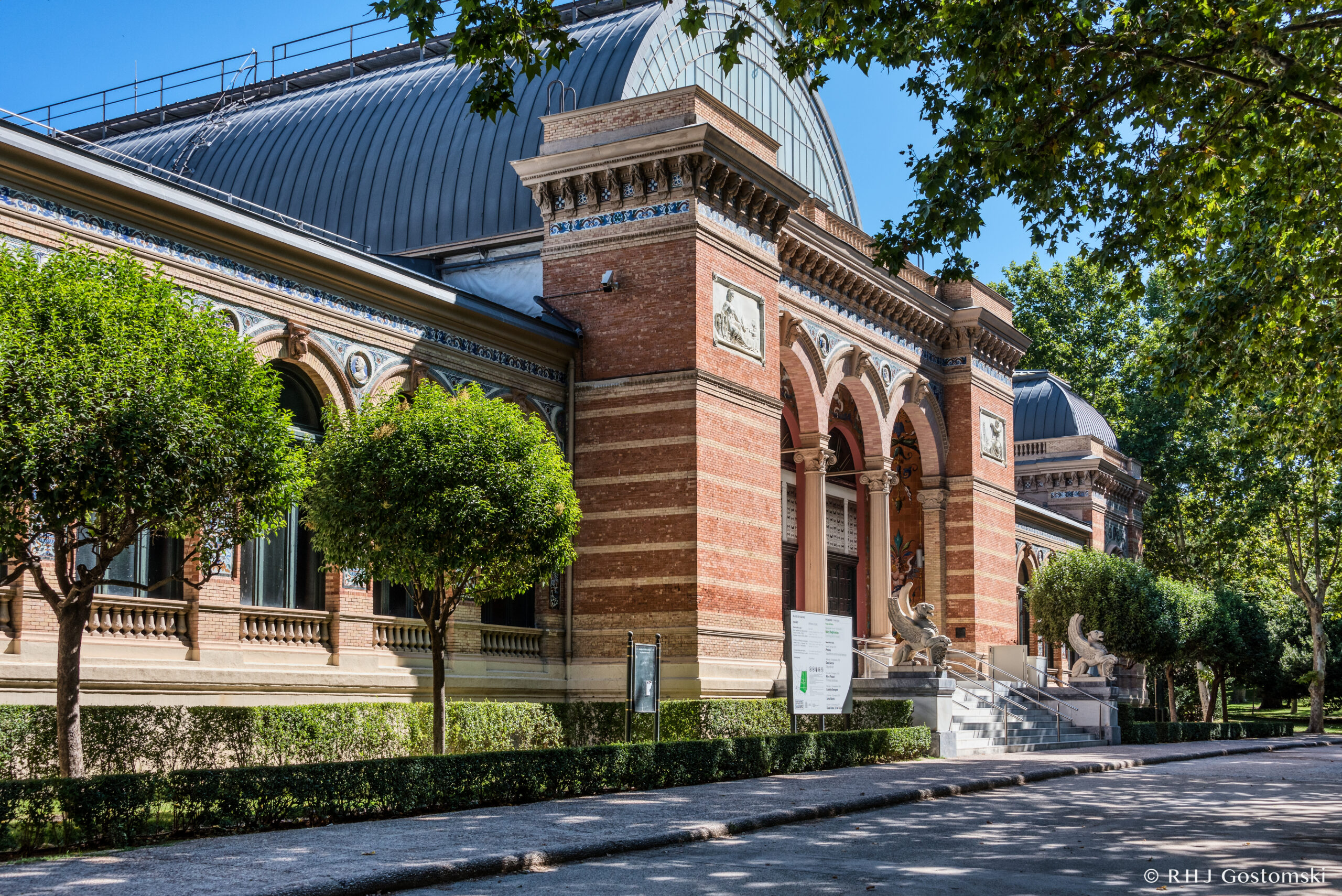
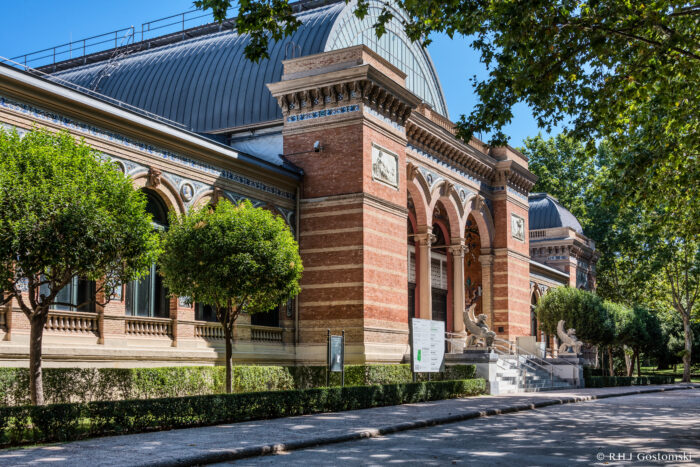
The Palacio de Velázquez is situated in the heart of the park, strategically positioned between the expansive boating lake and the diminutive lake adjacent to the Palacio de Cristal. Designed by the architect Ricardo Velázquez Bosco, the same mastermind behind the Palacio de Cristal, the palace was built between 1881 and 1983 for the National Exhibition of Mining held in Madrid in 1883. Its neo-Baroque architecture incorporates elements of Italian Renaissance design.
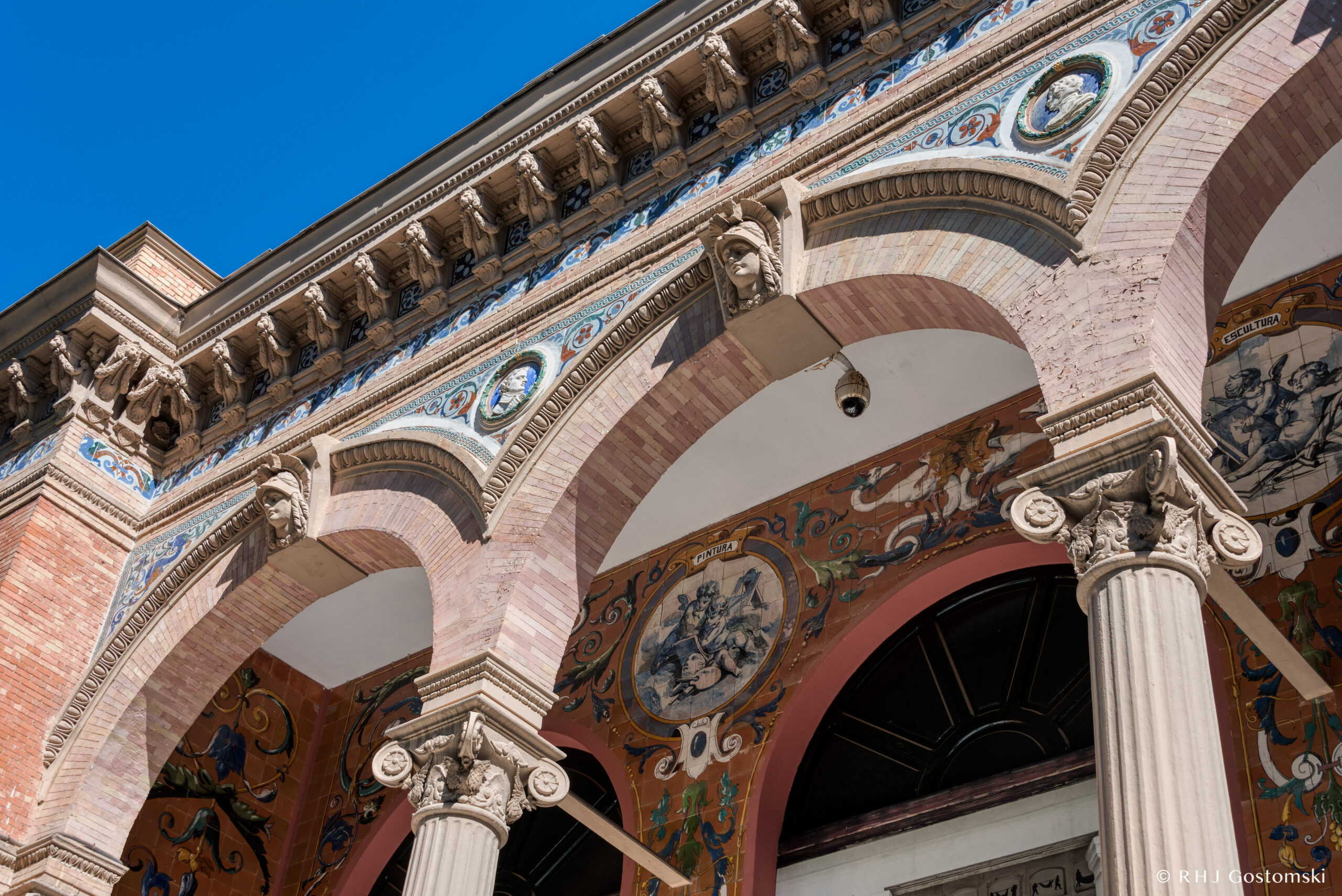
The palace’s most notable features are its brick façade, arched windows, and intricate decorative stonework. In contrast to the airy and glass-and-iron structure of the Crystal Palace, the Velázquez Palace exudes a more substantial and monumental presence. Its rich and classical design is in stark contrast to its more transparent counterpart.
Originally constructed in 1883, the Palacio de Velázquez served as the primary venue for the National Exposition of Fine Arts. Its purpose was to showcase Spanish art and culture, complementing the grand exhibits and displays of the exposition.
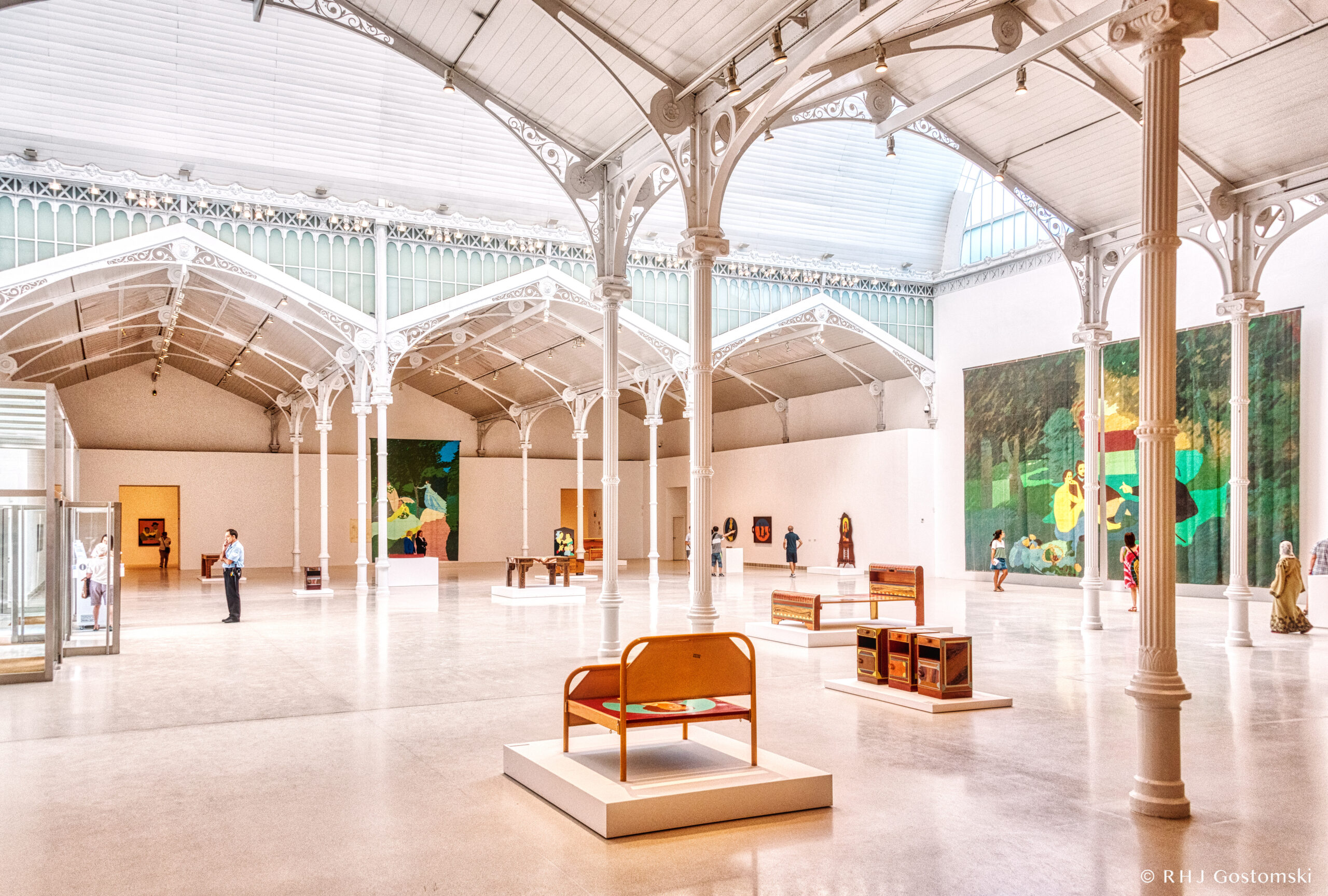
Presently, the Palacio de Velázquez has become an integral part of the Reina Sofía Museum (Museo Nacional Centro de Arte Reina Sofía). It currently functions as a venue for temporary art exhibitions, focusing on modern and contemporary art.
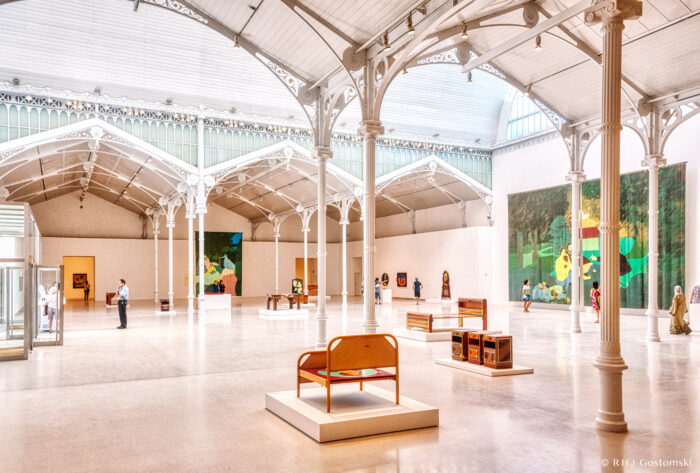
The roof of the building comprises glazed iron vaults to naturally illuminate the exhibition rooms.