TABLE OF CONTENTS
Location
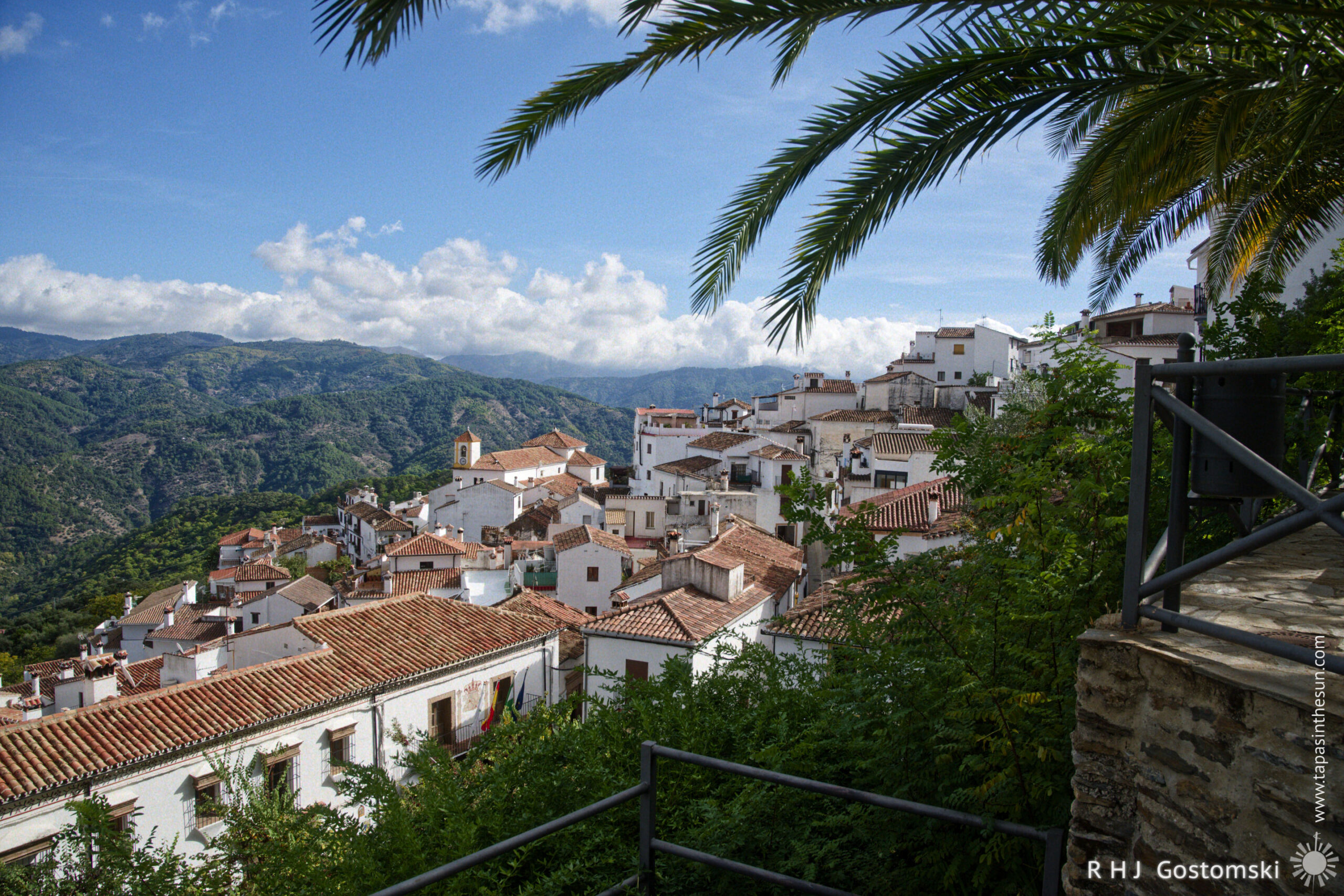
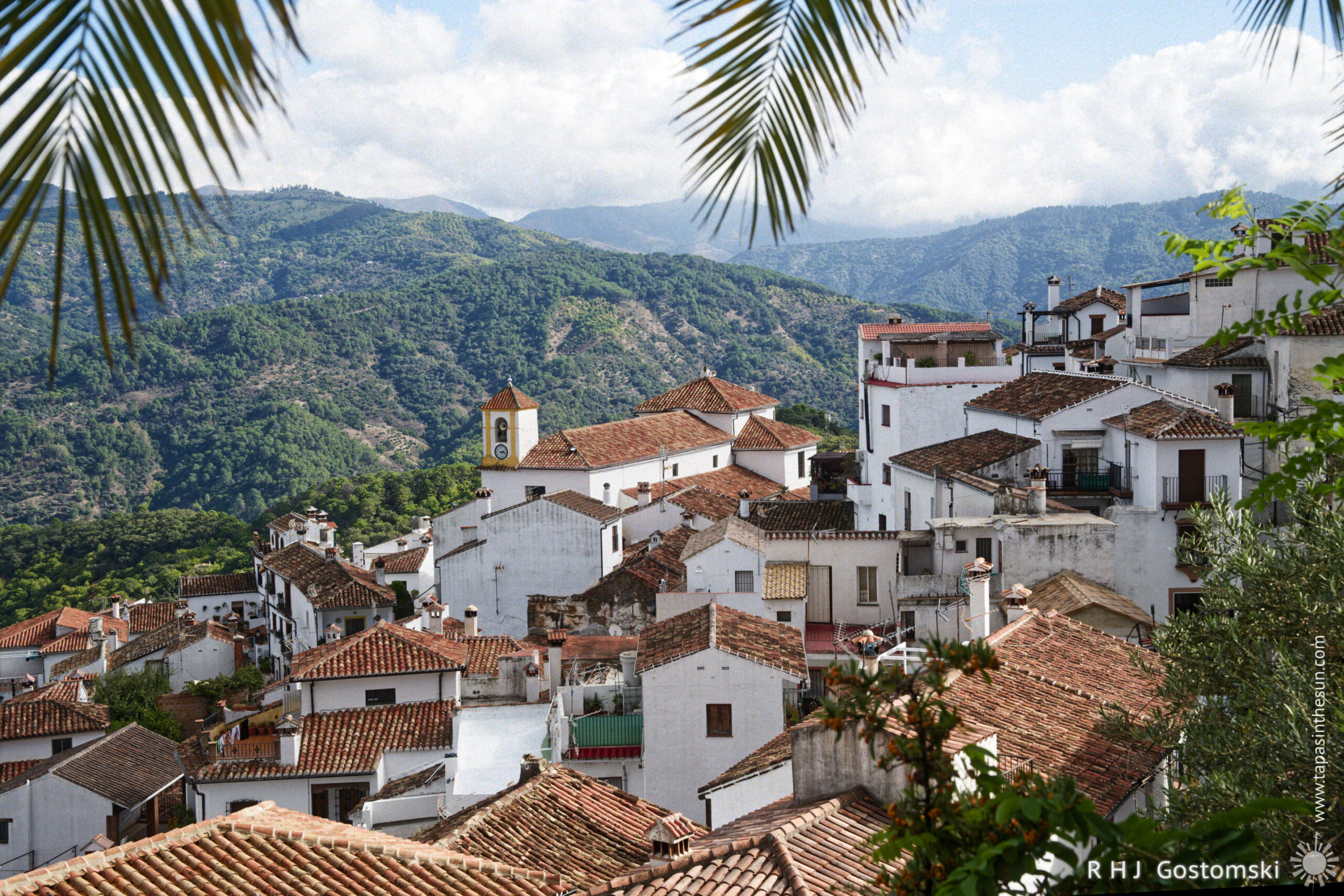
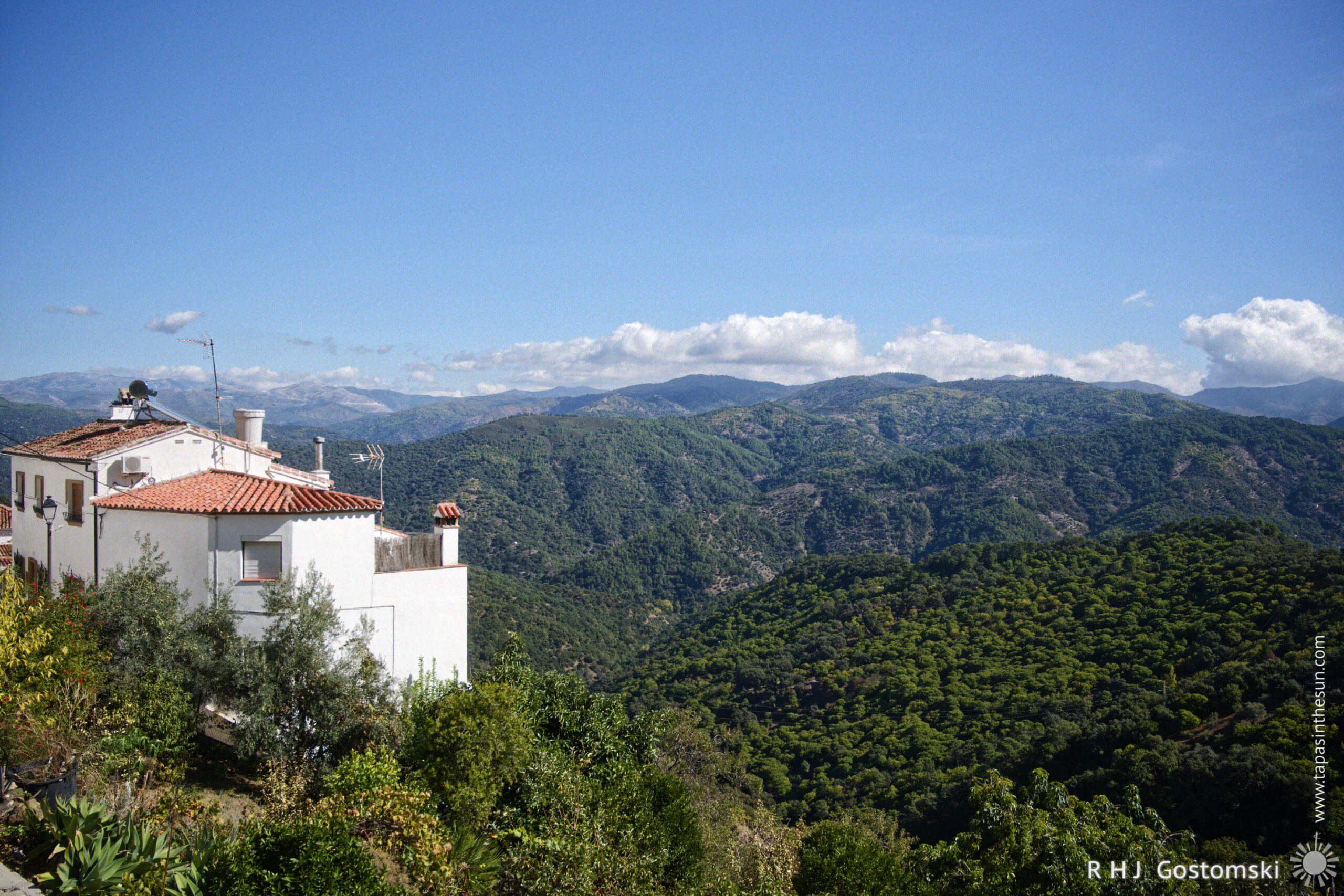
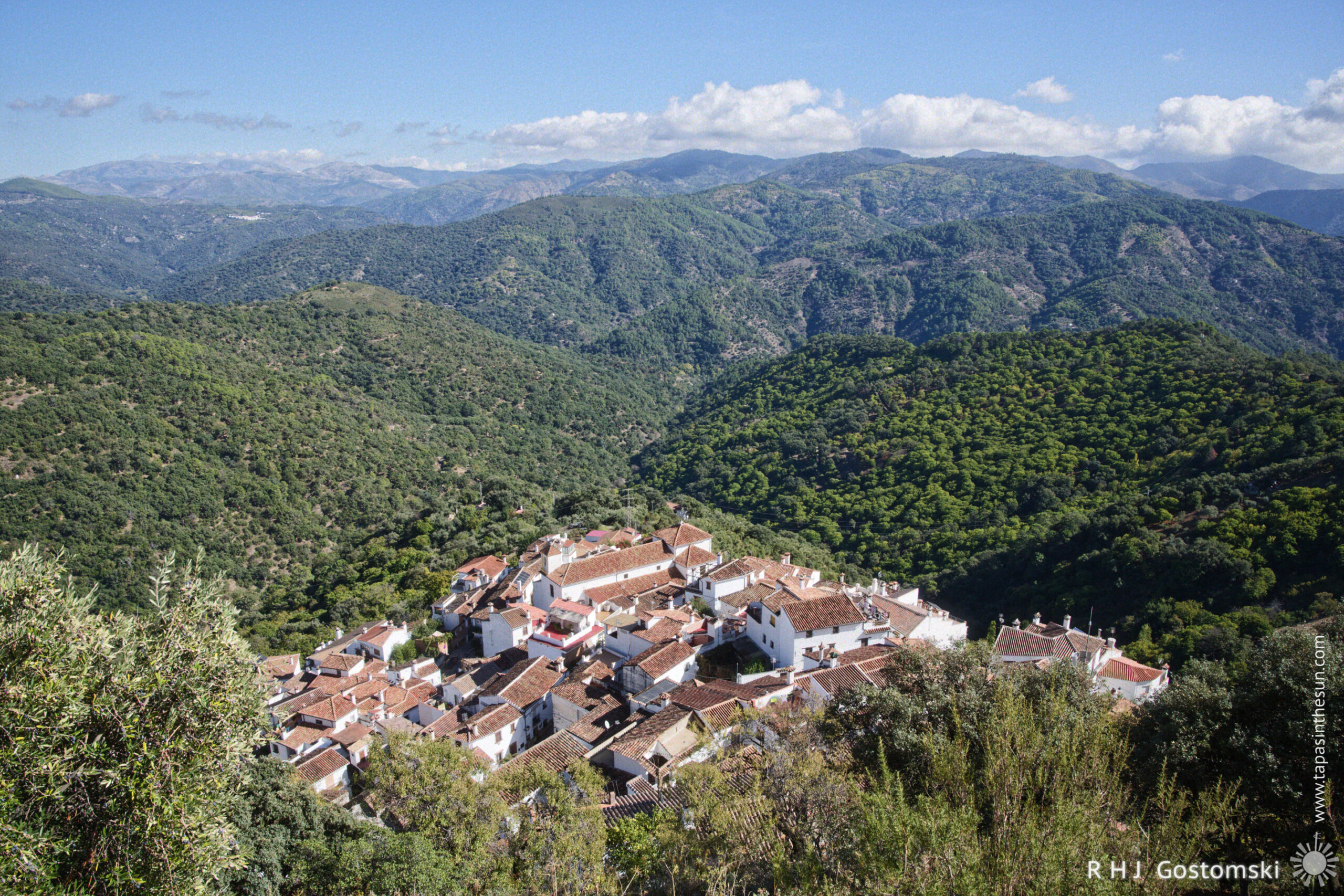
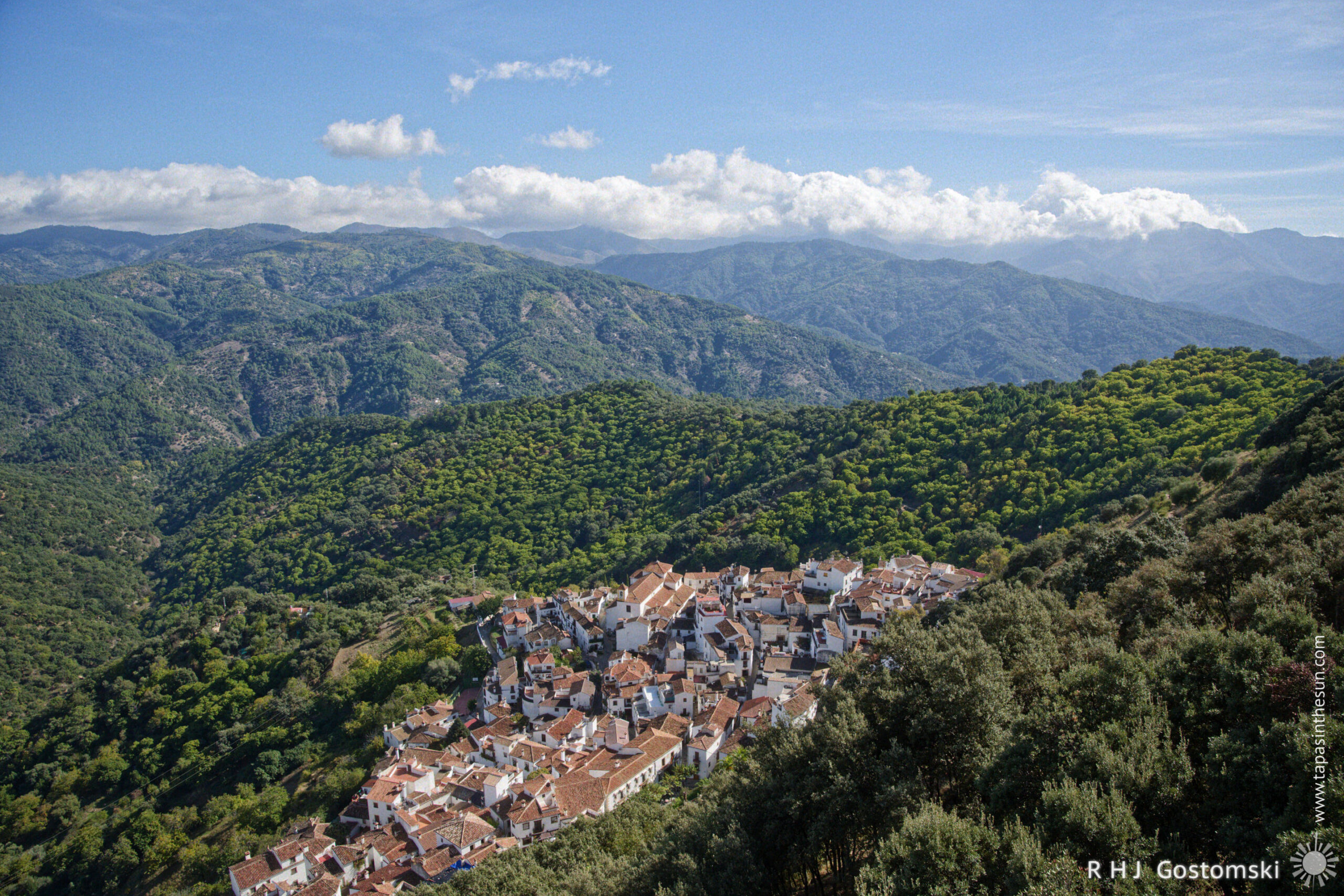
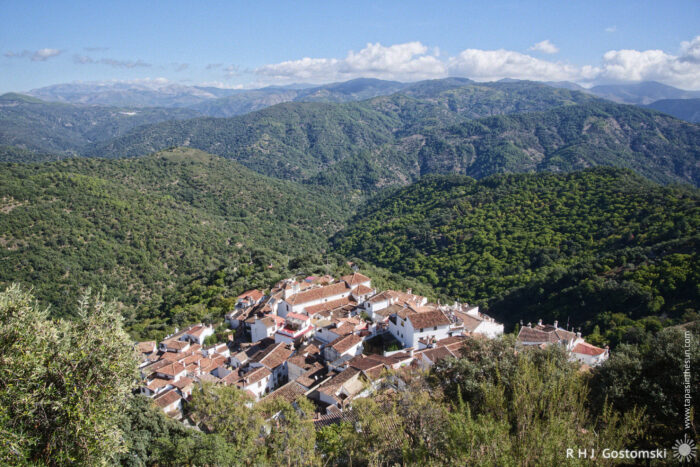
Benalauría is a small white hillside village in southern Spain, tucked into the Genal Valley within the Serranía de Ronda, in the province of Málaga, Andalucia. For centuries, it survived mainly from farming, especially chestnuts, olives, and almonds.
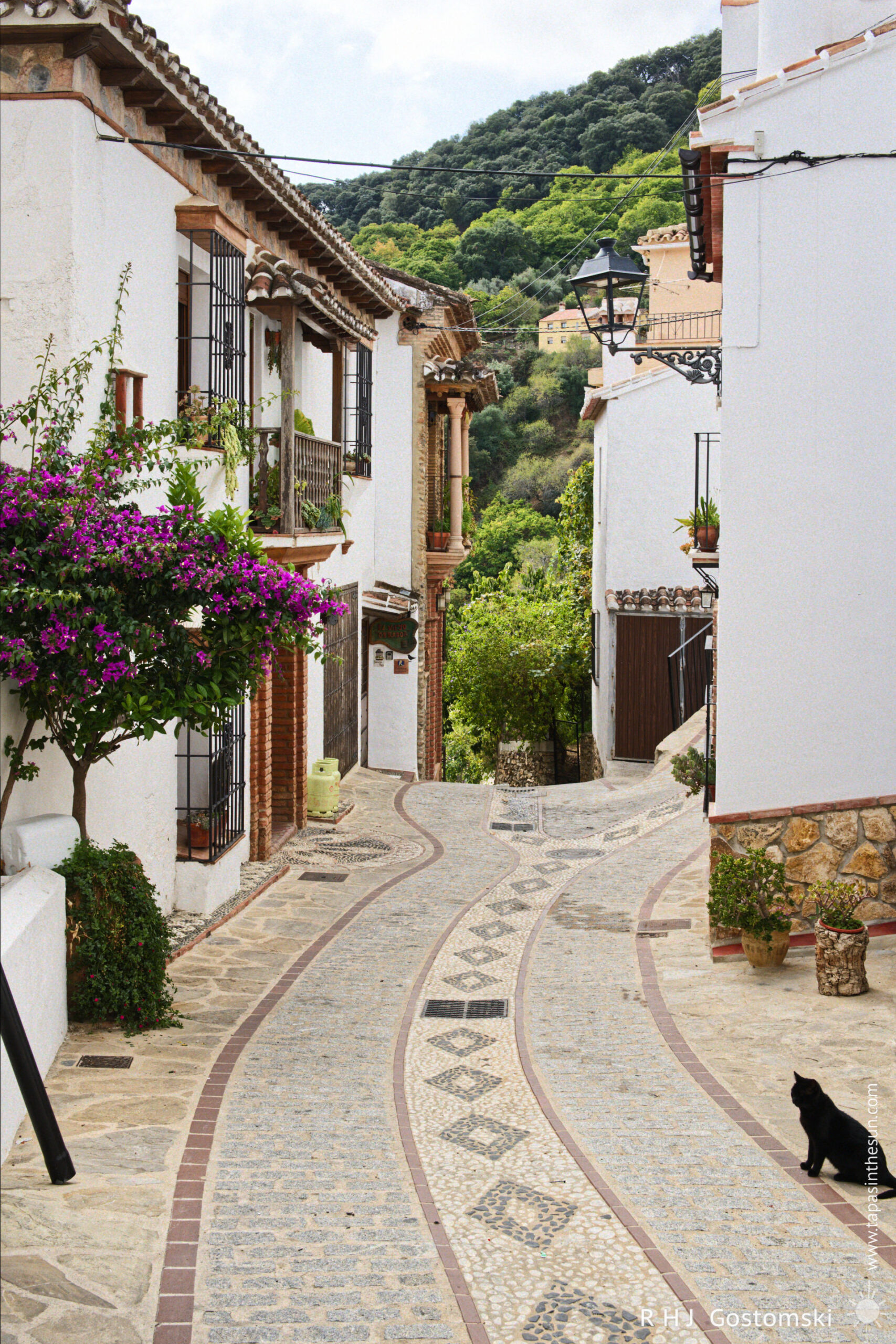
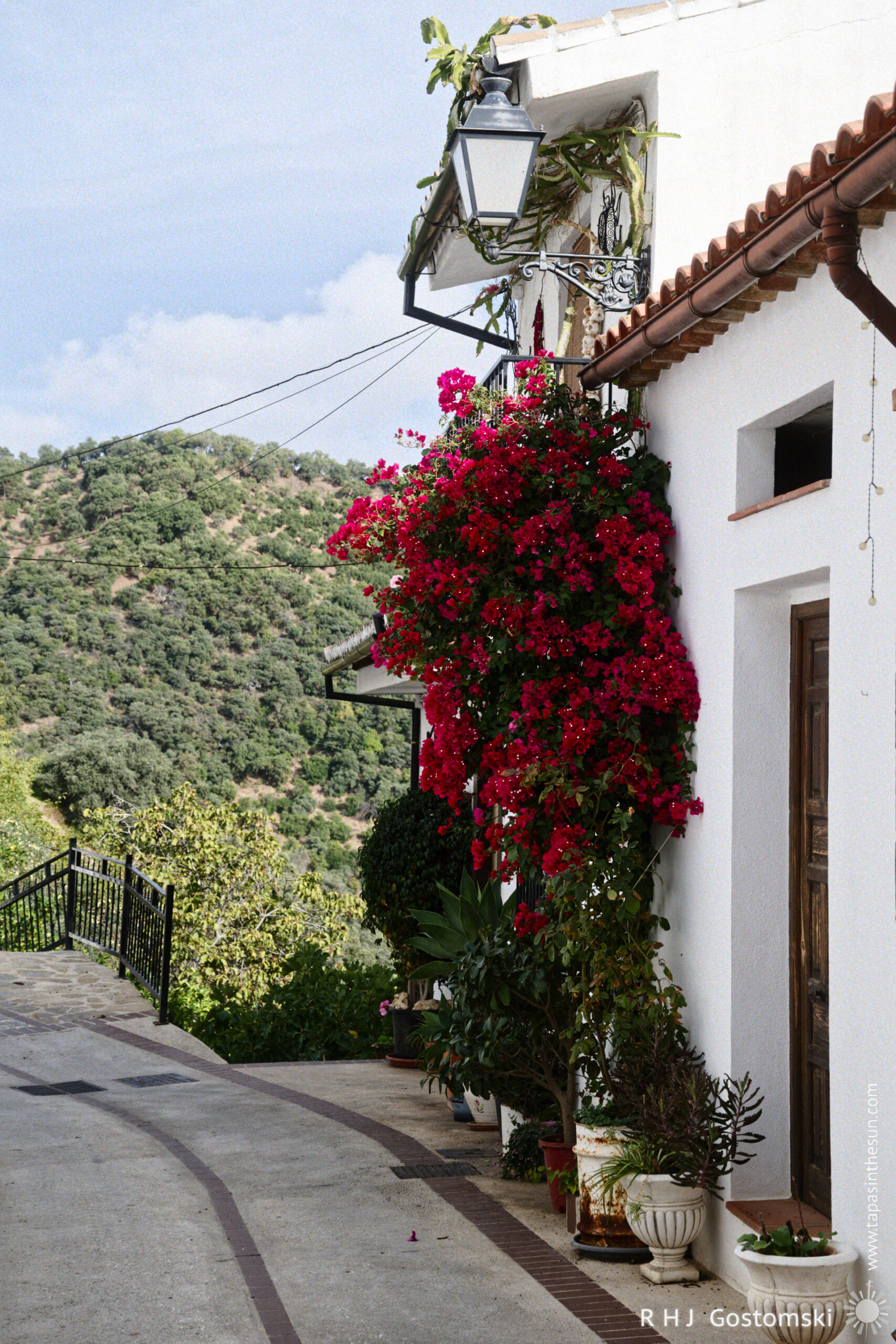
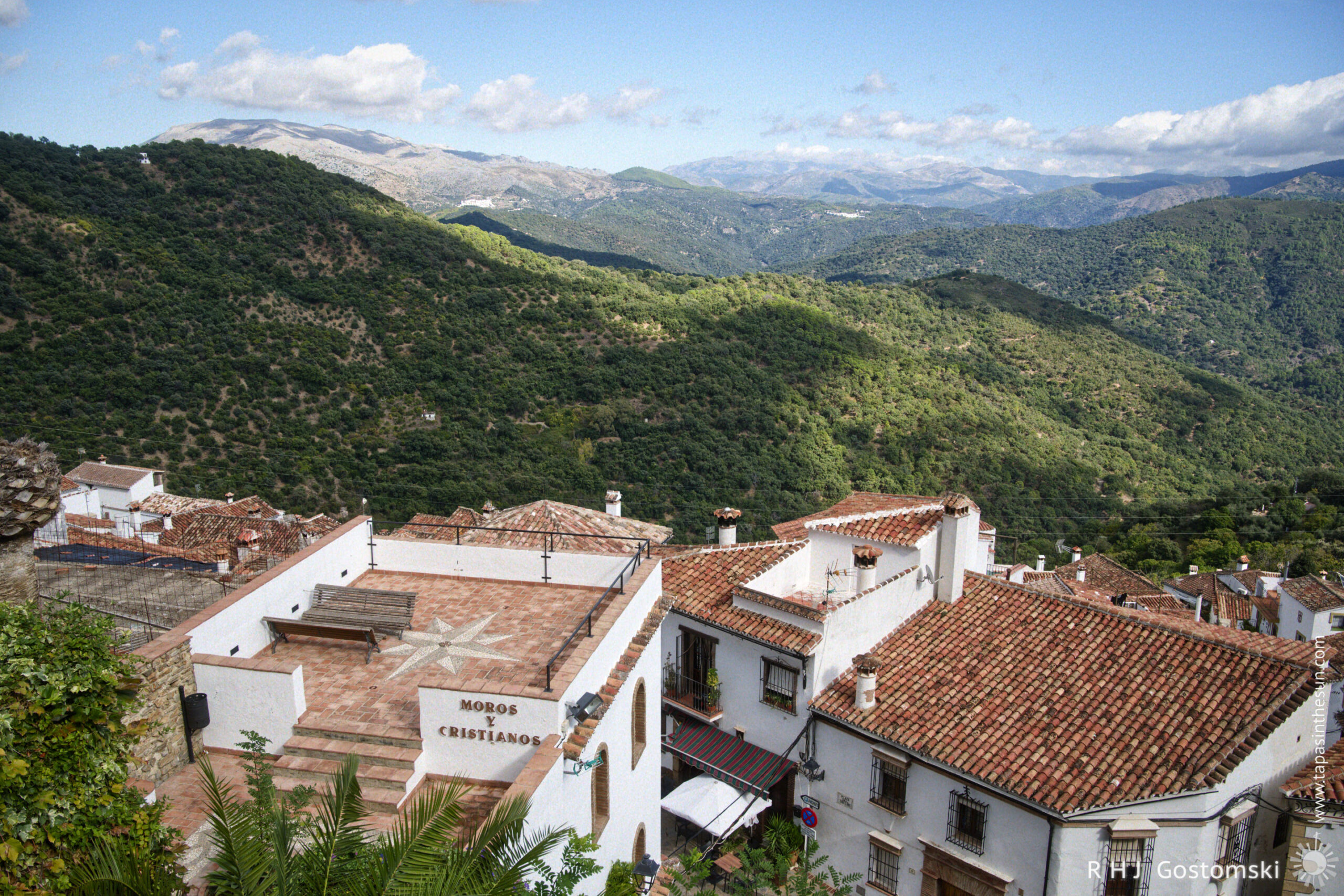
The village sits on a hillside surrounded by chestnut forests, olive groves, and steep, green slopes. With a population of only a few hundred people, the town feels quiet and intimate, the kind of place where narrow streets, whitewashed houses, and mountain views shape everyday life.
A Brief History
Benelauría has roots going back to Roman agricultural activity, though it developed mainly during the Muslim period. Its name reflects its Andalusí origins, and the village was shaped by hillside farming, irrigation systems, and defensive settlement patterns typical of Al-Andalus.
In 1485, Benalauría was taken by Castilian forces during the Reconquista, leading to population loss after Morisco revolts and expulsions and later repopulation by Christian settlers. Traditionally dependent on agriculture—especially olives and chestnuts—the village declined in population during the 20th century but is now valued for its preserved architecture, natural surroundings, and rural tourism.
The Village of Benalauría
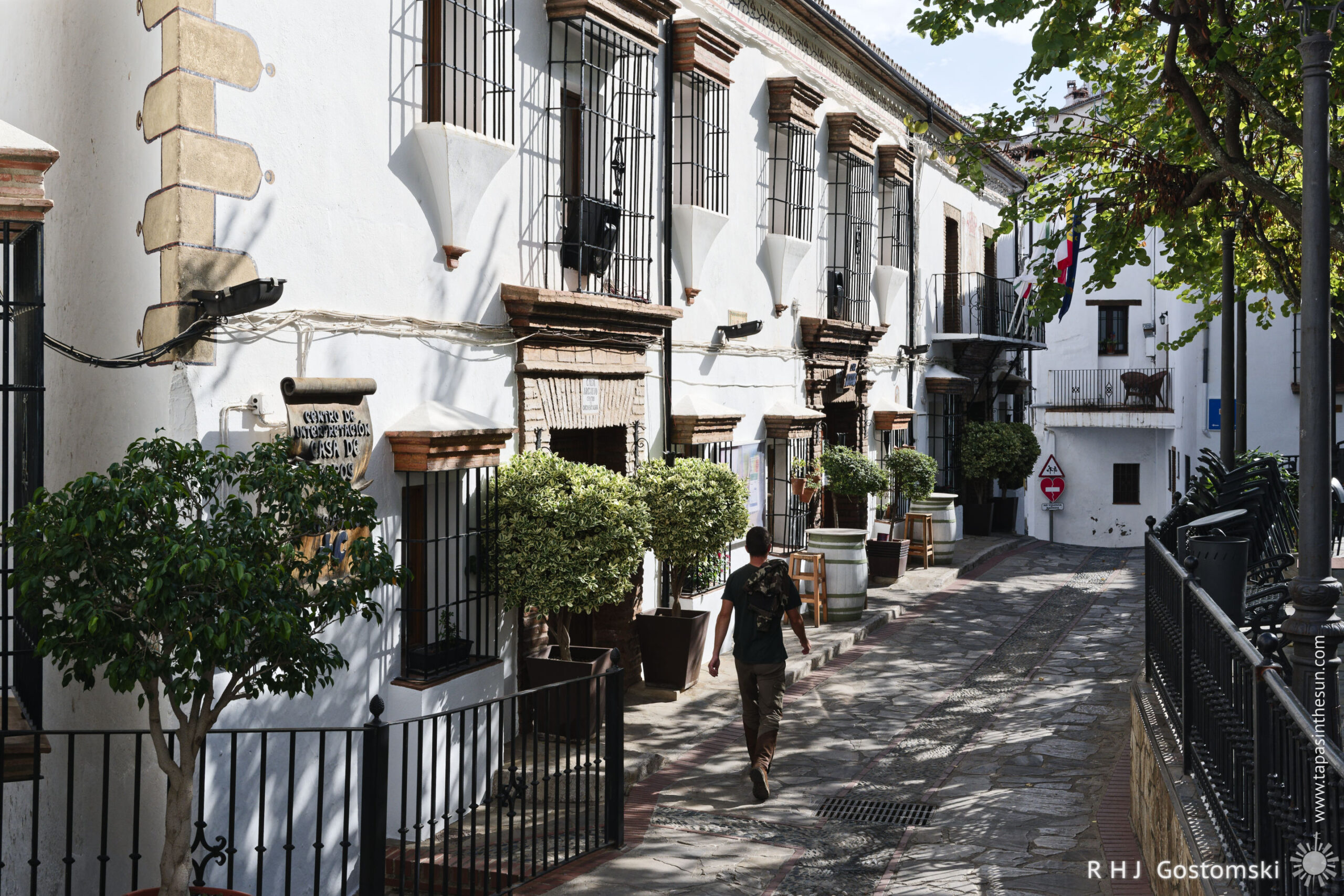
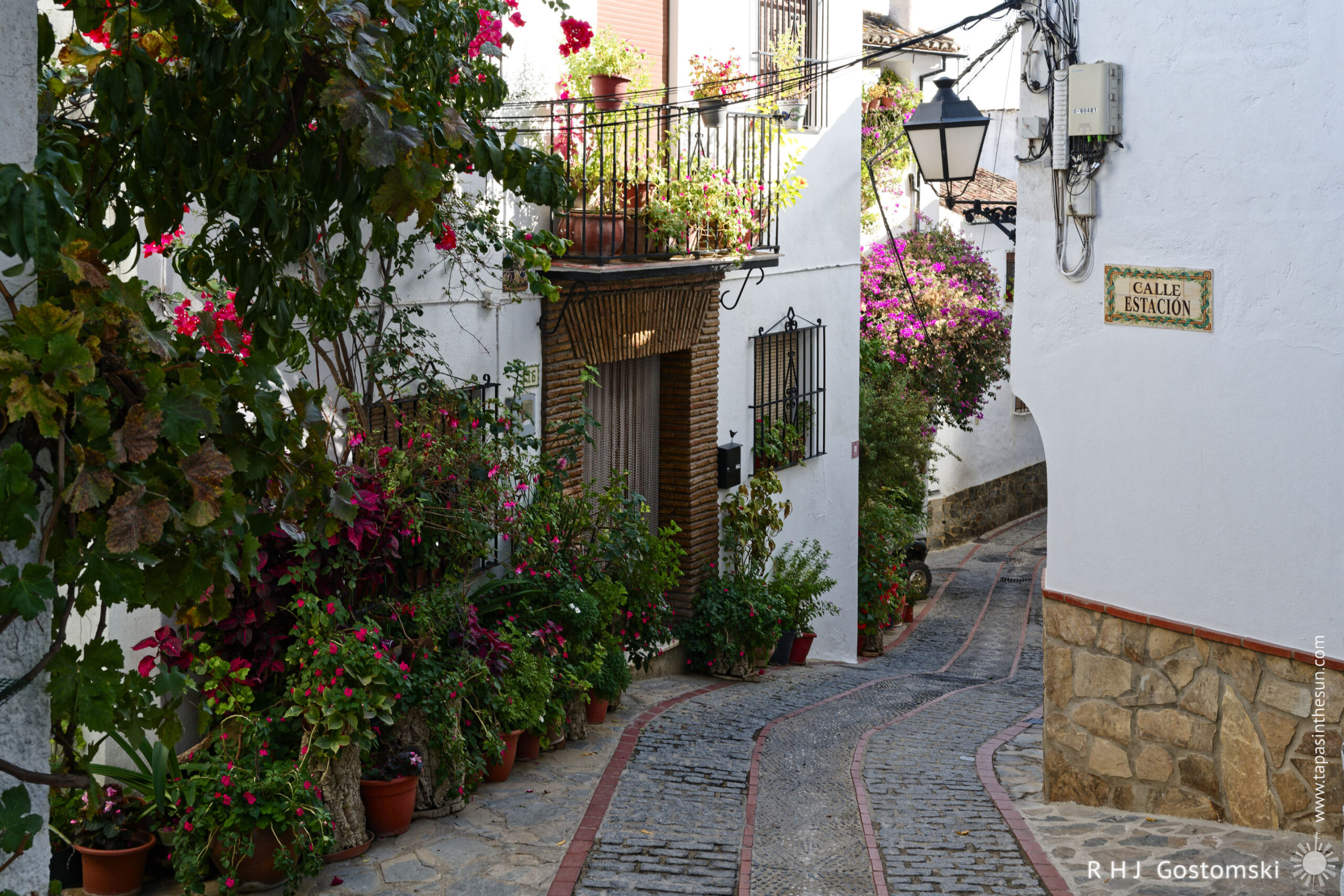
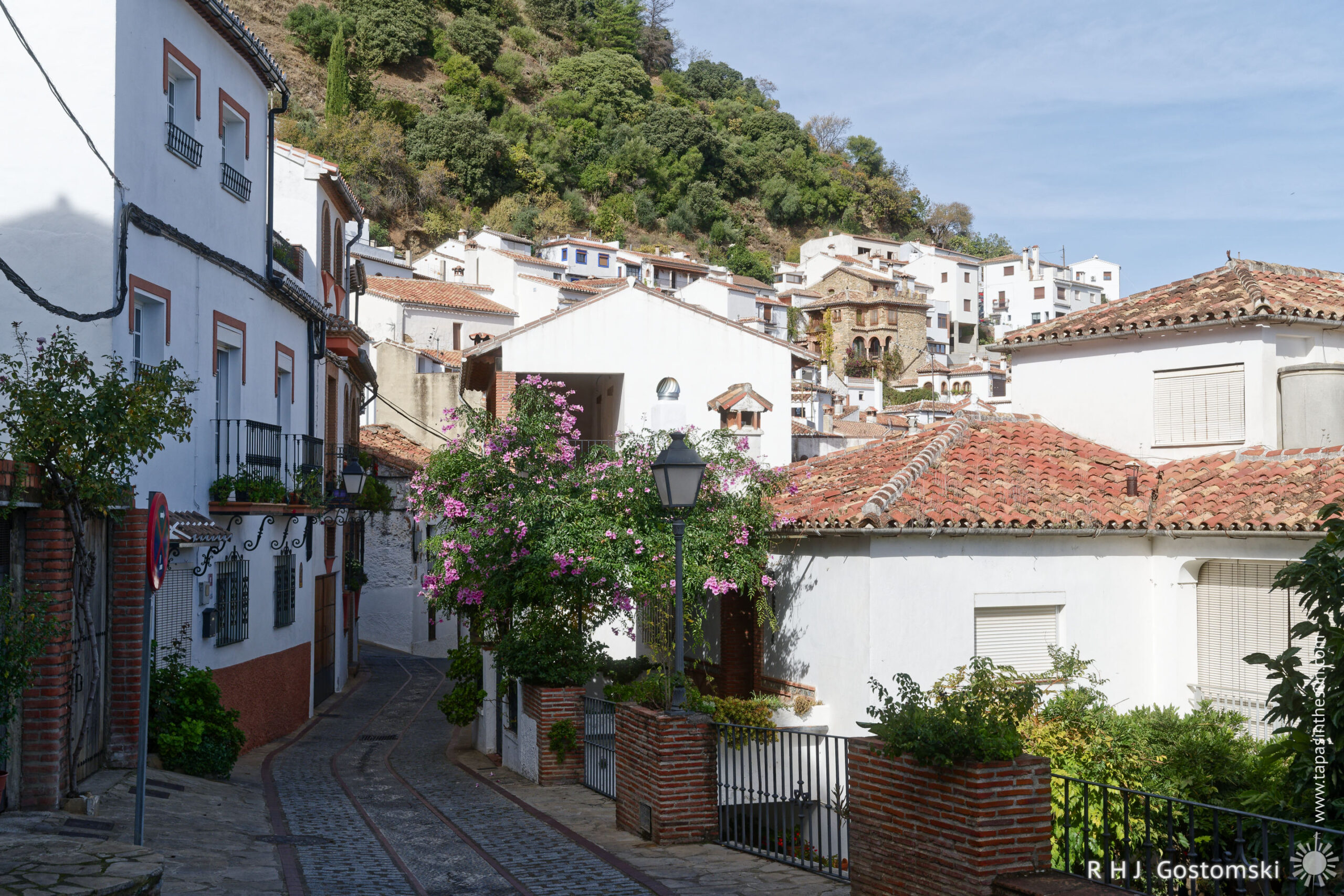
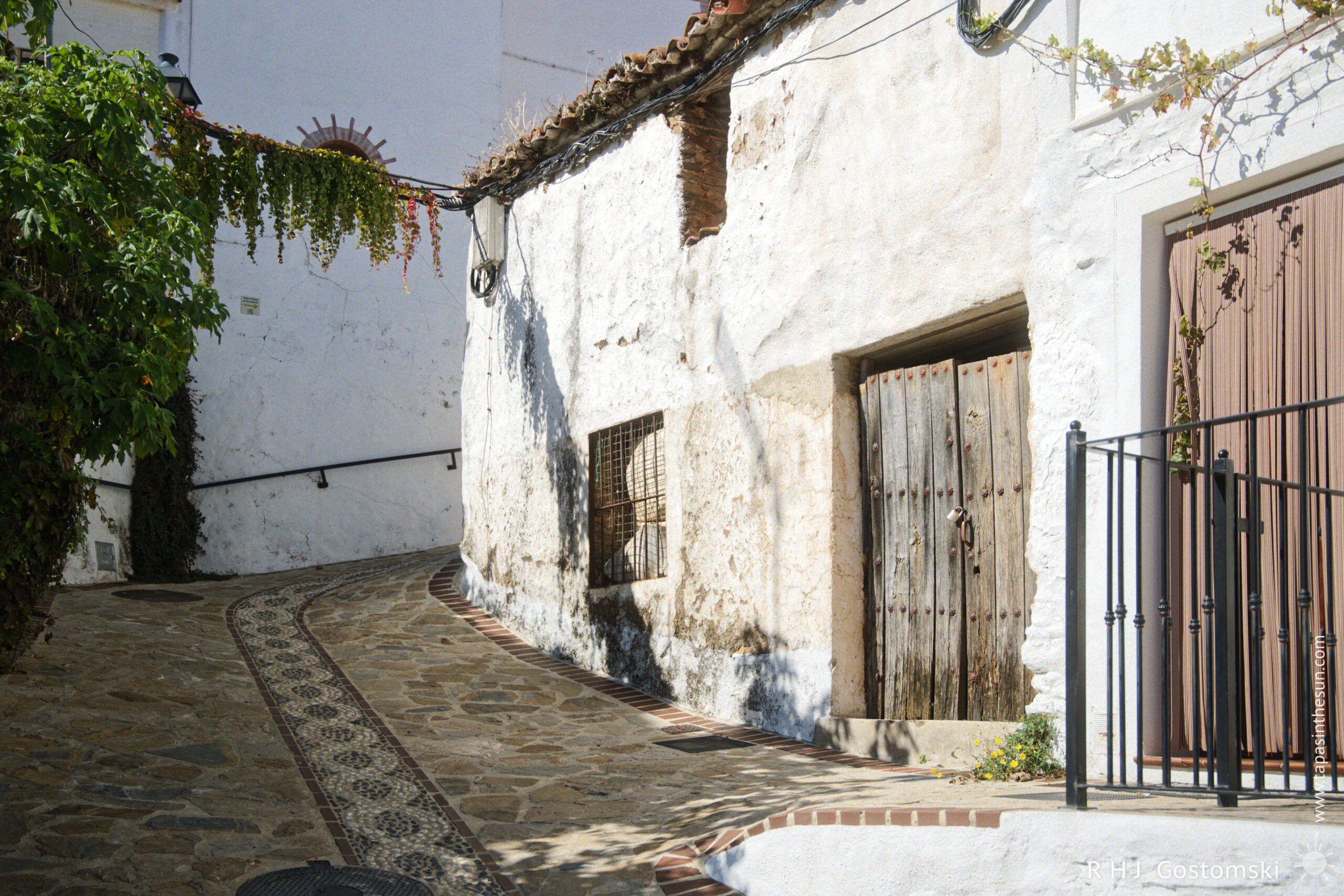
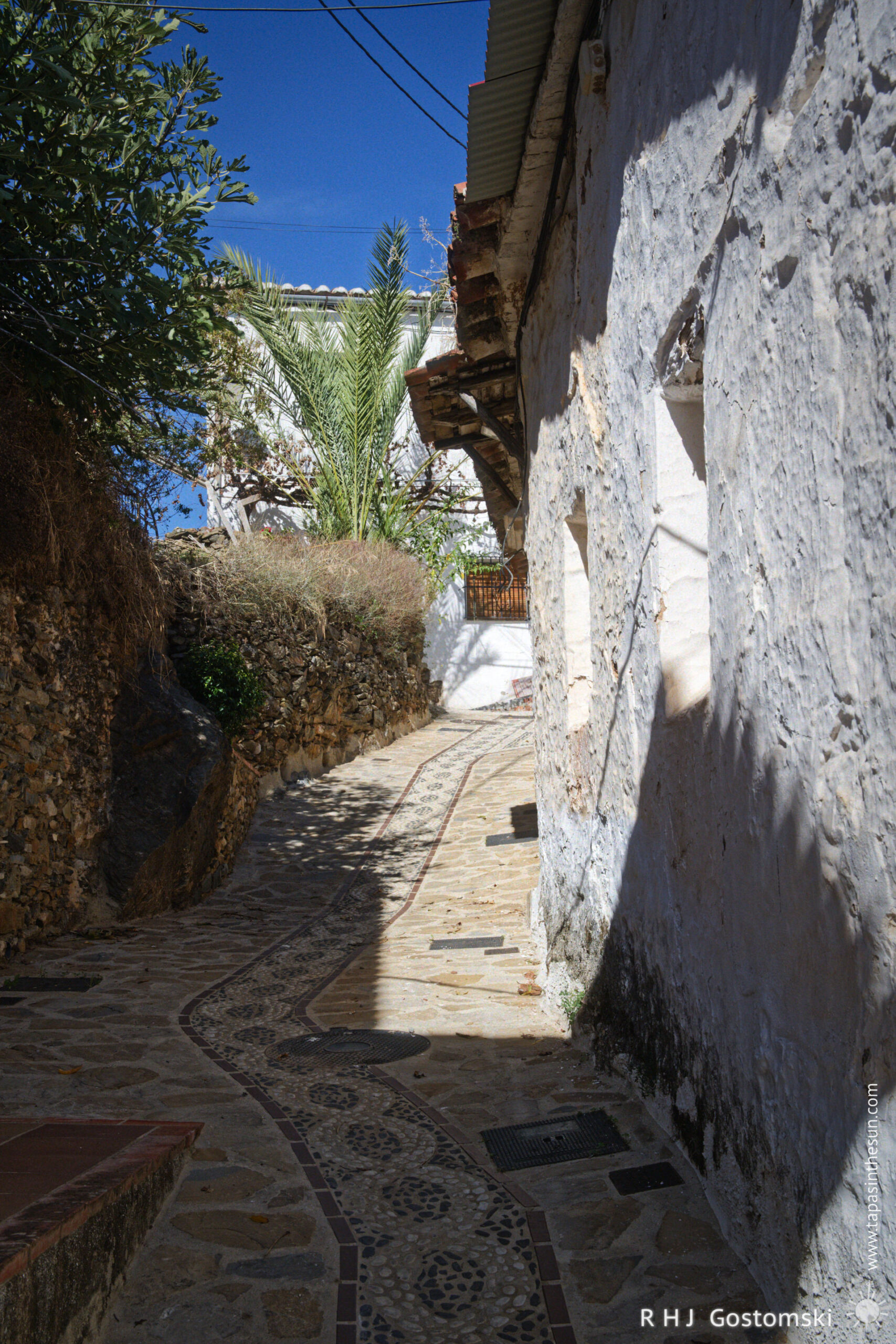
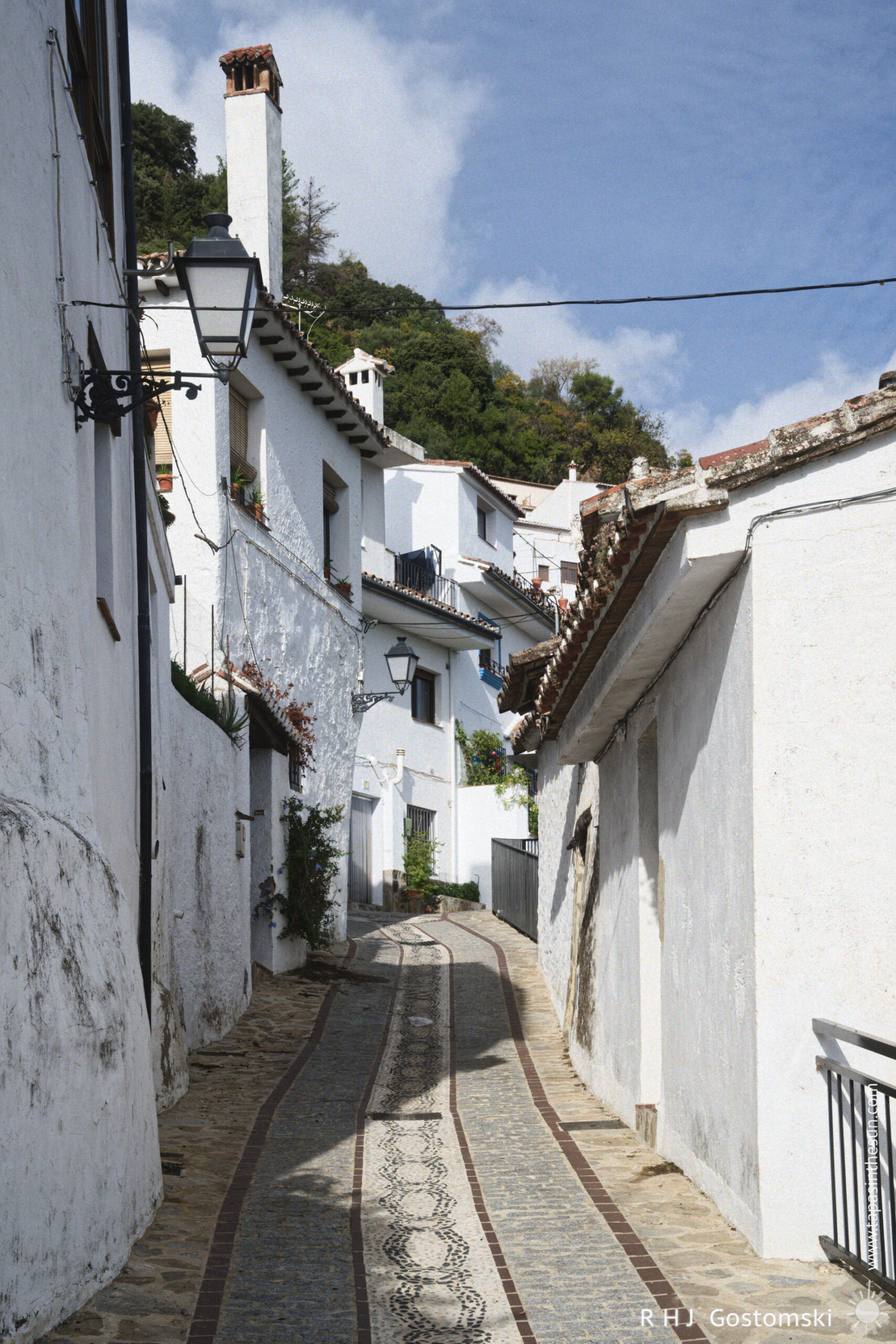
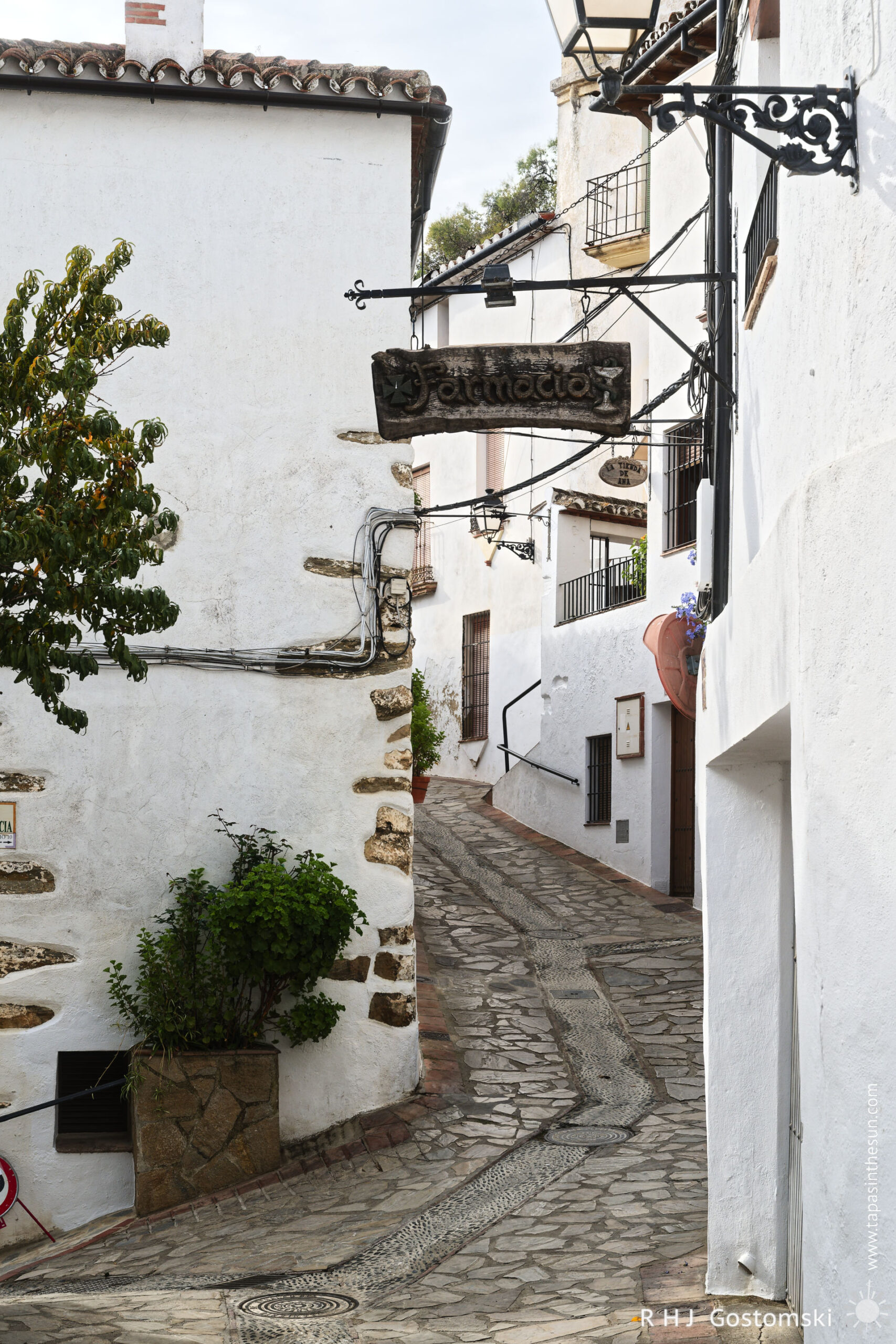
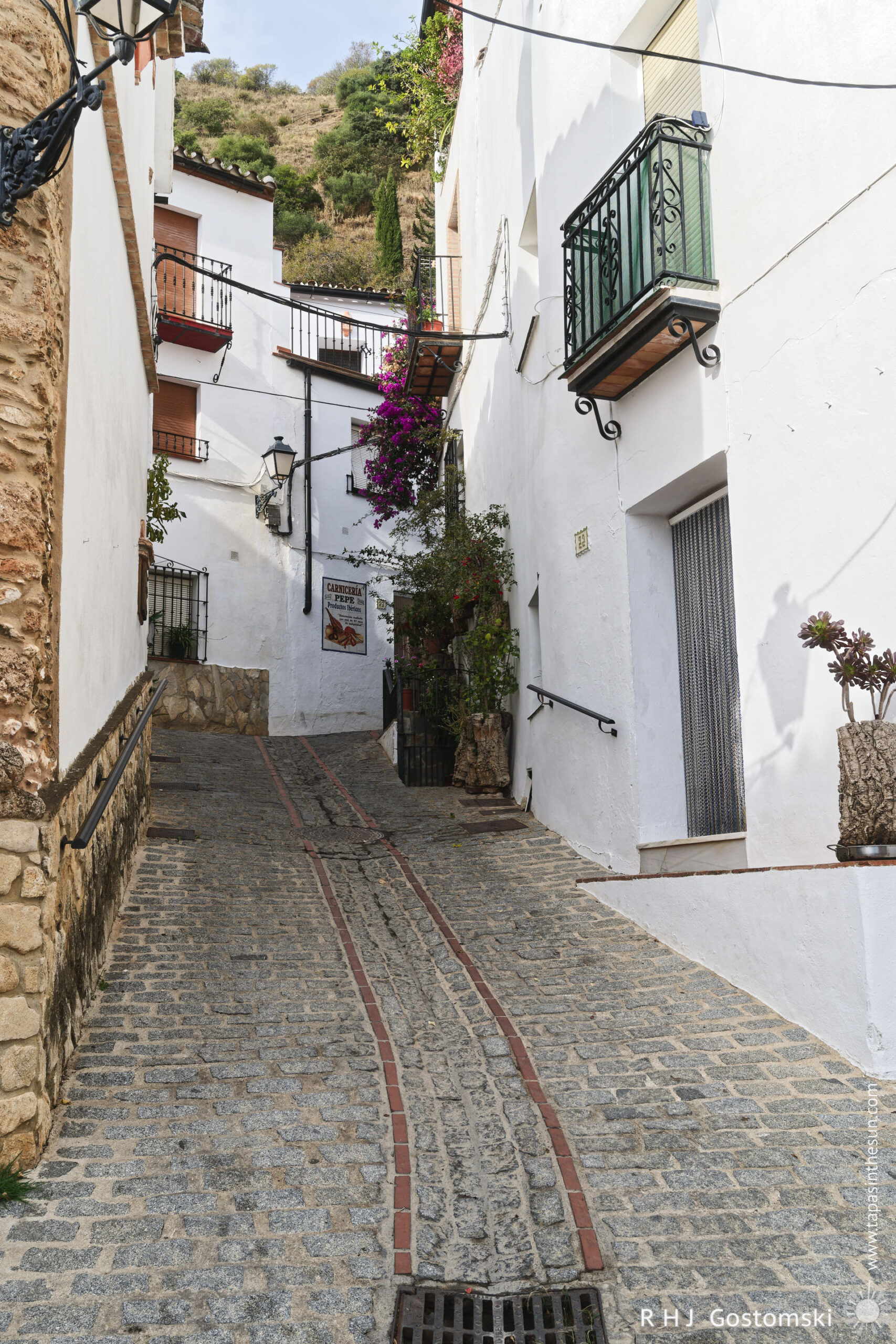
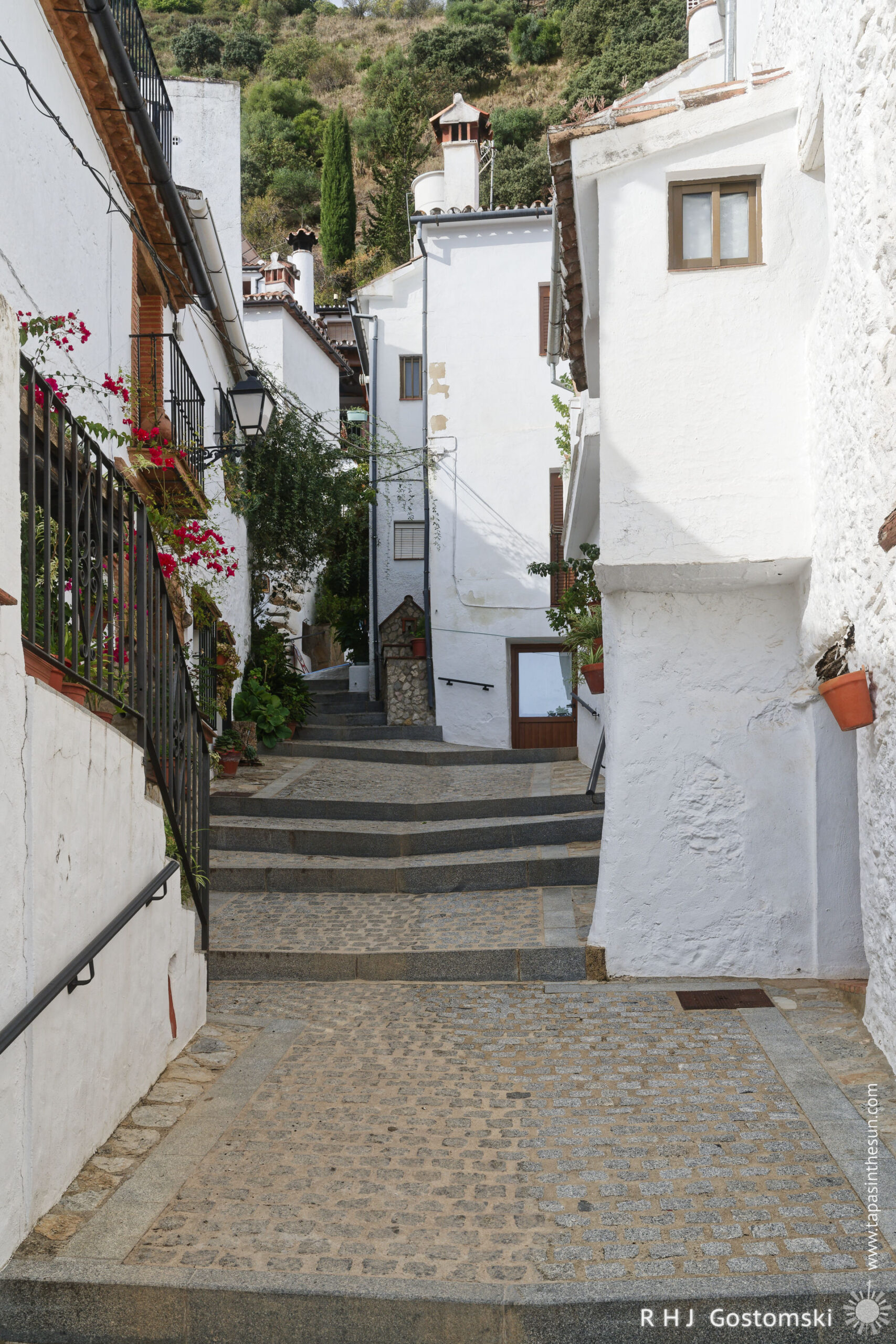
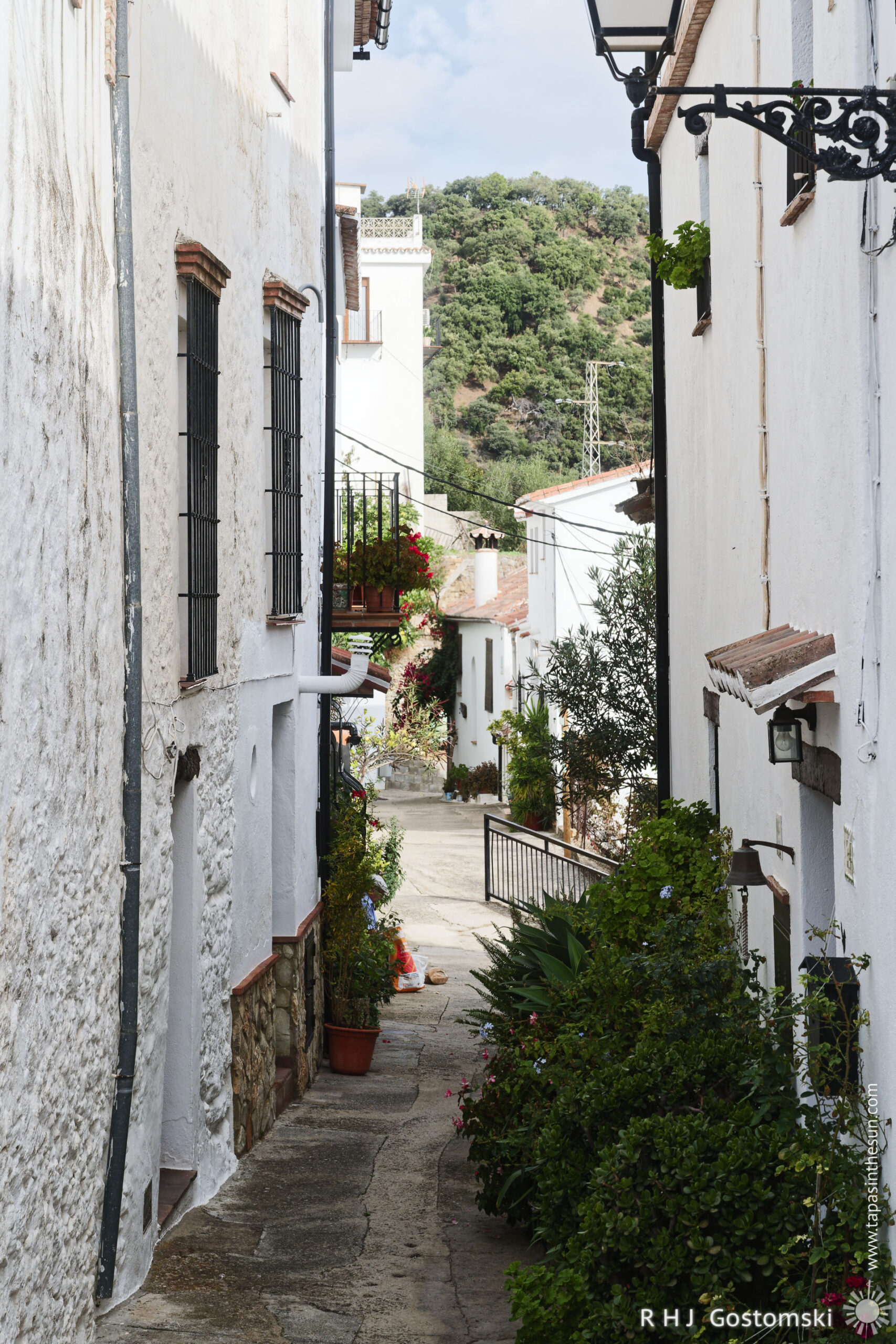
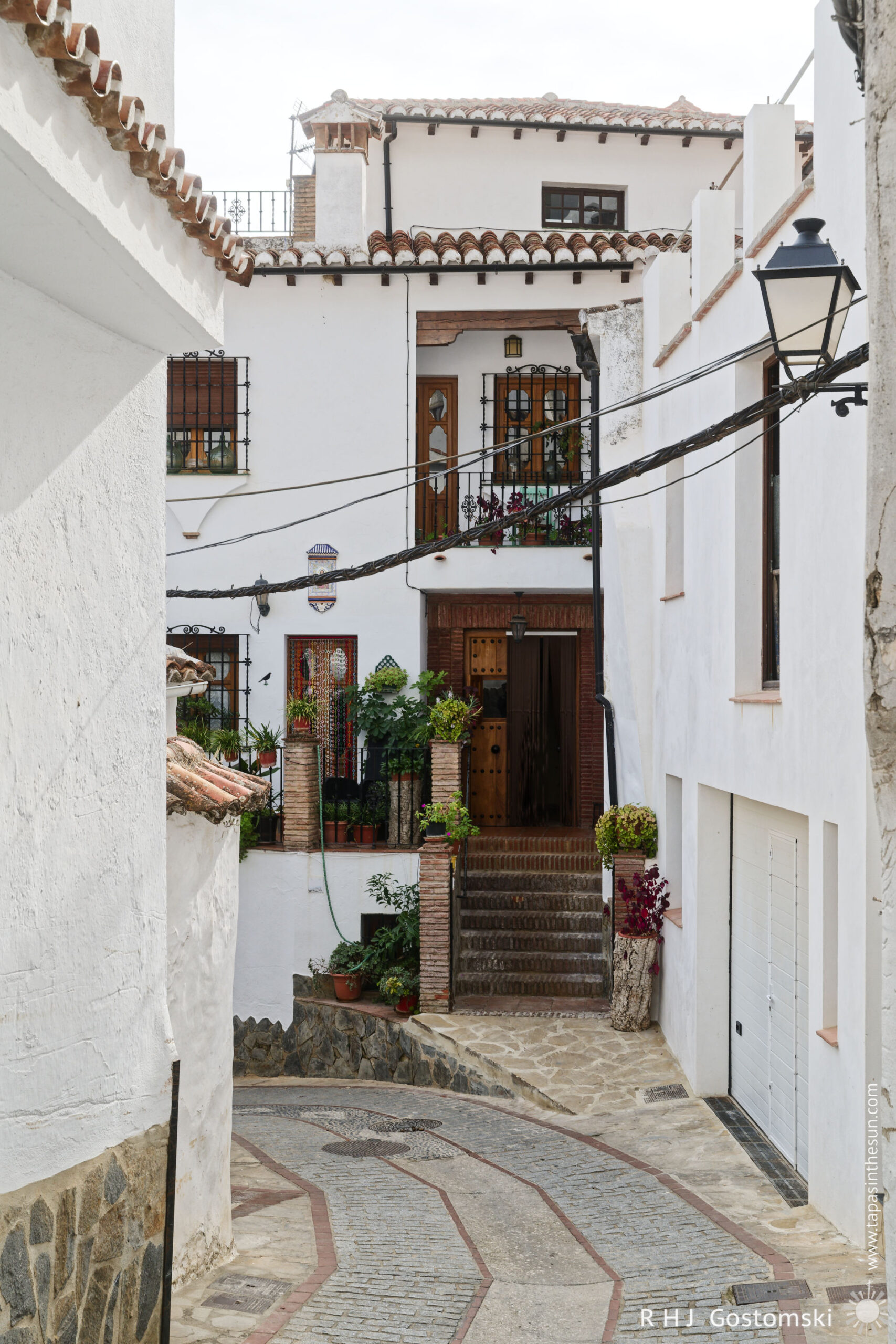
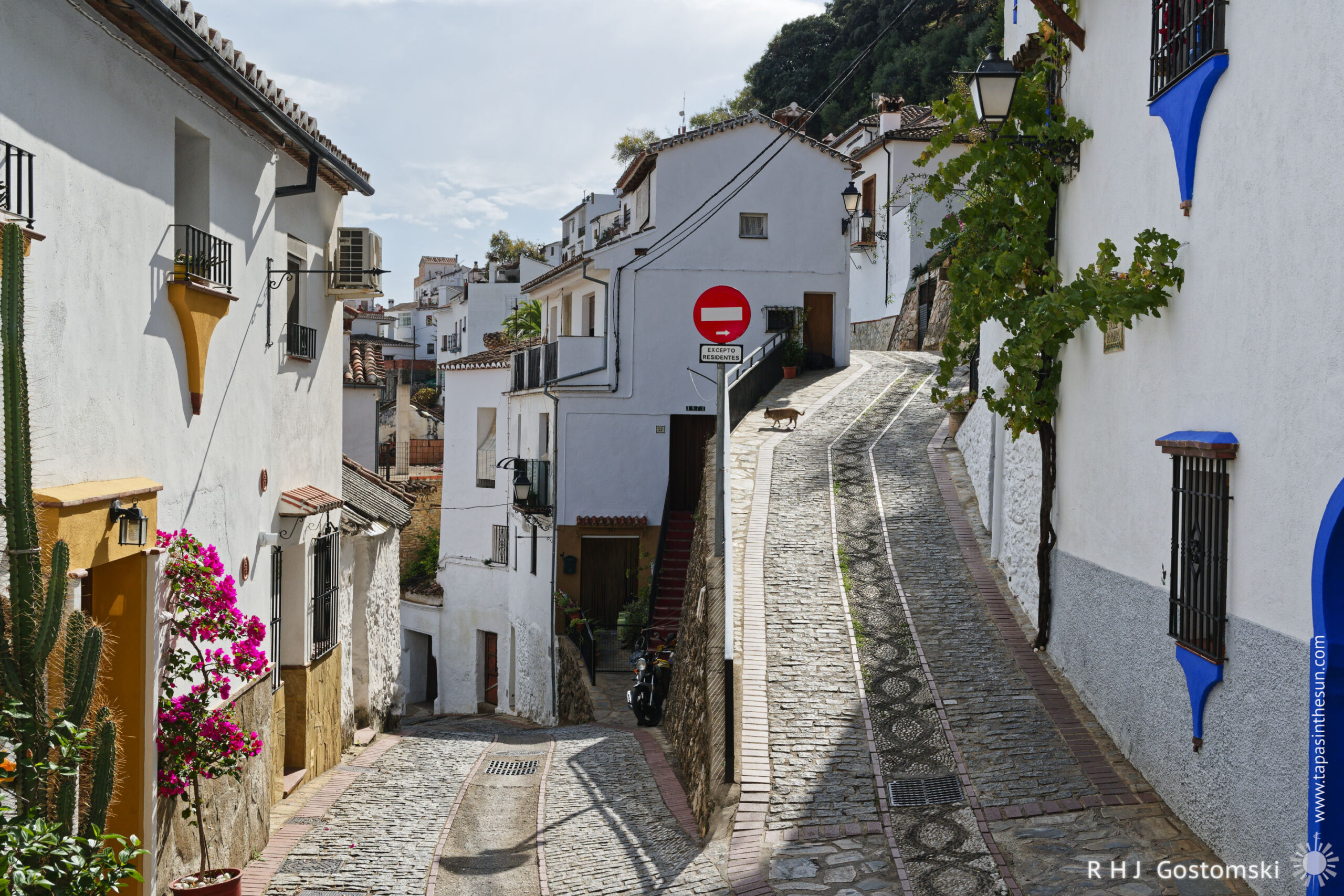
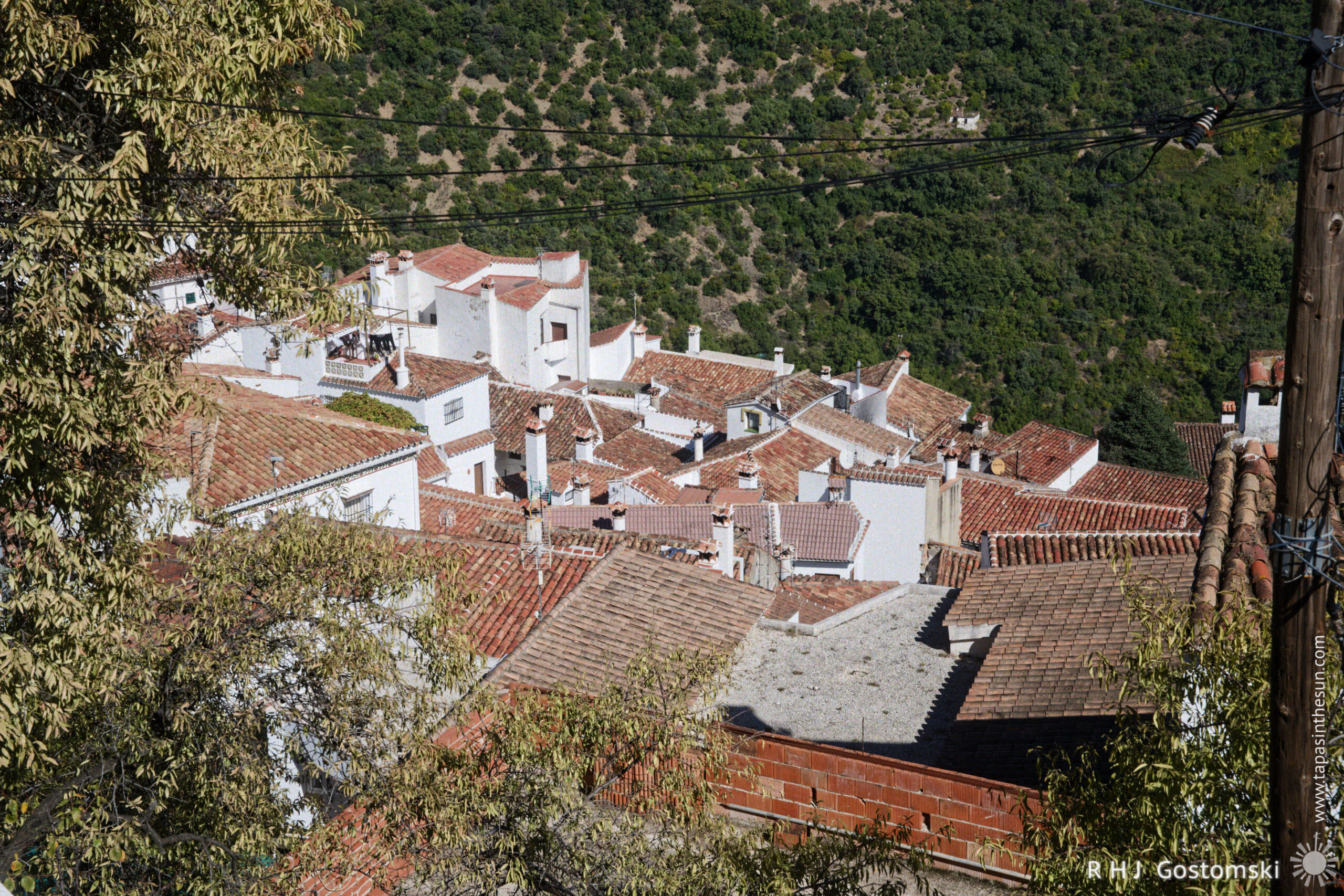
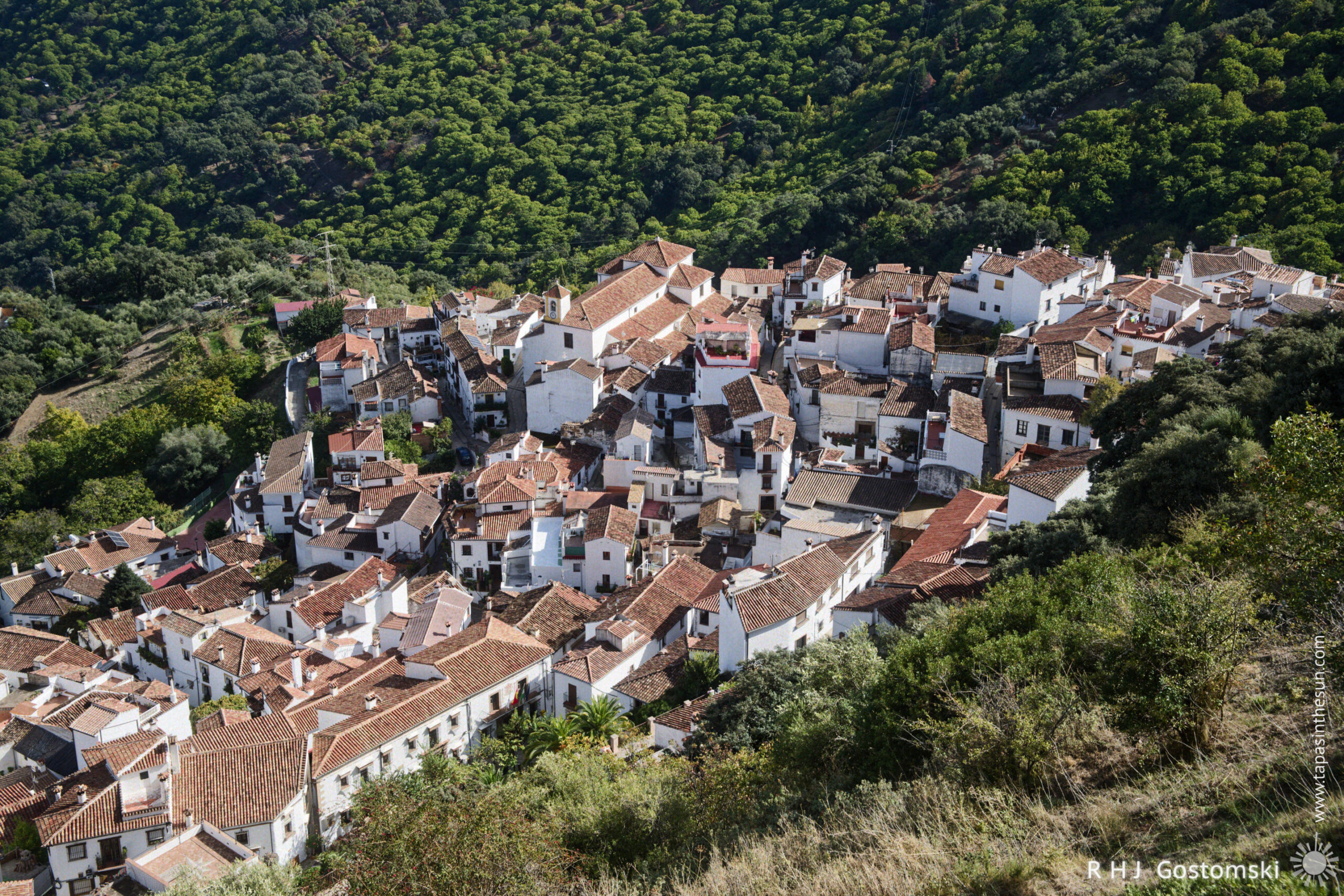
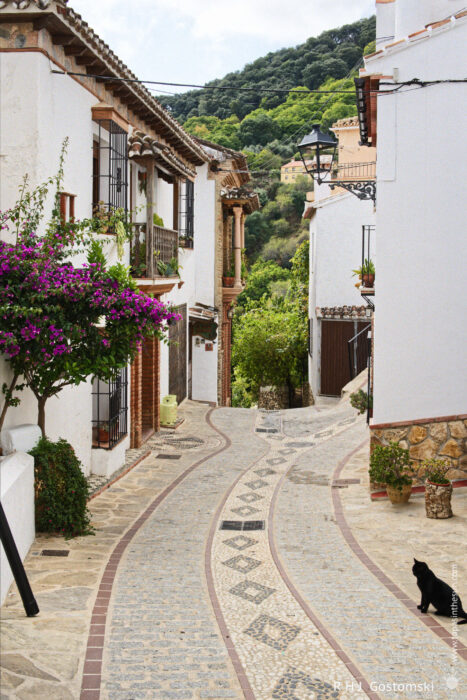
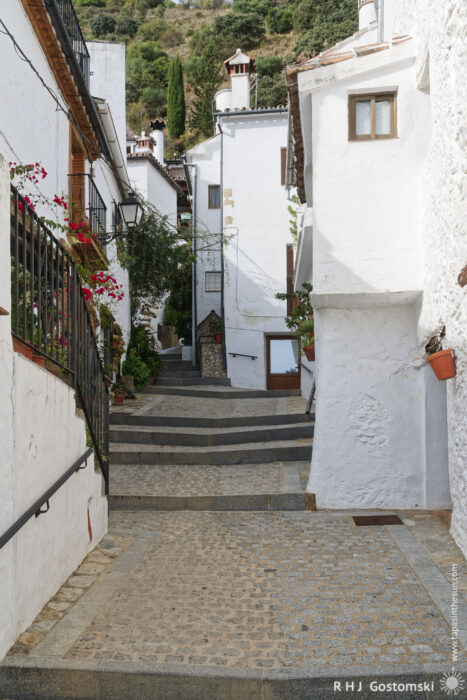
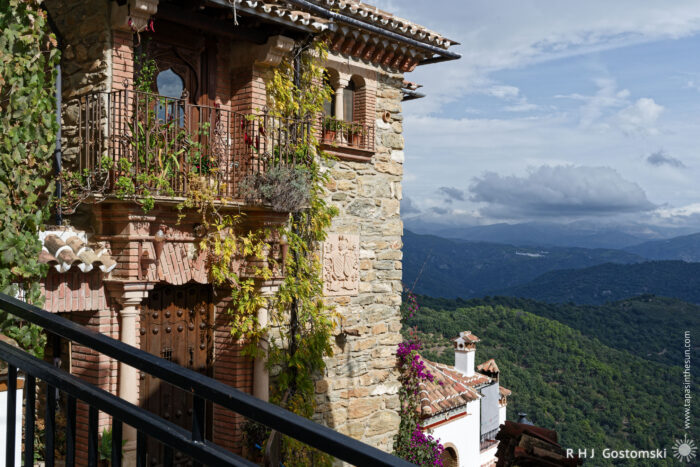
The village is built steeply into a mountainside, with narrow, winding streets that adapt closely to the natural slope rather than following a grid. This irregular layout comes from its Andalusí (Muslim-period) origins, designed for defence, shade, and efficient use of space. Many streets curve sharply or end in small terraces, creating sudden viewpoints over the Genal Valley.
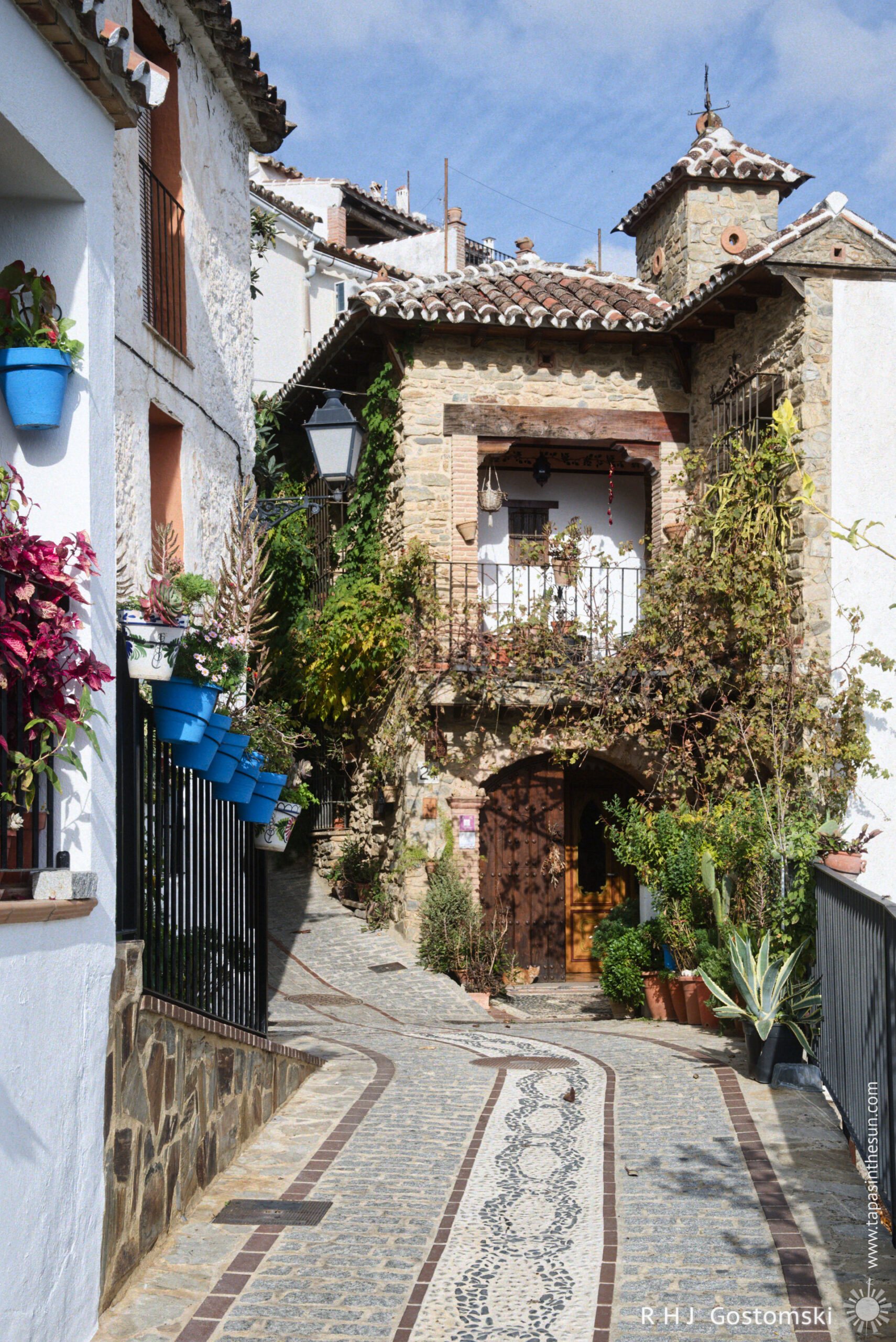
Due to the steep hillside, houses are often stacked and interconnected, with entrances at different levels depending on the street. Overall, Benalauría feels organic and compact — shaped more by landscape and history than by formal planning.


The Village Square
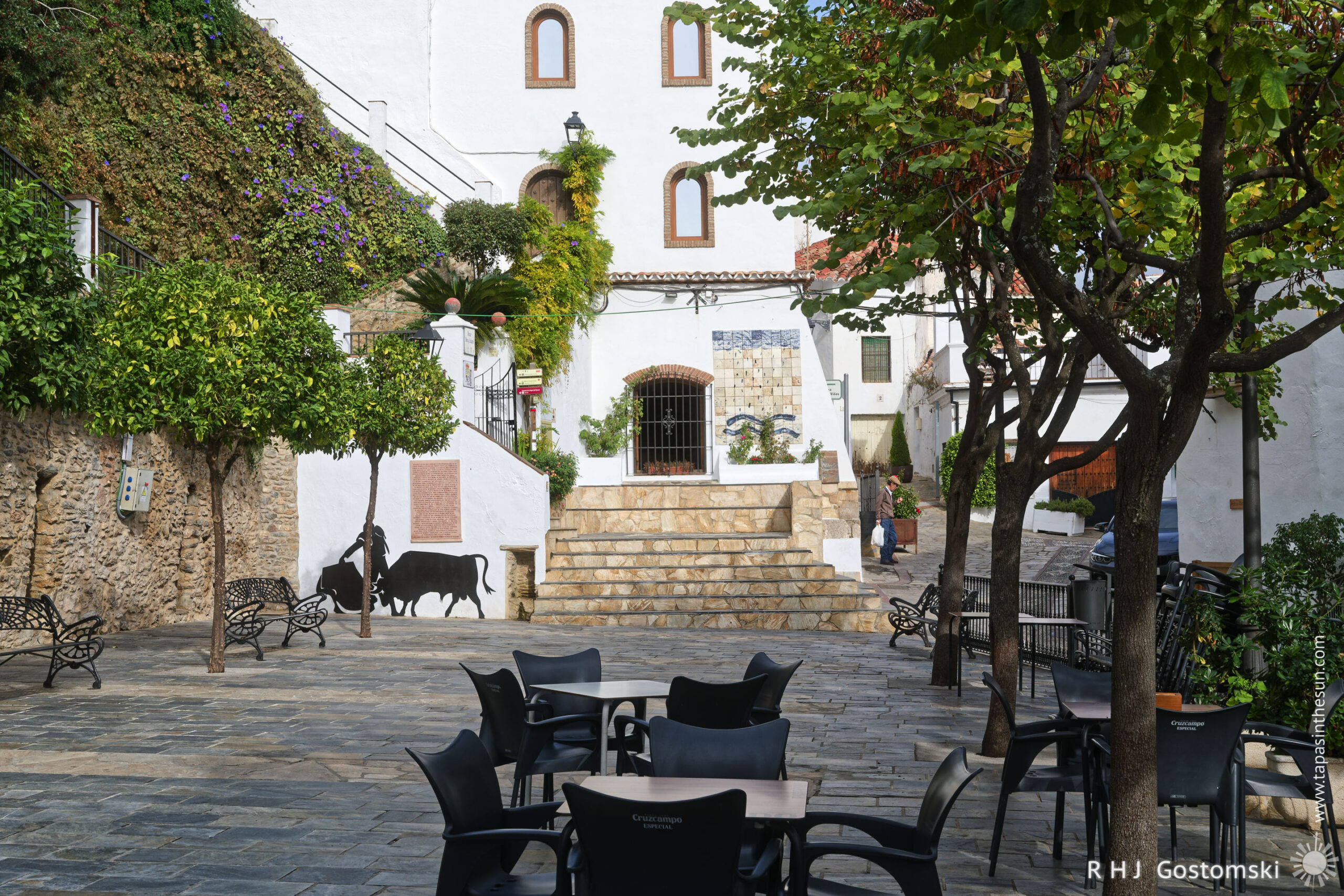
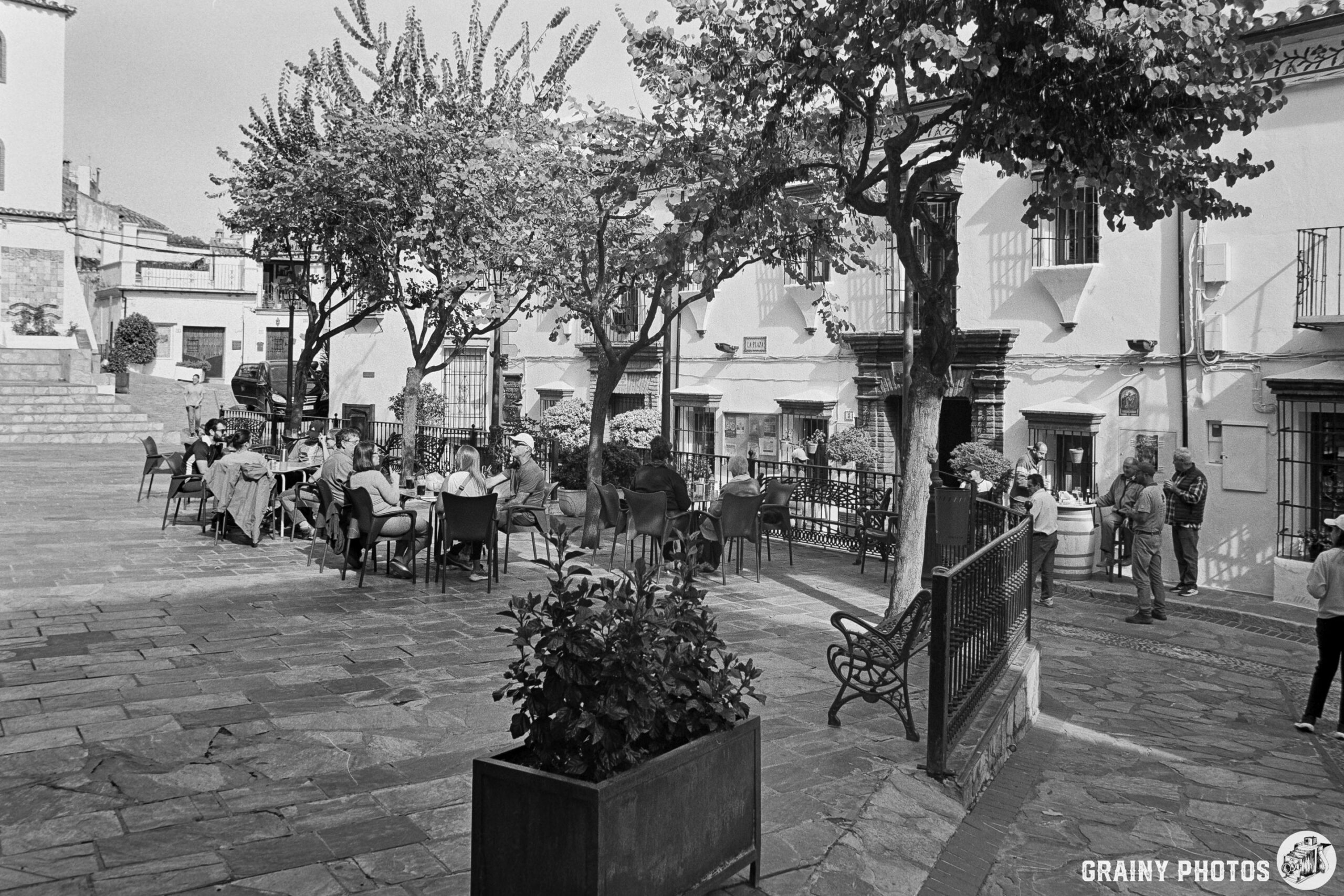
The main square is the heart of Benalauría, acting as the focal point for social life, local administration, and cultural activity within the village. It even served as a bullring in the 1800s.
Many of the buildings around the square are 18th-century constructions reflecting the traditional architectural style, and now house the Town Hall (Ayuntamiento), the tourism office, a local interpretation centre about the Moros y Cristianos festival, and a bar.

Today, the plaza remains a place where villagers and visitors gather — whether chatting on benches, starting explorations of the town from there, enjoying a drink in the bar or filling water bottles at the Fuente Grande (fountain) located right in the square.

The Fuente Grande
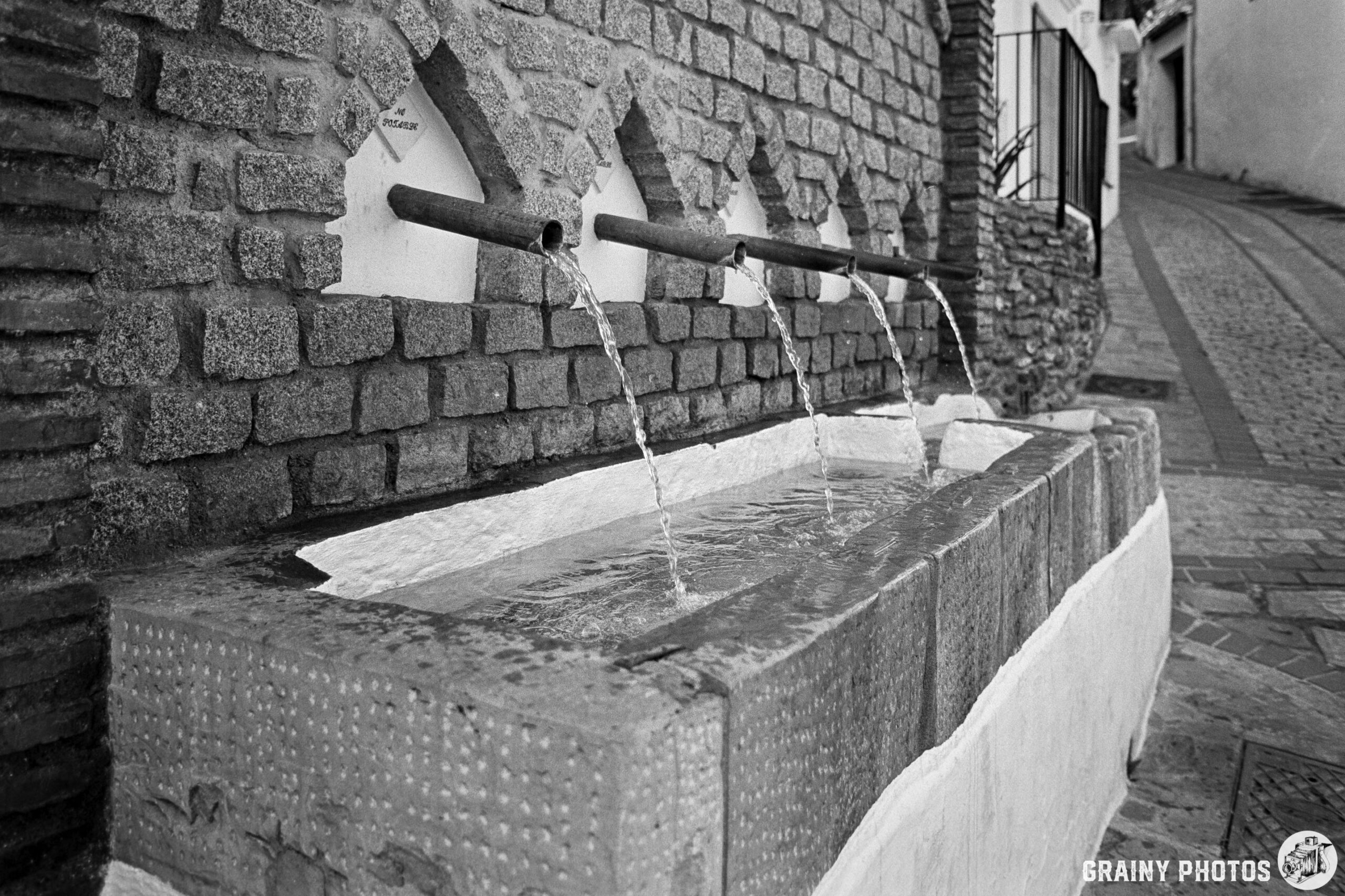
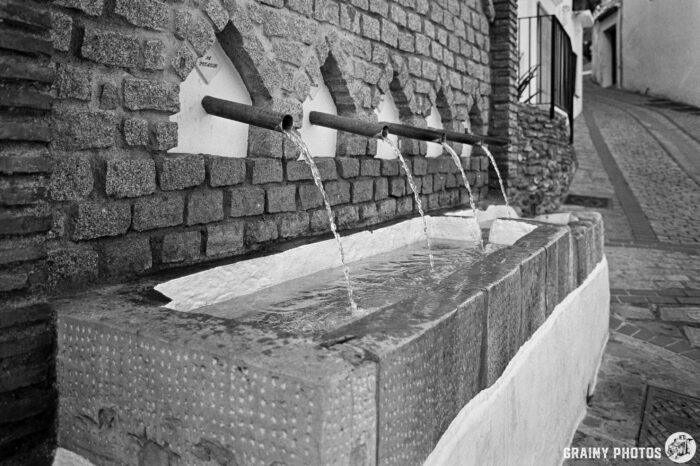
The Fuente Grande in Benalauría functioned historically as both a fountain (fuente) for people and an abrevadero (watering place) for animals. These two parts originally sat side by side, with separate stone basins—one used by villagers for water and the other for livestock.
Today, the fountain includes five spouts (caños) and a large stone trough (pilón).
Iglesia de Santo Domingo de Guzmán
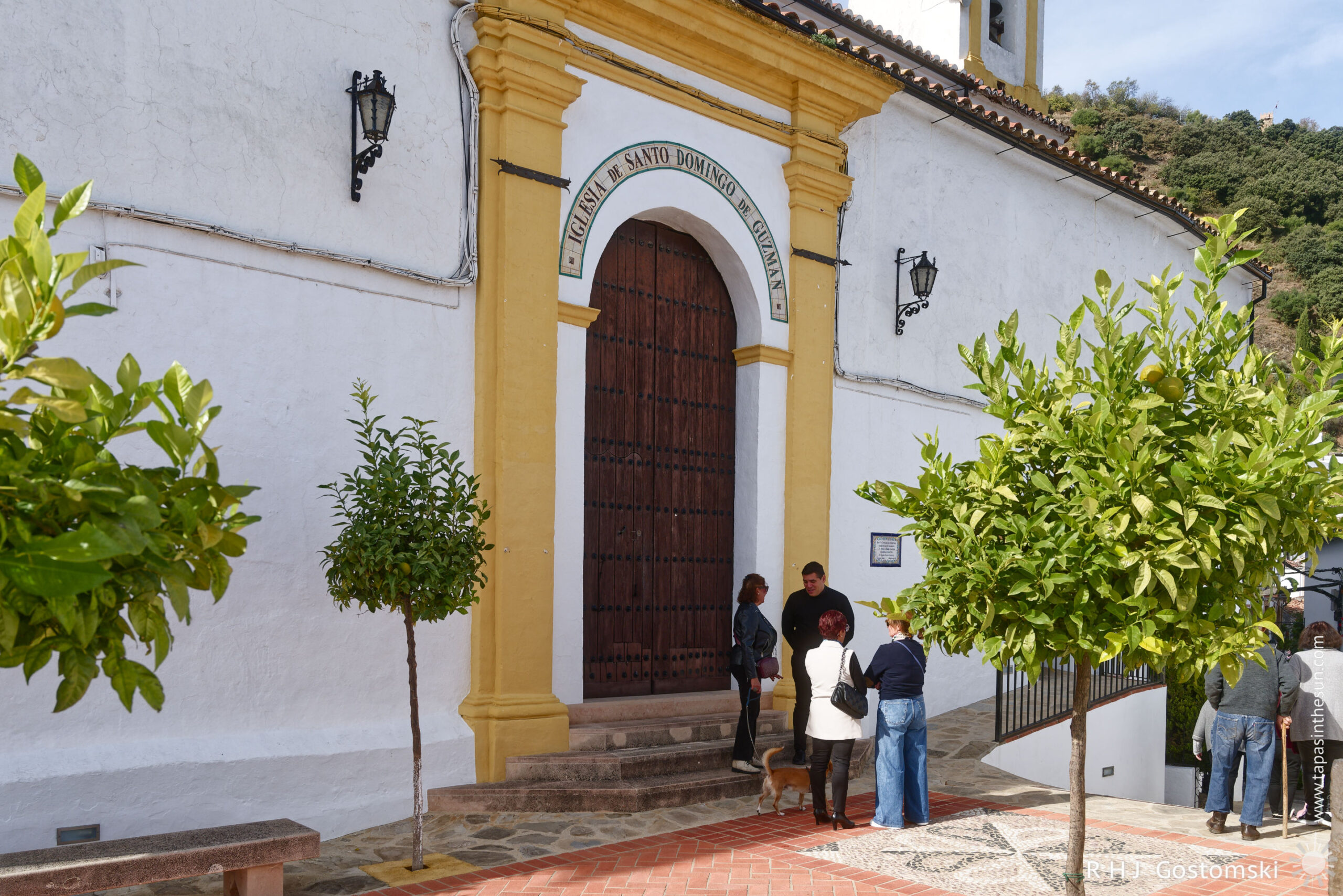
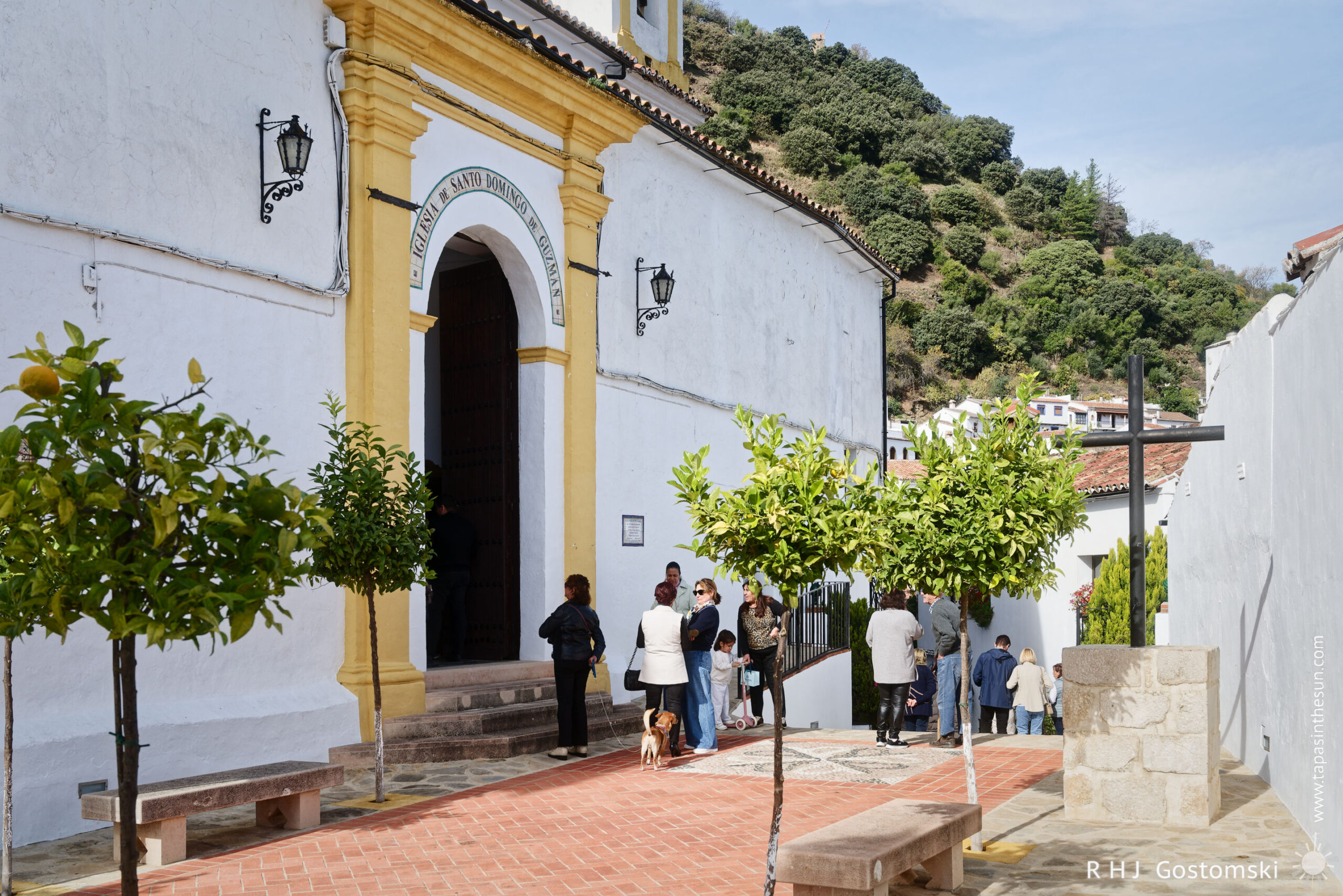
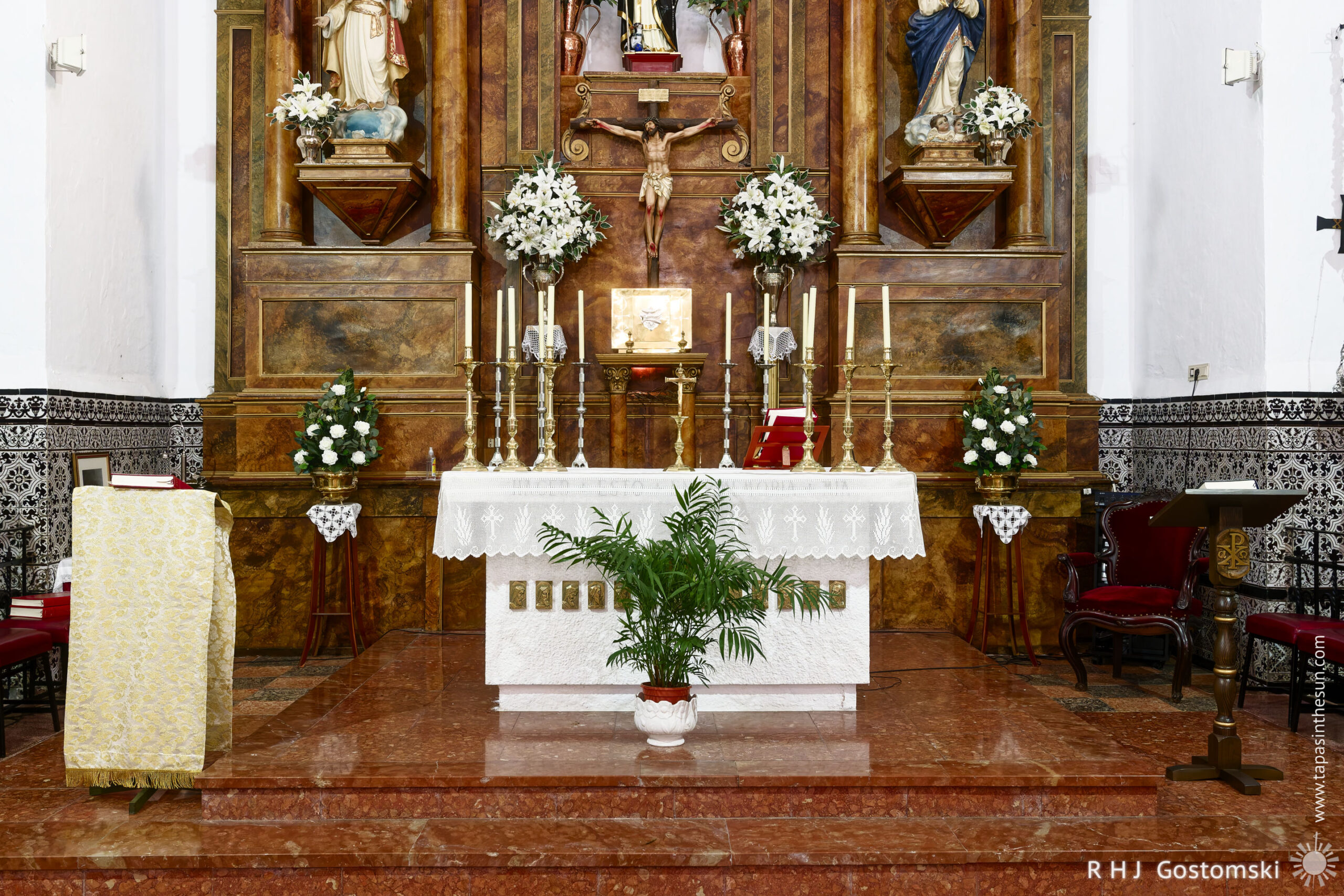
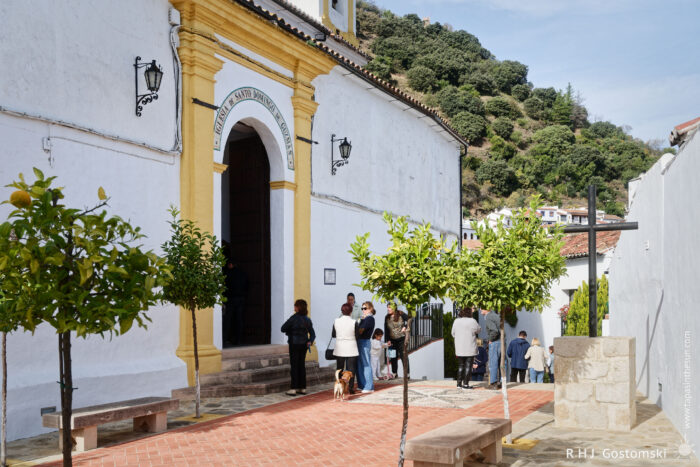
The church is dedicated to Santo Domingo de Guzmán, the patron saint of Benalauría. Its origins date back to shortly after the Christian reconquest of the area in the late 15th century (around 1485), a period when many parish churches were established in former Moorish towns.
For such a small village, this church is architecturally substantial — it can reportedly accommodate around 400 people, which highlights its importance as a community hub throughout history.
Architecture
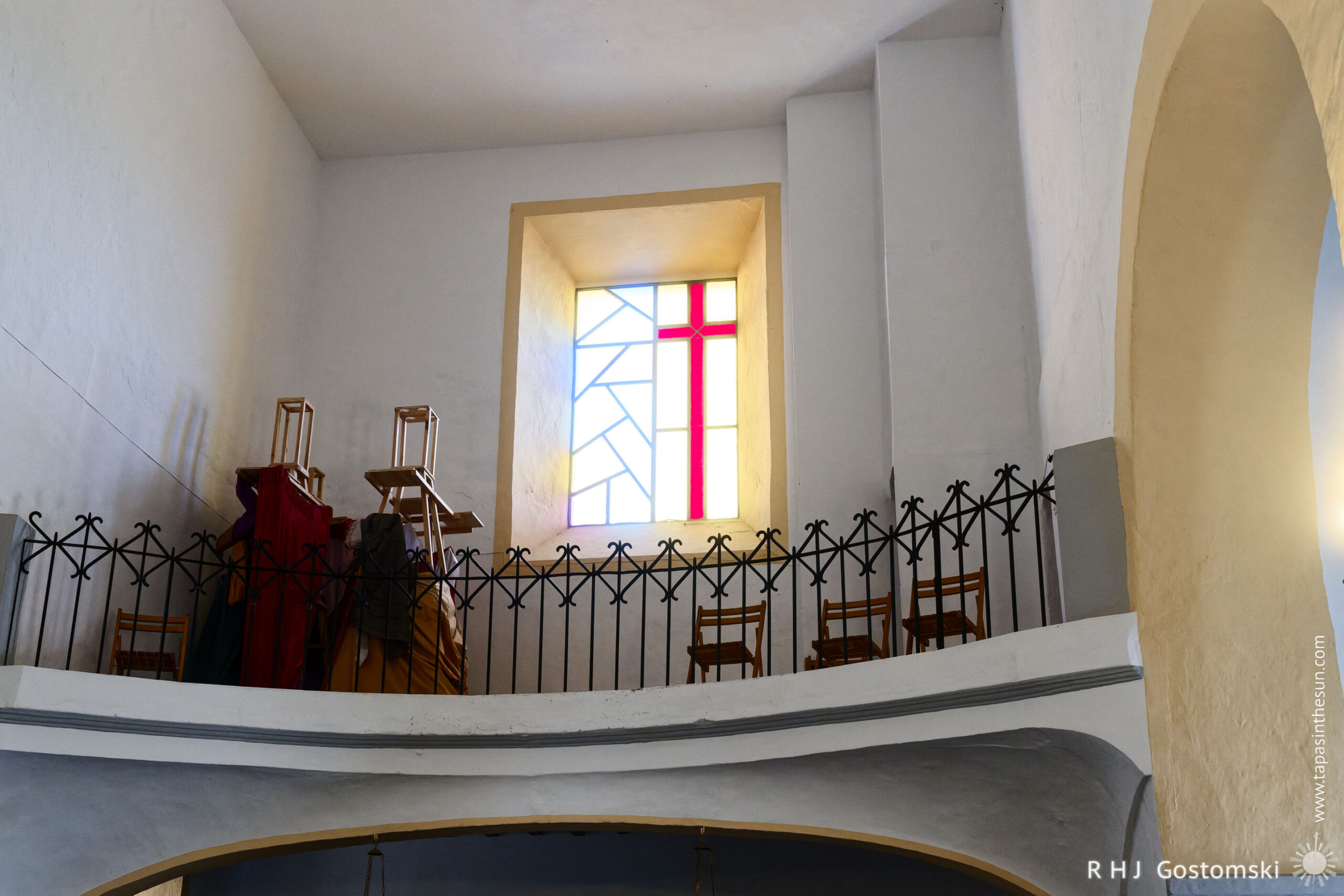
The church is built in a neoclassical style that reflects later rebuilding and renovations, particularly during the 18th and 19th centuries, when many rural Spanish parish churches were expanded or refurbished.
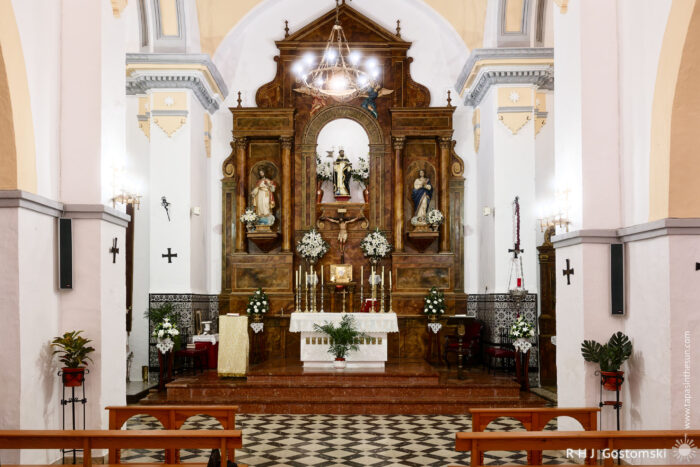
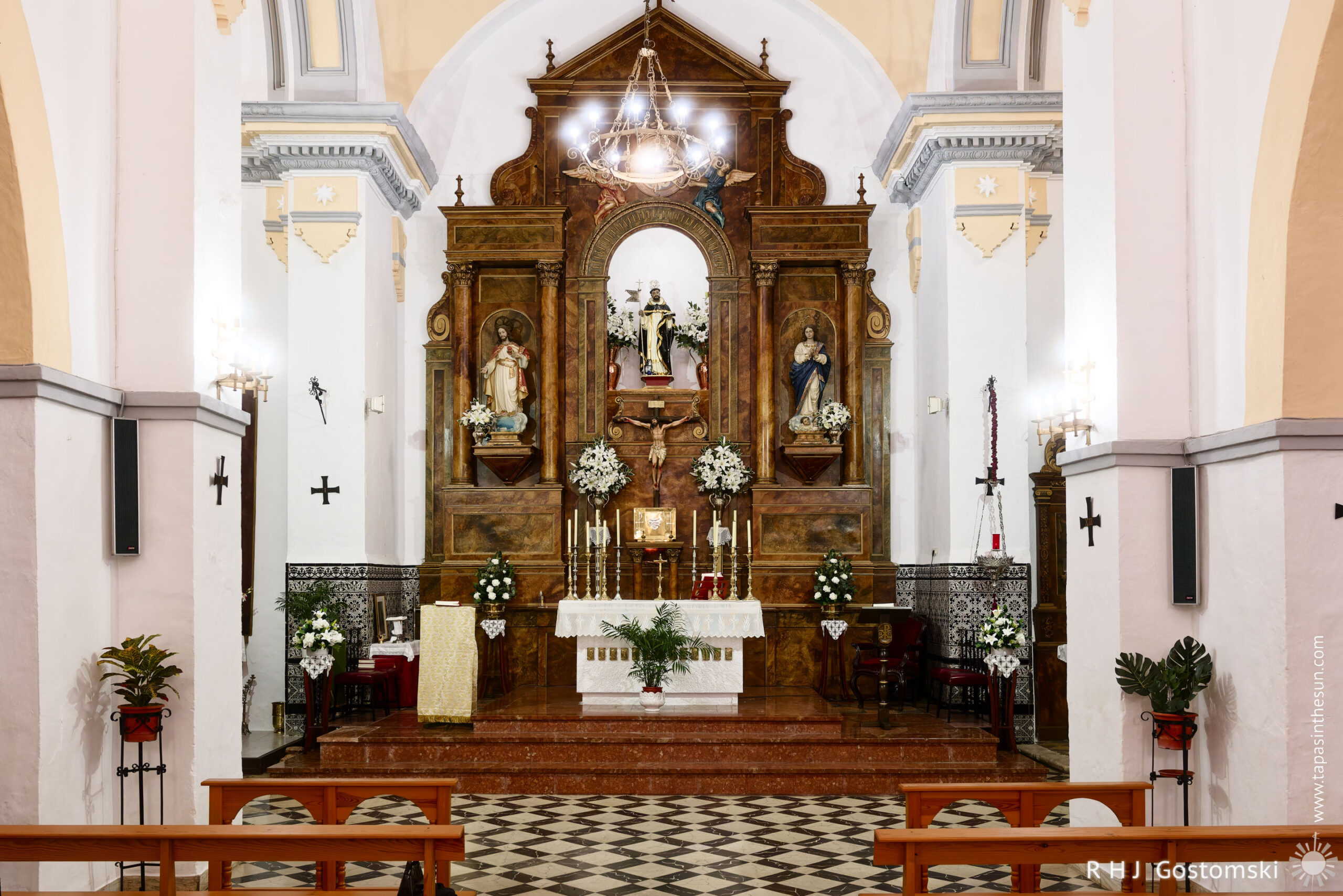
It has a basilica-style plan with three naves and a distinctive central dome (“cúpula de media naranja”) separating the main nave from the apse area. The main retablo (altarpiece) is divided into three niches that house important religious images, including those of Santo Domingo, the Sagrado Corazón, and the Inmaculada Concepción.

Historic Art
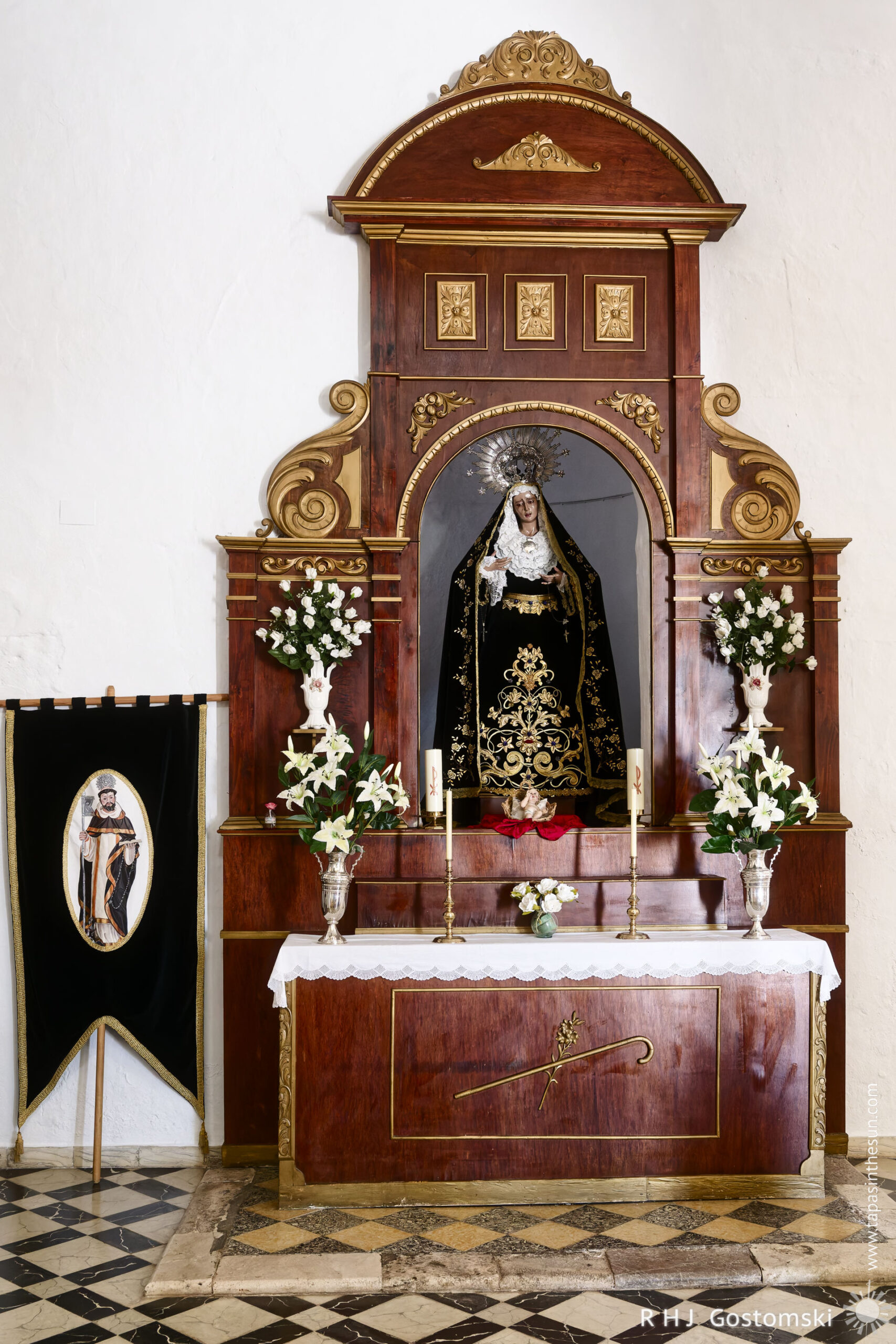
One of the most significant pieces of art inside the church is the image of the Virgen del Rosario, the patroness of the town, which is celebrated with a romería (pilgrimage/celebration) in October each year. This image is historically important because it was saved from destruction during the Spanish Civil War by determined local villagers.
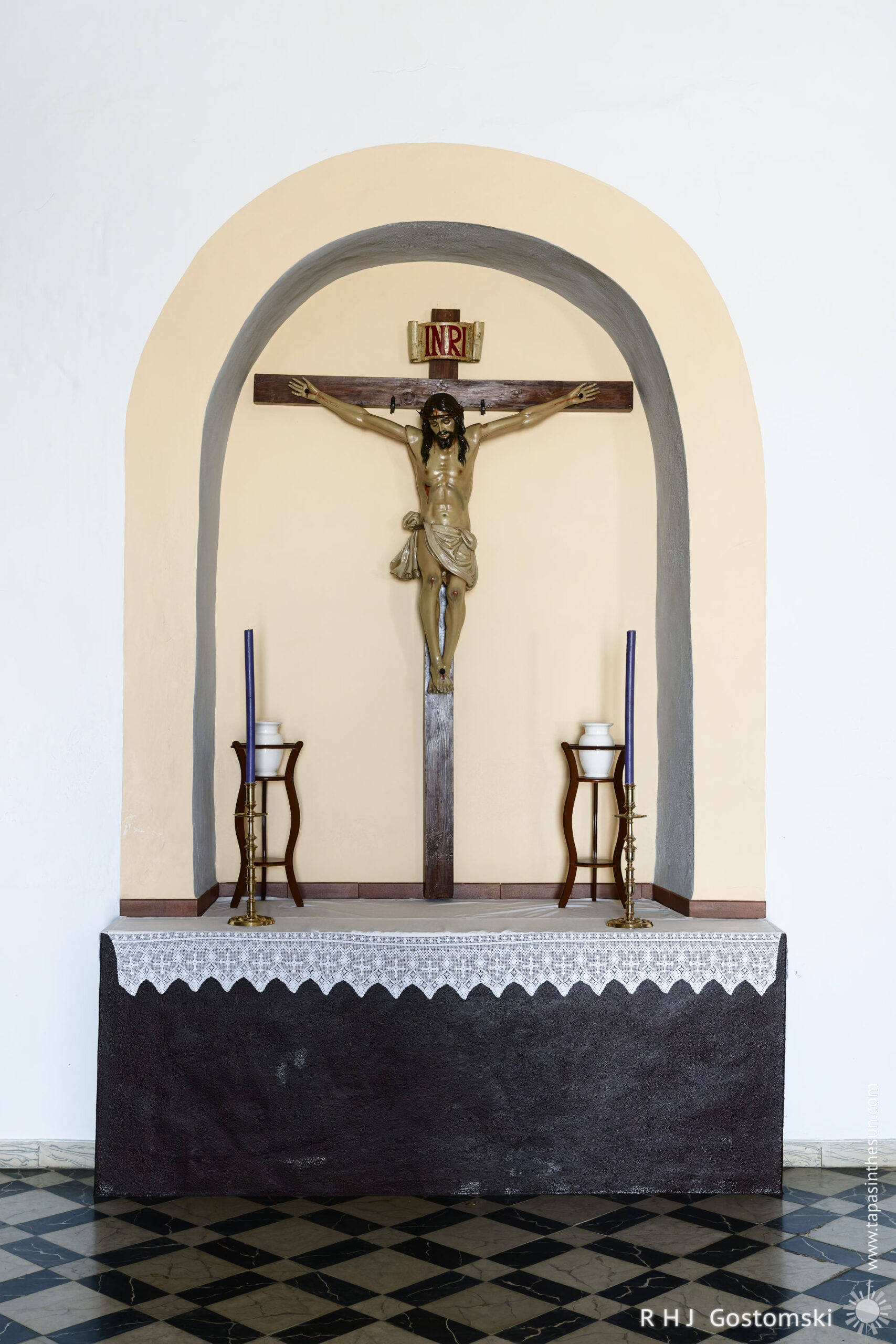
The church also houses images of other important figures — such as Padre Jesús Nazareno, San Juan, la Virgen de los Dolores, María Auxiliadora, and a unique crucifix whose arms are movable for Holy Week ceremonies.
Cementerio Municipal de Benalauría
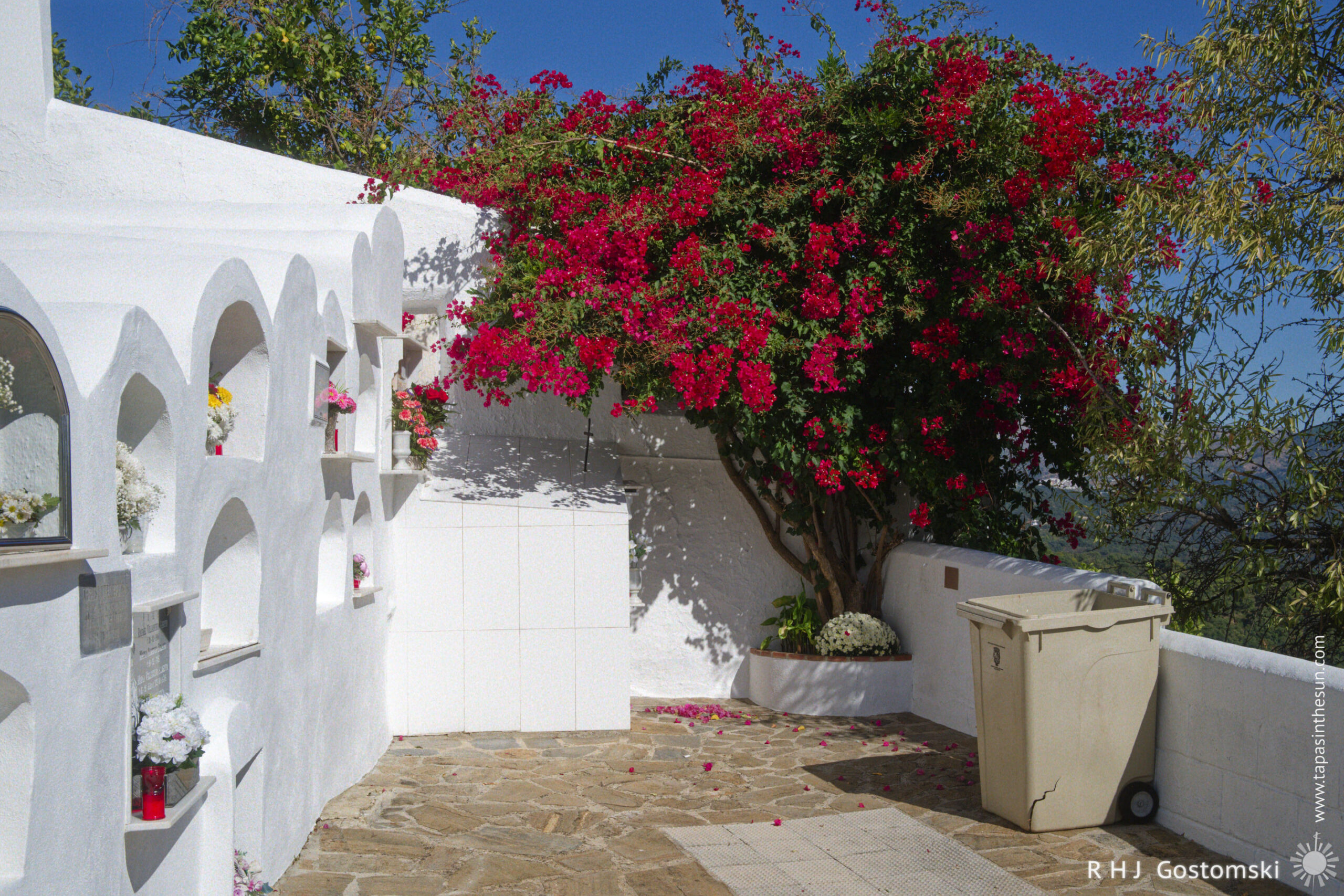
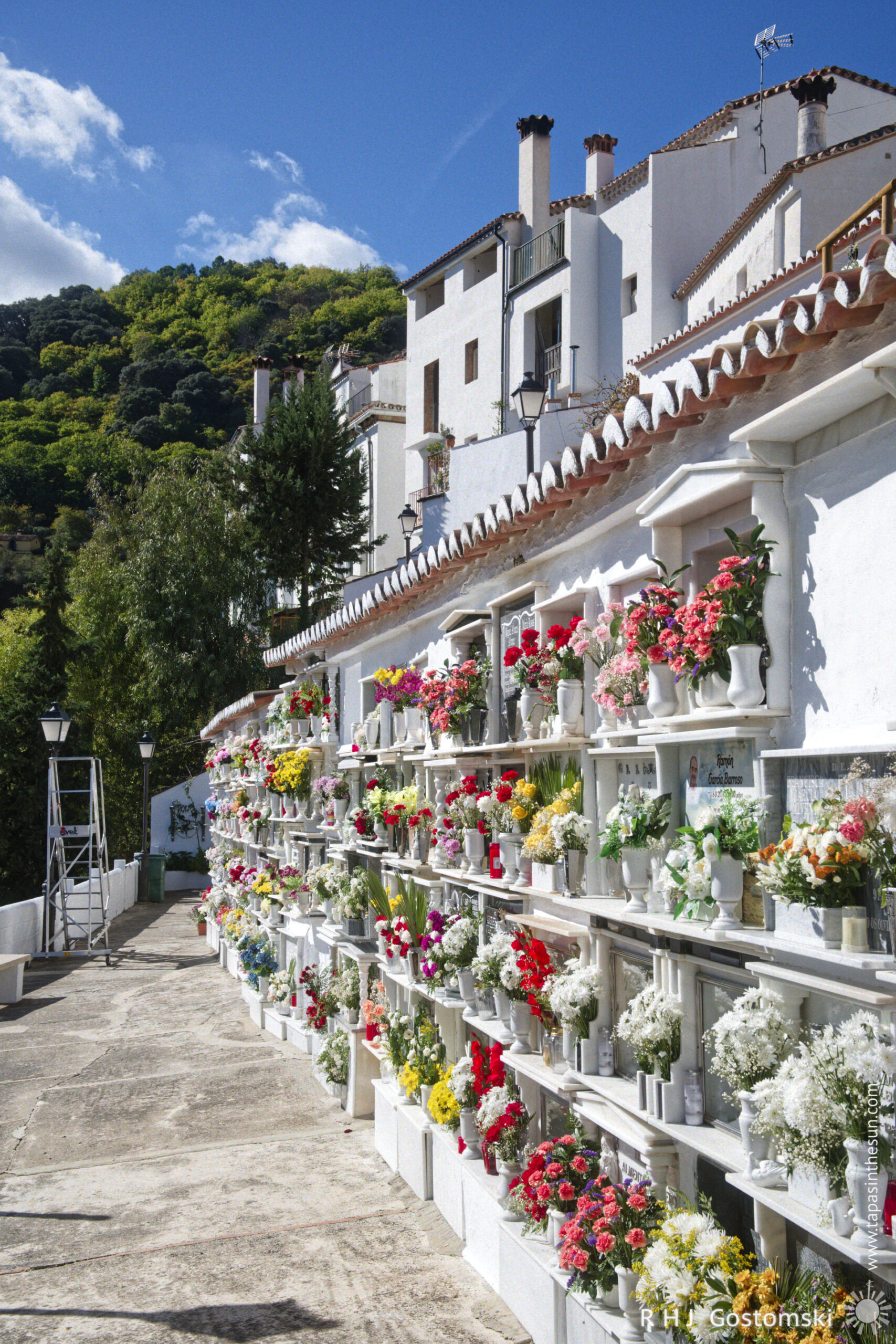
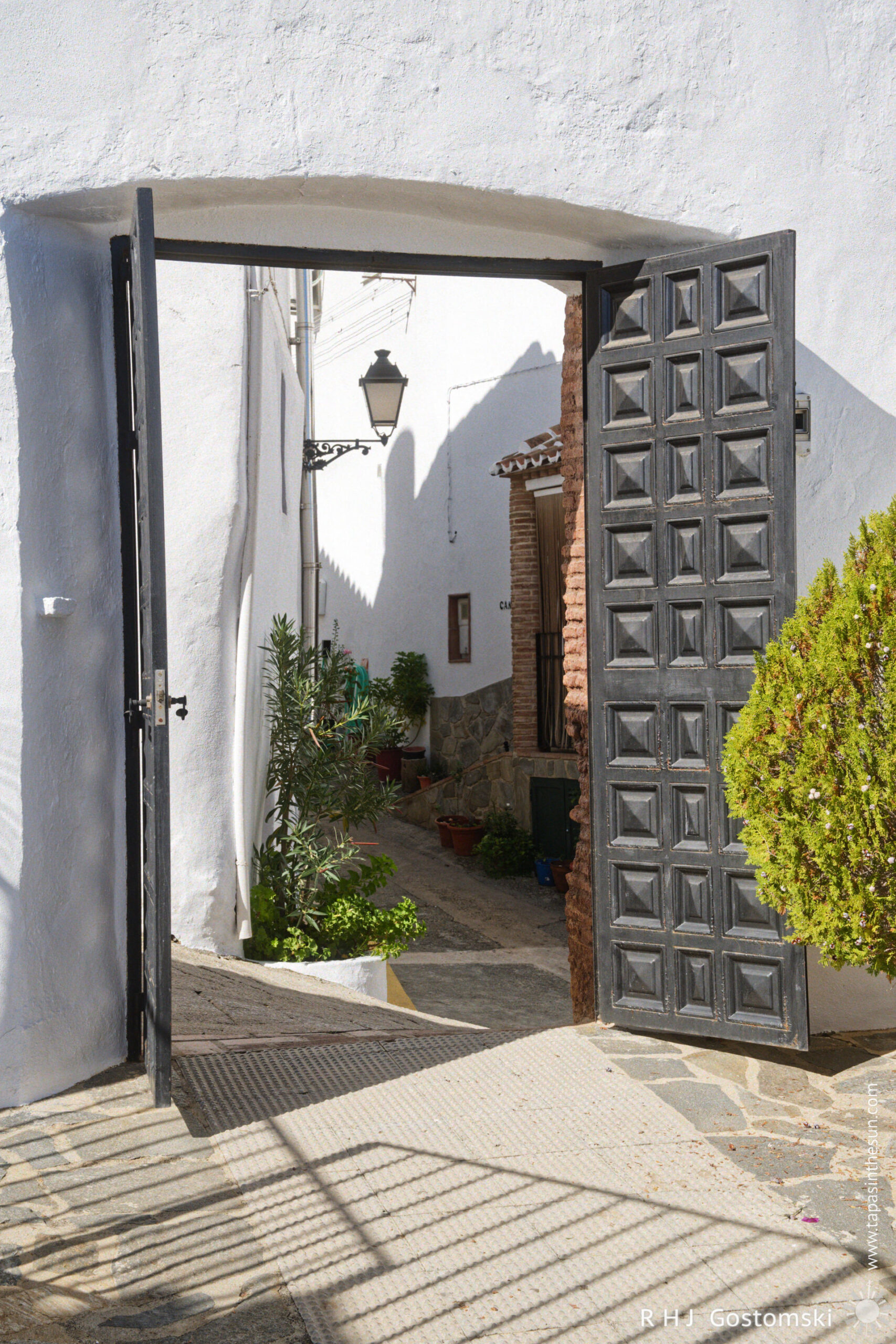
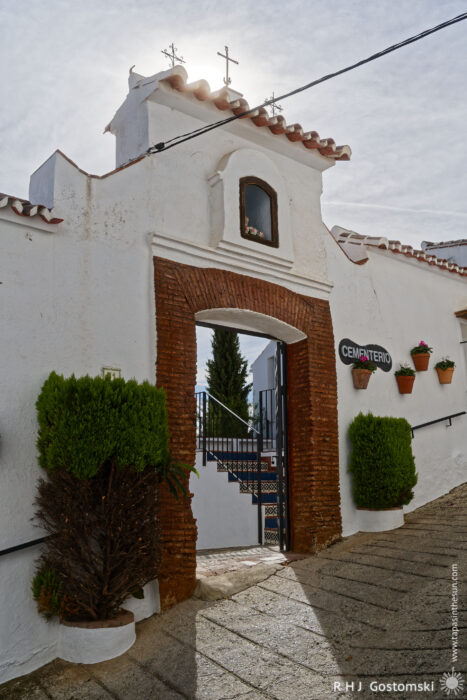
The Cemetery is situated on a sloping hillside, necessitating the arrangement of graves and niches in terraced levels connected by ramps. This architectural adaptation reflects the steep and narrow terrain available. Many of the burial niches are constructed into blocks of three or four levels, whitewashed, and topped with tiles, a common feature in rural Andalusian cemeteries. The oldest graves are located on the left side of the graveyard and adhere to local traditions for niche placement.

The Torreón Virgen del Rosario
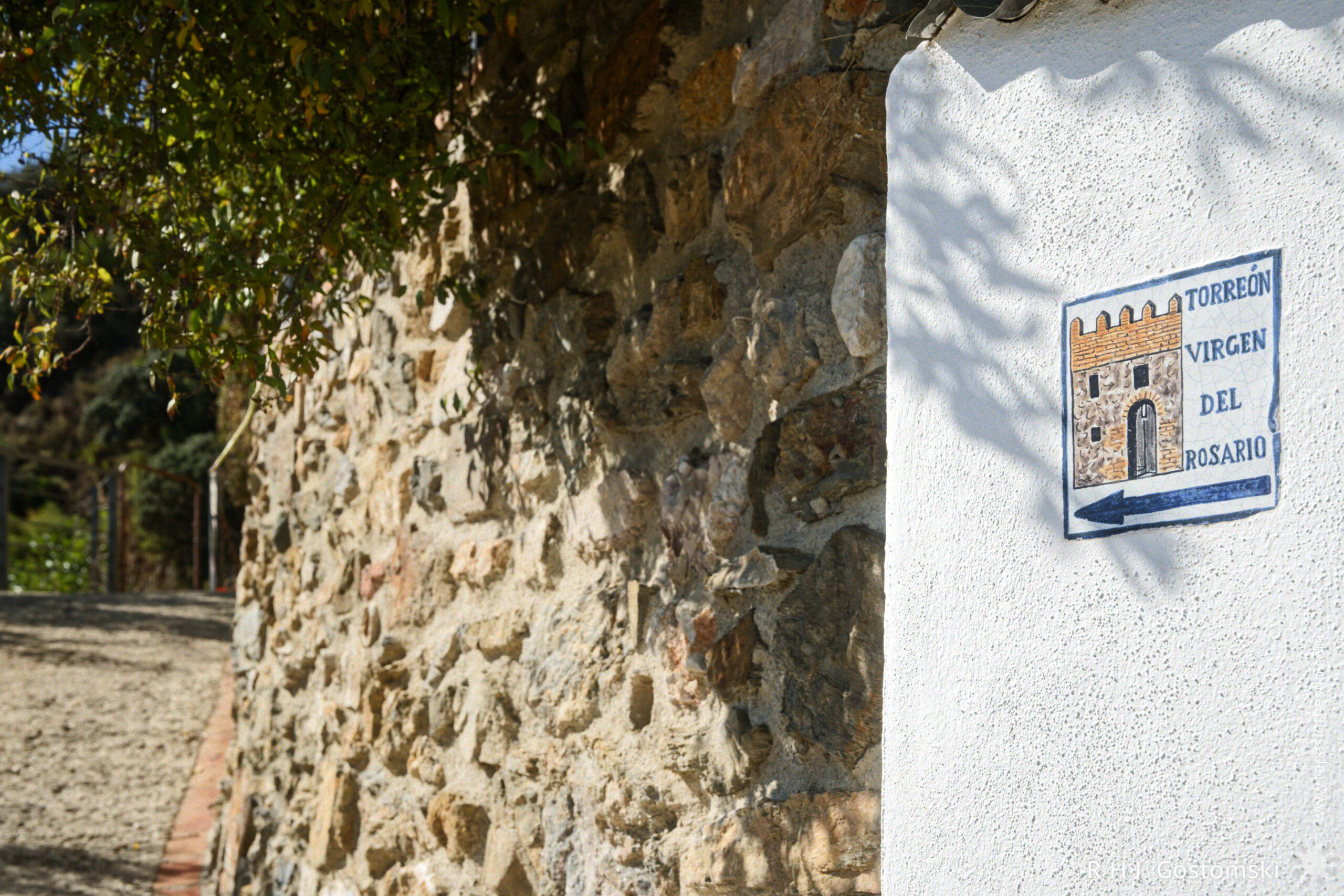
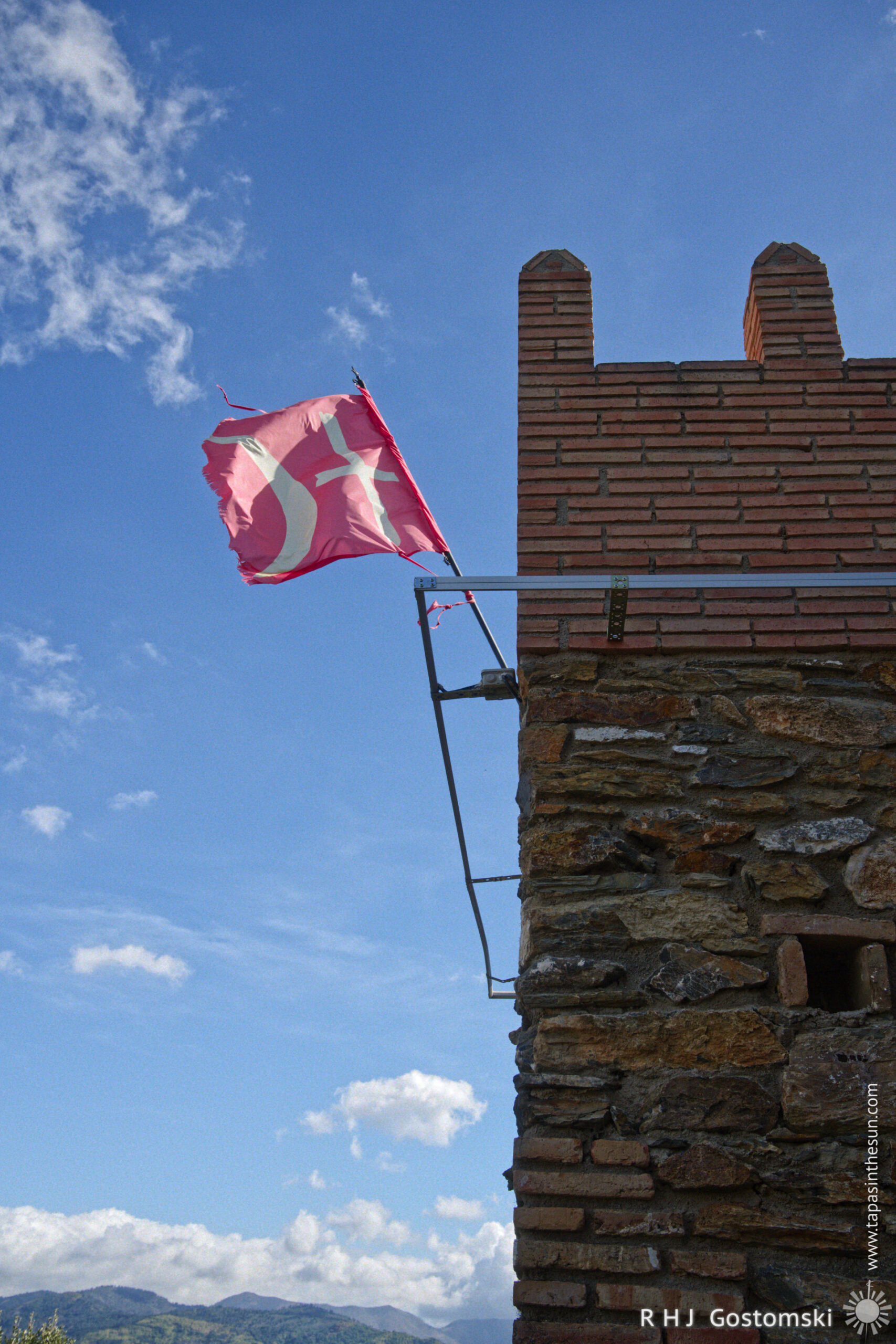
Perched above the village of Benalauría, the Torreón Virgen del Rosario is a small but striking historic watchtower. Its origin likely stems from the ancient Roman road that connected Carteia (San Roque) with Acinipo and Arunda (Ronda). The tower underwent restoration in 2016 by the municipality.
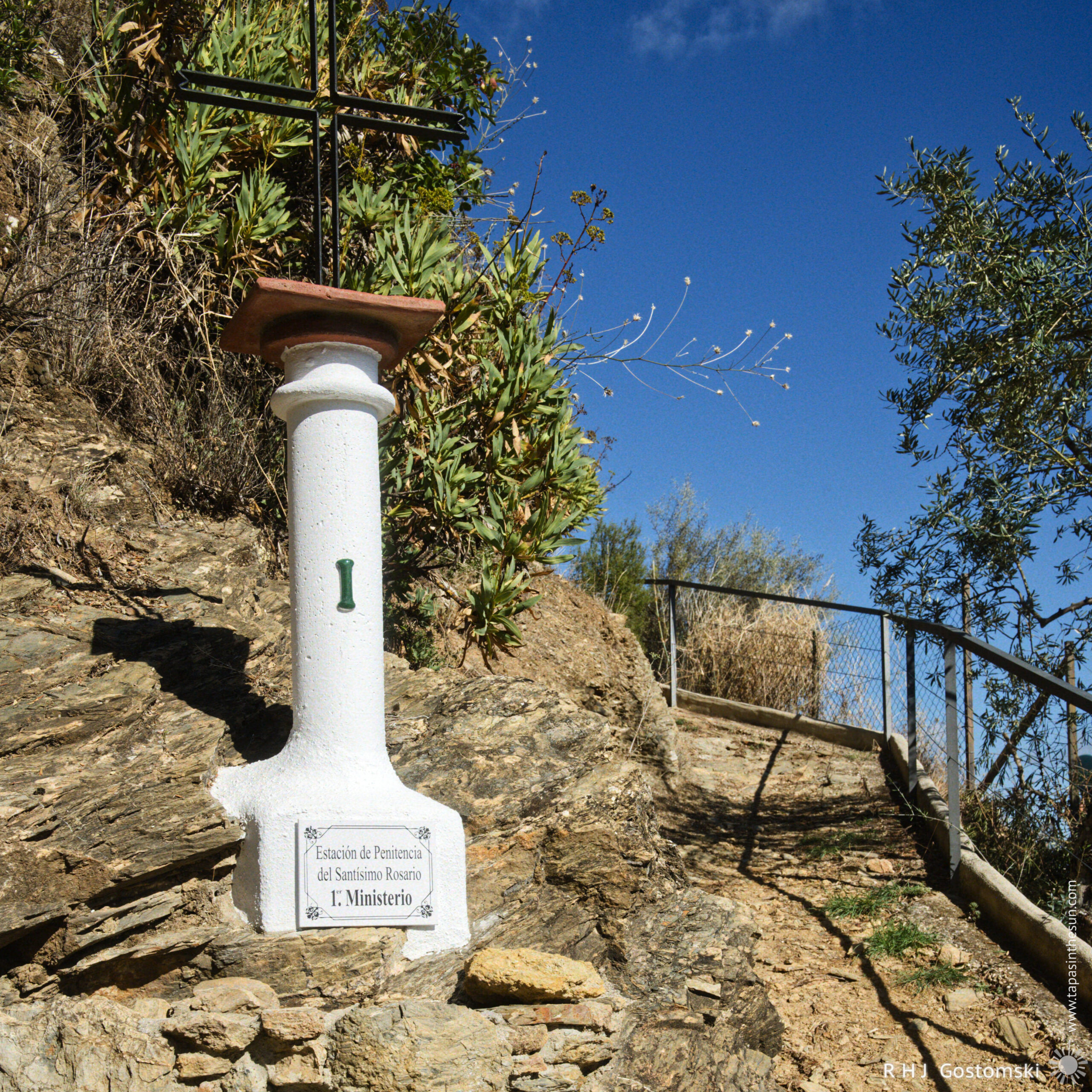
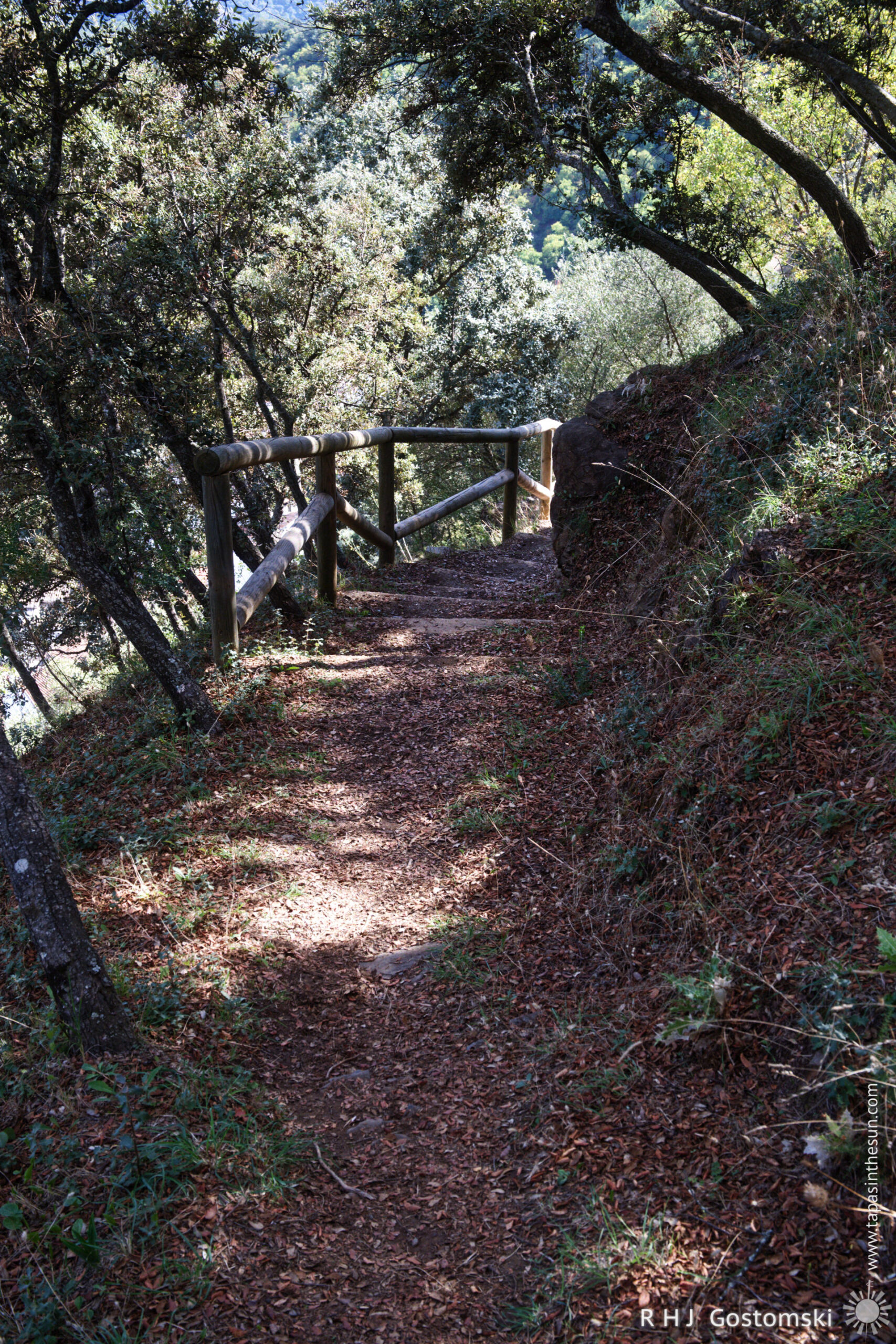
The tower offers sweeping panoramic views of Benalauría, the Genal Valley, and the surrounding mountains. Five stone markers along the path represent the Mysteries of the Rosary, adding a devotional element to the climb.
In recent years, a small image of the Virgen del Rosario, the patroness of Benalauría, has been placed in a shrine near the tower. A biennial celebration, known as the “bajada de la Virgen,” brings the statue down to the village for a procession, mass, and communal festivities before returning her to her place above the town.
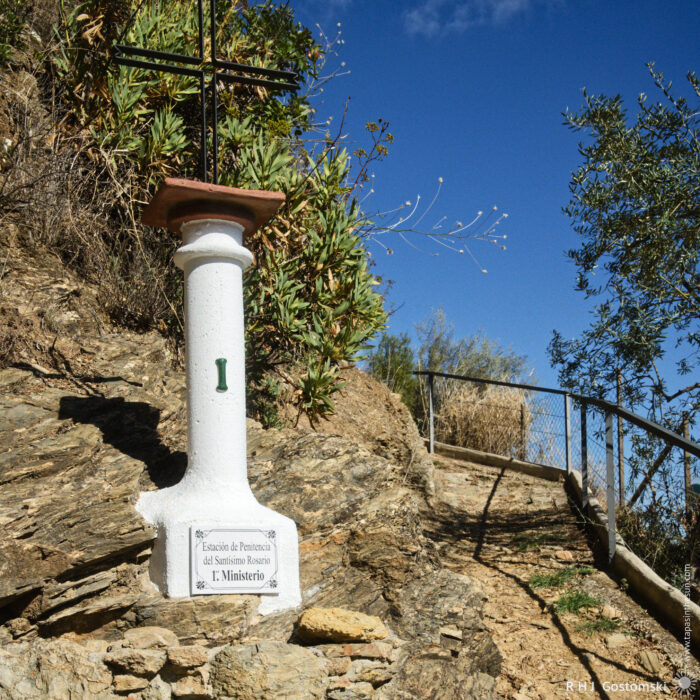
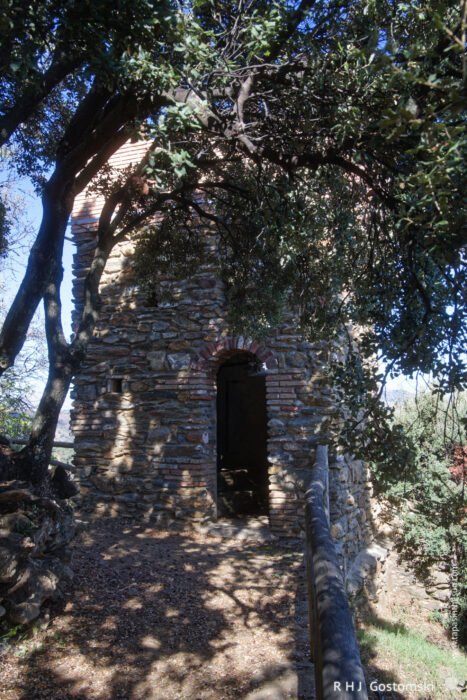


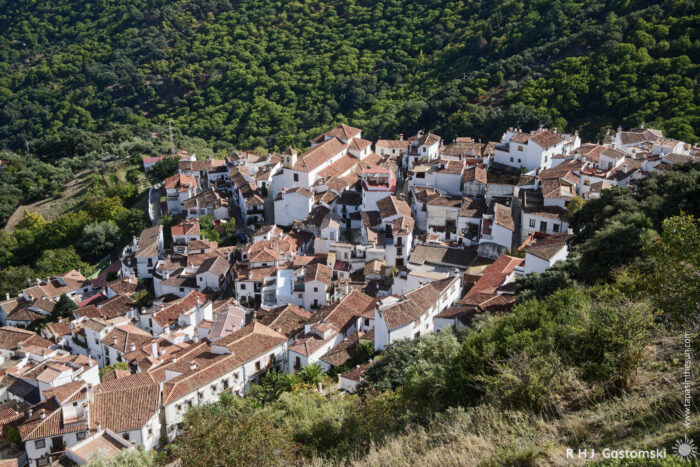
The Torreón Virgen del Rosario’s combination of natural beauty, cultural meaning and striking views makes it well worth seeing when exploring Benalauría, especially for those who enjoy short walks with rewarding vistas and a touch of local tradition.
Festivals and Fiestas in Benelauría
Benalauría has several vibrant and culturally rich festivals and fiestas throughout the year that reflect its history, traditions, and community spirit. The main ones being:
Fiesta de Moros y Cristianos (Festival of Moors and Christians)
When: The first week of August, with the main events on Sunday.
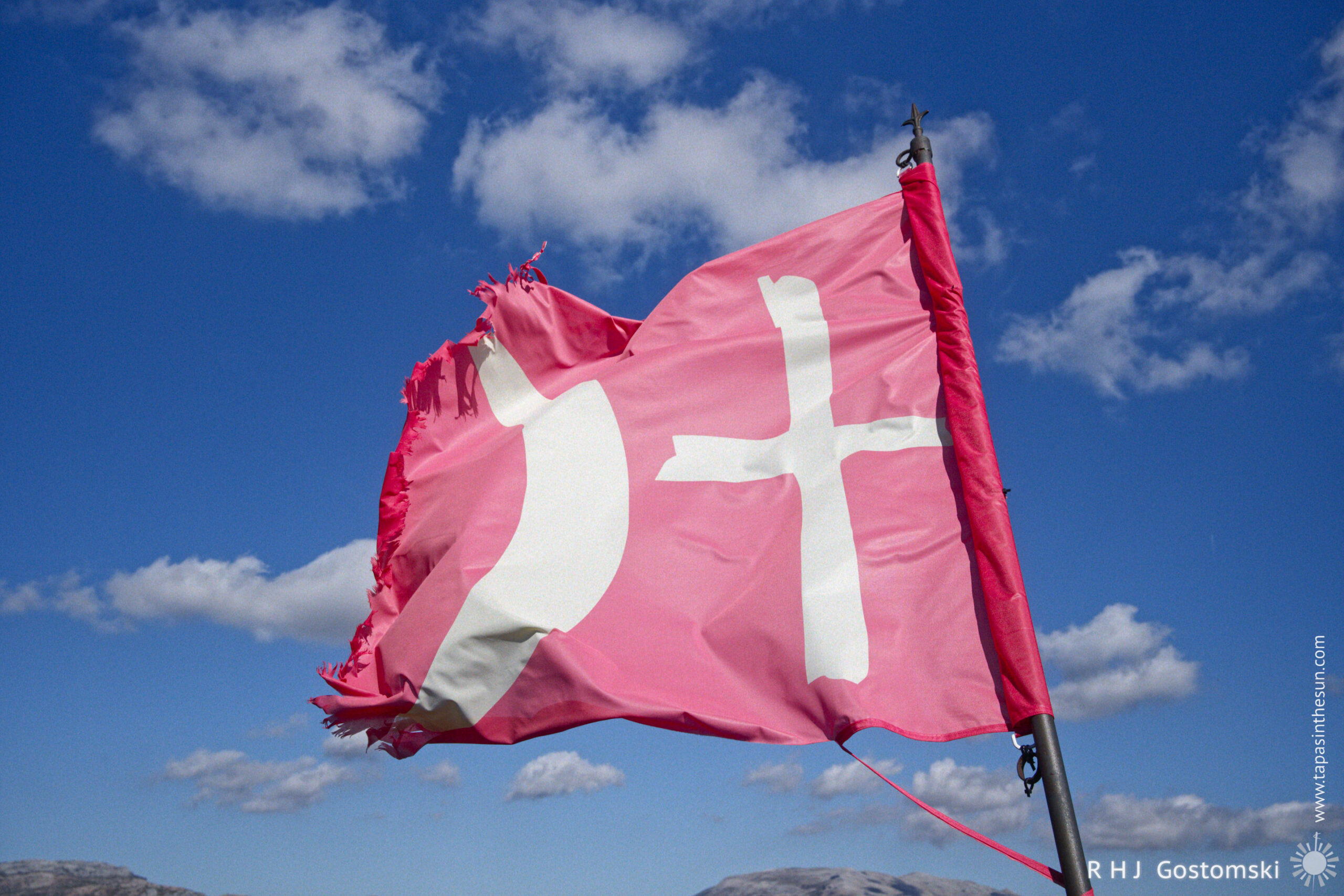
Benalauría’s most important annual festival, honouring its patron saint, Santo Domingo de Guzmán, features a fair, music, parades, and the theatrical performance of Moors and Christians. Villagers dress in 15th-century costumes to recreate scenes from the Mudejar rebellion, including the “captiverio” and the “rescate” of the patron saint.
This festival is declared of Tourist Interest of Andalusia and Provincial Singularity due to its rich tradition and cultural appeal.
Romería y Celebración de la Virgen del Rosario (Pilgrimage and Celebration of the Virgin of the Rosary)
When: October (usually around the first weekend of October).
This holiday honours the Virgin of the Rosary, also a patron saint of Benalauría.
The Virgin of the Rosary fiesta in Benalauría includes a mass, procession through the village, and the image of the Virgen del Rosario taken to rural areas. The day ends with music, ribbon races on horseback, and a party in the square well into the night.
Fiesta de la Castaña (Chestnut Festival)
When: 1st of November (All Saints Day).
Benalauría’s unique celebration of the festival involves toasting and eating chestnuts, often with anise, in the square or streets. It’s a popular occasion for sharing traditions, music, and community gatherings.
Feria de Artesanía y Gastronomía (Craft and Gastronomy Fair)
When: 6-8 December.
The fair showcases local craftsmanship and products from the Serranía de Ronda, featuring workshops, live cooking, tastings, exhibitions, and entertainment.
Romería de Siete Pilas (Pilgrimage to the Seven Troughs)
When: May (date varies) – this pilgrimage is shared with neighbouring villages.
The Romería de Siete Pilas is a springtime pilgrimage and countryside fiesta where people from Benalauría and surrounding villages walk to a historic spring in a festive atmosphere. Family and friends enjoy music, singing, traditional food and wine.
Bajada de la Virgen (The Descent of the Virgin)
When: A biannual event, usually in May
This is a biennial celebration in which the small image of the Virgin is brought down from its shrine near the Torreón to the village church and plaza, accompanied by processions, a Mass, music and community festivities.
Benelauría Today
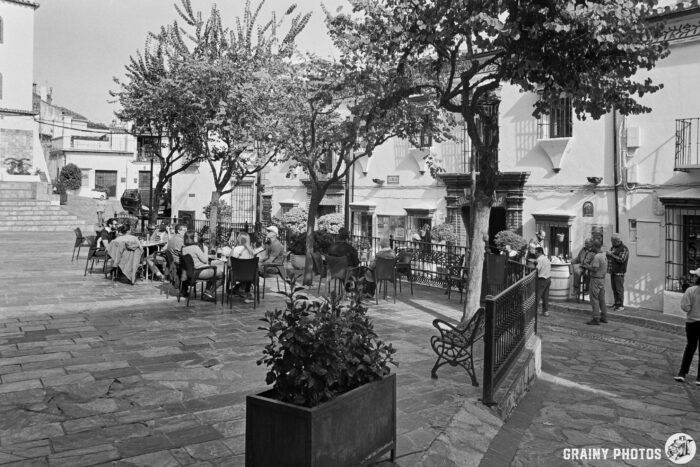
Today, Benalauría is part of a network of rural villages that attract visitors looking for hiking, nature, and traditional Andalusian culture rather than busy tourism. Local festivals, seasonal harvests, and a strong sense of community continue to define life there, giving the town a timeless, unhurried character.
About the Photos
I took all the photos over several days. Colour photos were taken with a Nikon Zf digital camera.
The black-and-white photos were taken with a vintage Nikon FE film camera using Kentmere 100 film. I developed the film using Spur Acurol-N Developer. I then digitised the negatives using a Nikon Zf mirrorless digital camera with a Tokina AT-X Pro Macro 100mm f2.8 D lens and processed them using DXO Photolab 8 software.