


Antequera
Antequera offers so much, including the Alcazaba of Antequera, the Collegiate Church, beautiful parks and gardens, stunning viewpoints of the city, and even some old Roman baths that are still being unearthed. No less than three cultures – Arab, Christian and Roman – in a single place.
Located 45 km from Malaga and 115 from Córdoba, Antequera has an architectural heritage comprising more than fifty religious and civil buildings and numerous archaeological sites. In fact, Antequera has the largest number of churches per inhabitant in all of Spain.
A walk around the town immerses you in a glorious history with palaces, churches and convents of various styles representing different periods of history. There is also a Muslim fortress, El Alcazaba, and a prehistoric complex declared a World Heritage Site.
A short distance away is El Torcal—a fantastic landscape of Karst Limestone, arguably the best example in Europe. I highly recommend exploring that on another day – see my photos in my post about El Torcal de Antequera.
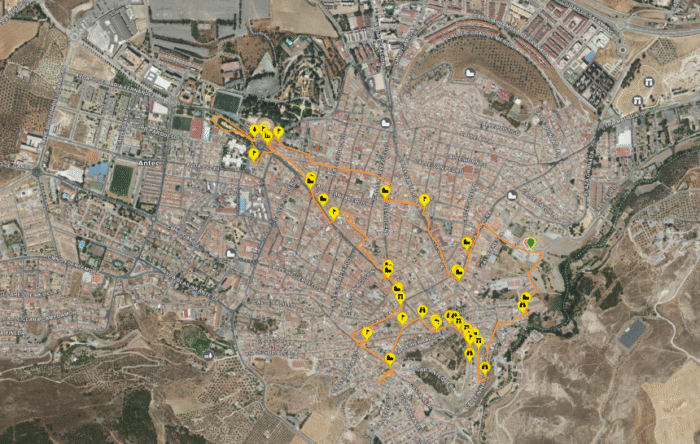
Route around Antequera
I generally followed a route from Wikiloc, which I found very useful. Several are available, such as this one here. It is easy to modify to suit your own needs.
Alcazaba de Antequera
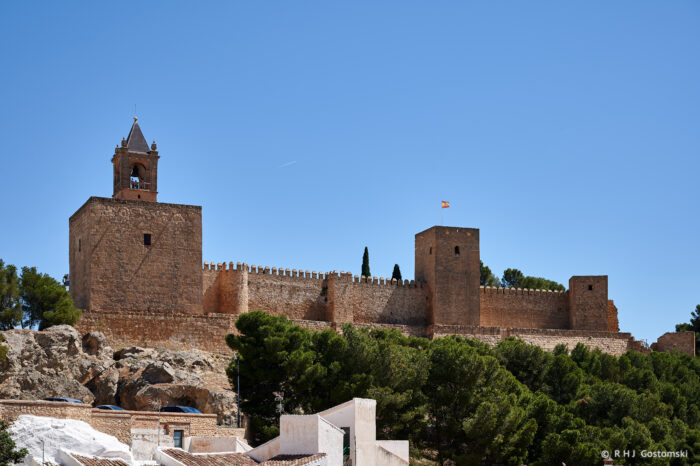
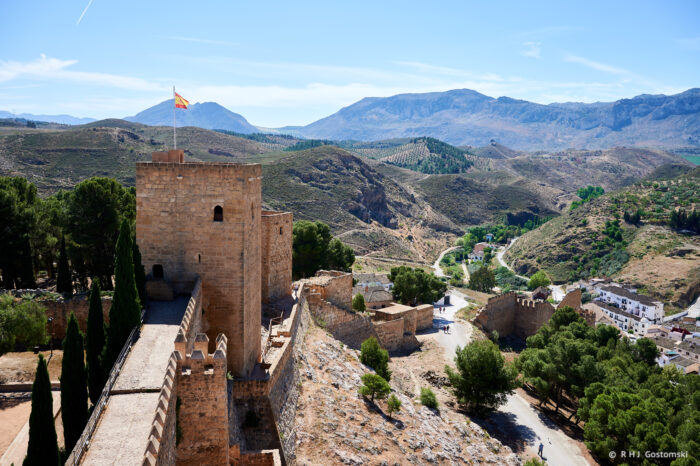
The Alcazaba, a military fortress, is undoubtedly one of Antequera’s crown jewels.
The exact origins are unknown; it is believed that the beginnings of the overall layout of the current Alcazaba date back to the eleventh century. The fortress was built on ruins dating back to Roman times, and many of the original materials from the Roman period were re-used in its construction.
In the fourteenth century, it was rebuilt and strengthened, including the addition of towers and extensions, to protect access to the river below the fortress and resist the Christian advances from the north.
The Alcazaba was declared an Asset of Cultural Interest in 1985.
Real Colegiata de Santa María la Mayor
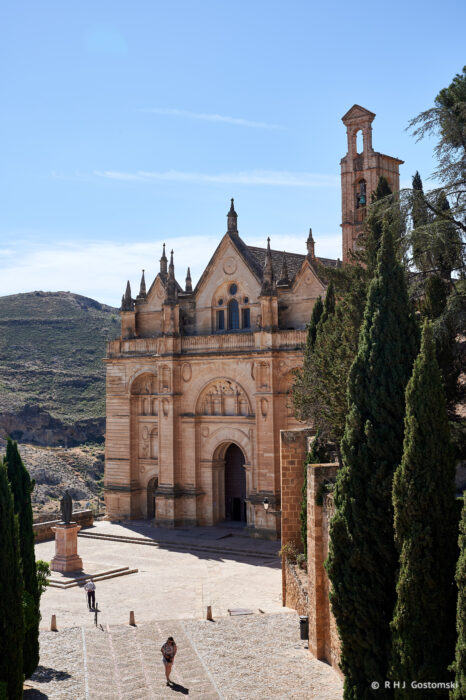
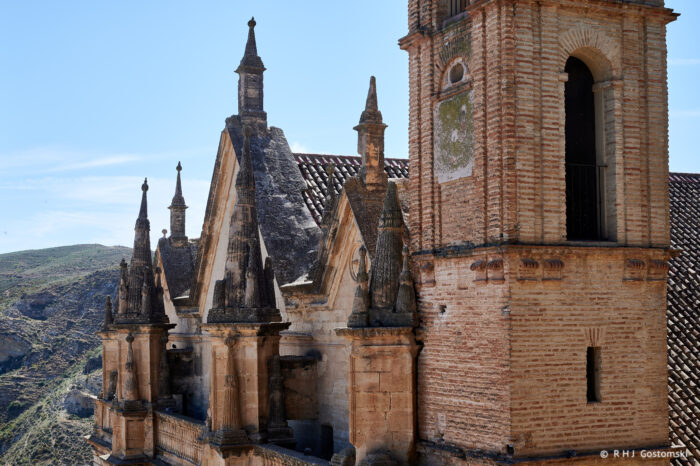
The Royal Collegiate Church of Santa María la Mayor is Antequera’s most interesting religious architectural building. It was built in the 16th century and is considered the first Renaissance building in Andalusia.
The architect was Pedro del Campo. The church is considered the first columnar church built in Andalusia and one of the first in Spain. Its Ionic columns and Mudejar coffered ceilings stand out, as well as the Gothic-Mudéjar vault of the High Altar. The ashlar facade is built with stones from the remains of Singilia Barba.
Other points of interest in Antequera
While the Alcazaba and the Royal Collegiate Church of Santa María la Mayor are undoubtedly Antequera’s gems, there are many other sights worth seeing. These include numerous churches, convents, and palaces from different eras and styles. Here are some of the things that caught my eye.
Arco de los Gigantes
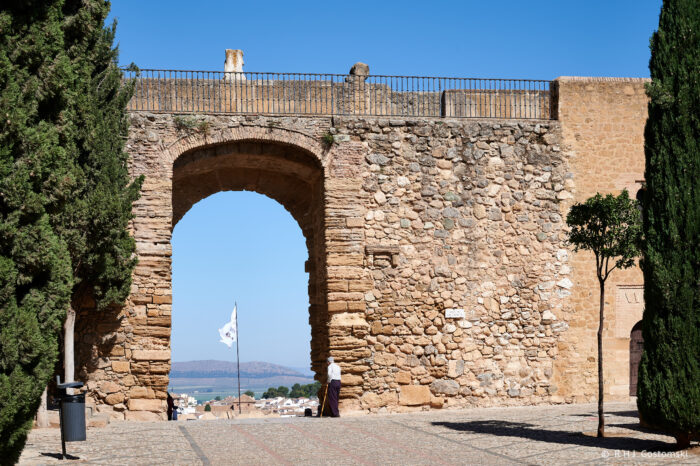
The Arco de los Gigantes was the entrance to the ancient Arab Medina and the route to the souk. The outside of the arch bears the coat of arms of Fernando I, featuring a lion, castle and stargazer lilies.
Roman Thermal Baths of Santa María
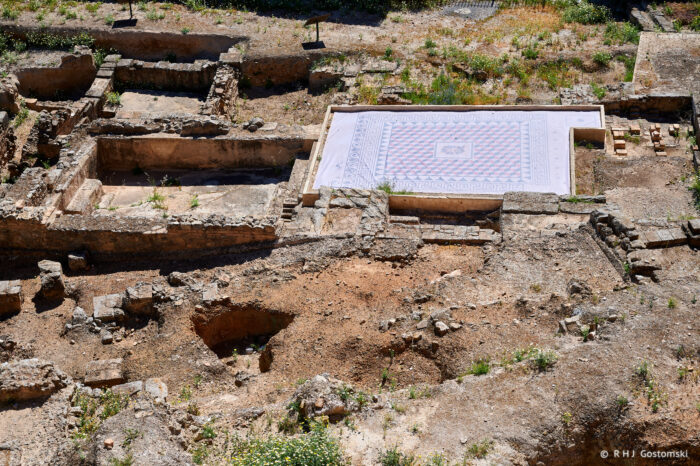
This Bath Complex, located at the feet of Santa Marîa la Mayor, was discovered by chance in the summer of 1988. It dates back to approximately the 1st century. The baths were constructed of large stone blocks covered in marble on the external faces. A large cold water pool was in the central area, with benches embedded within the surrounding walls. A large polychrome mosaic, believed to date back to the 3rd century, whose central medallion represents a sea god, was also discovered.
Stunning views and Architecture
Antequera, renowned for its breathtaking blend of architecture and landscape, boasts a skyline that’s a tapestry of centuries. Prehistoric dolmens, Moorish fortifications, Renaissance and Baroque churches, and elegant Neoclassical palaces coexist in harmony, showcasing the town’s rich architectural heritage and cultural depth. Highlights include the Alcazaba fortress, the UNESCO World Heritage sites Dolmens of Menga and Viera, and the stately mansions around Plaza del Coso Viejo. Walking through its streets feels like stepping through layers of history, where every corner reveals another era’s artistry.
Equally captivating are Antequera’s sweeping views and natural setting. Perched at around 540 metres above sea level, the town offers commanding panoramas of the surrounding valley, the striking limestone formations of El Torcal, and the iconic Peña de los Enamorados mountain. Viewpoints like the Alcazaba and the Mirador Niña capture both the beauty of the town’s tiled rooftops and the dramatic Andalusian landscape beyond. Together, Antequera’s architecture and scenery make it one of southern Spain’s most visually stunning and underrated destinations.


