Salt Extraction at Las Salinas
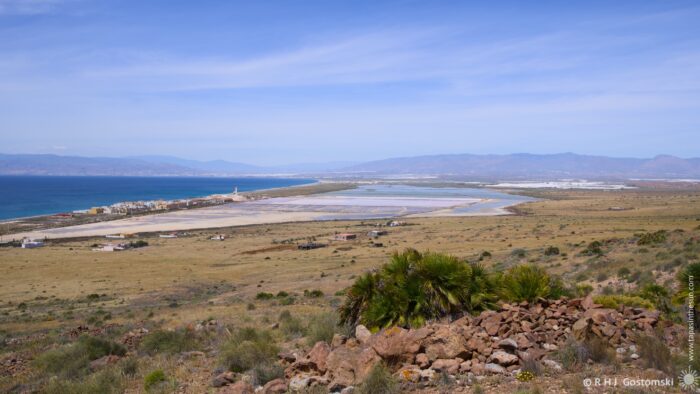
Las Salinas, the only active commercial salt works in eastern Andalusia, is operated by the French-owned company Salins España (formerly Unión Salinera). Production is now on a reduced and more specialised scale, balancing commercial extraction with environmental protection within the natural park.
The modern operation focuses on three key activities:
- Bulk marine salt production, primarily for winter road de-icing exports to northern Europe.
- Artisanal “flor de sal” harvested by hand as a gourmet product.
- Conservation management of the wetland ecosystem.
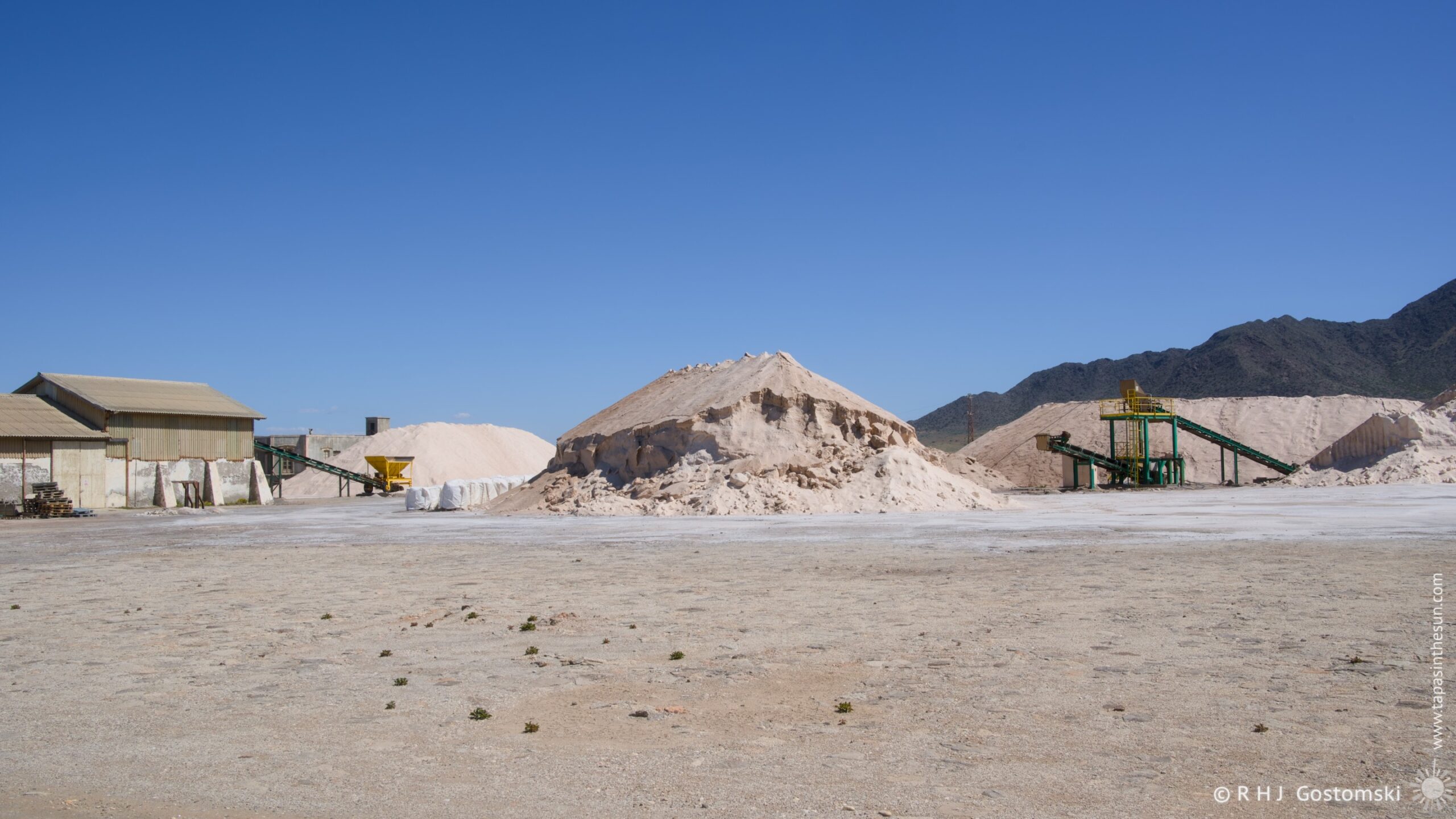
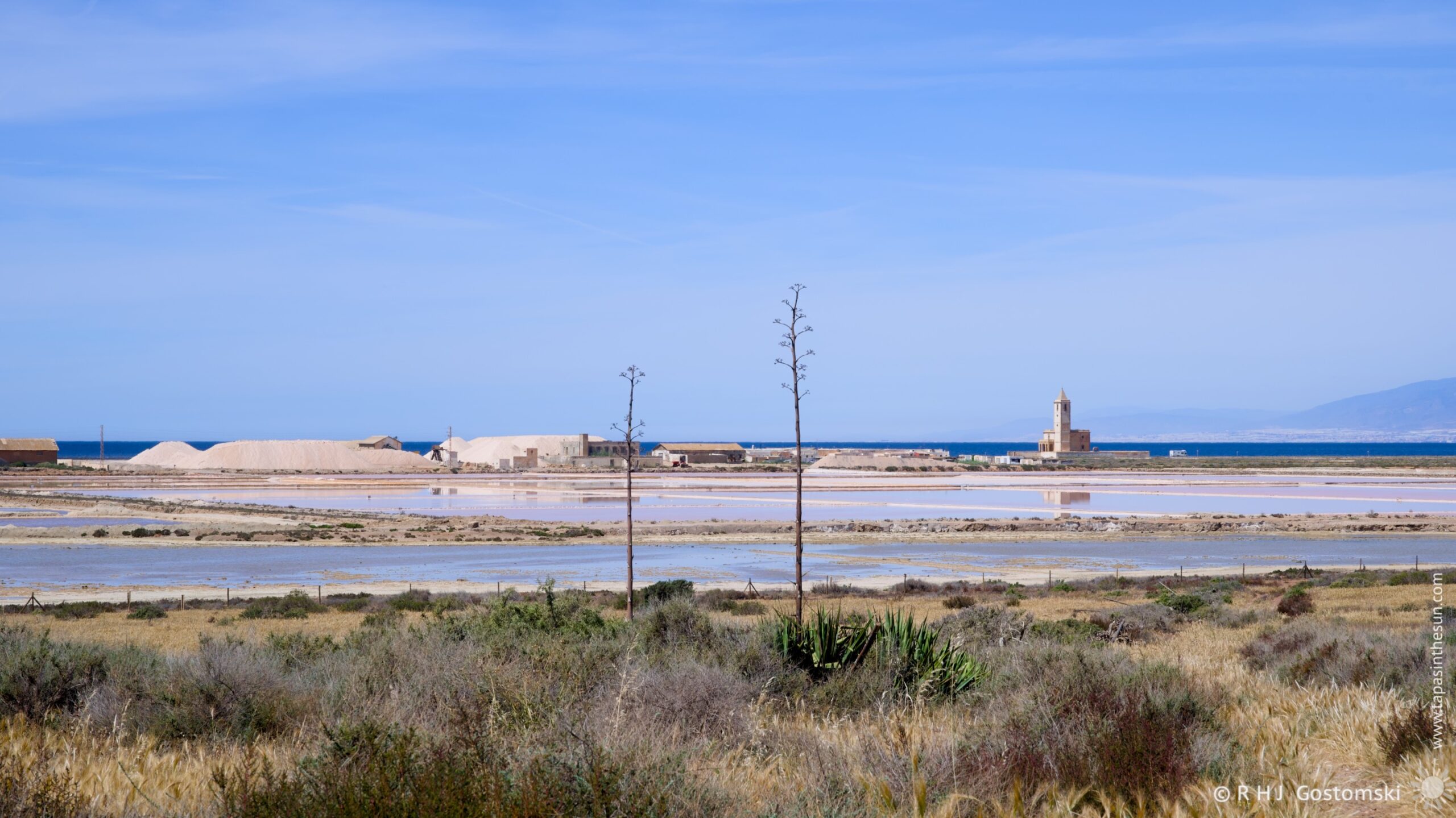
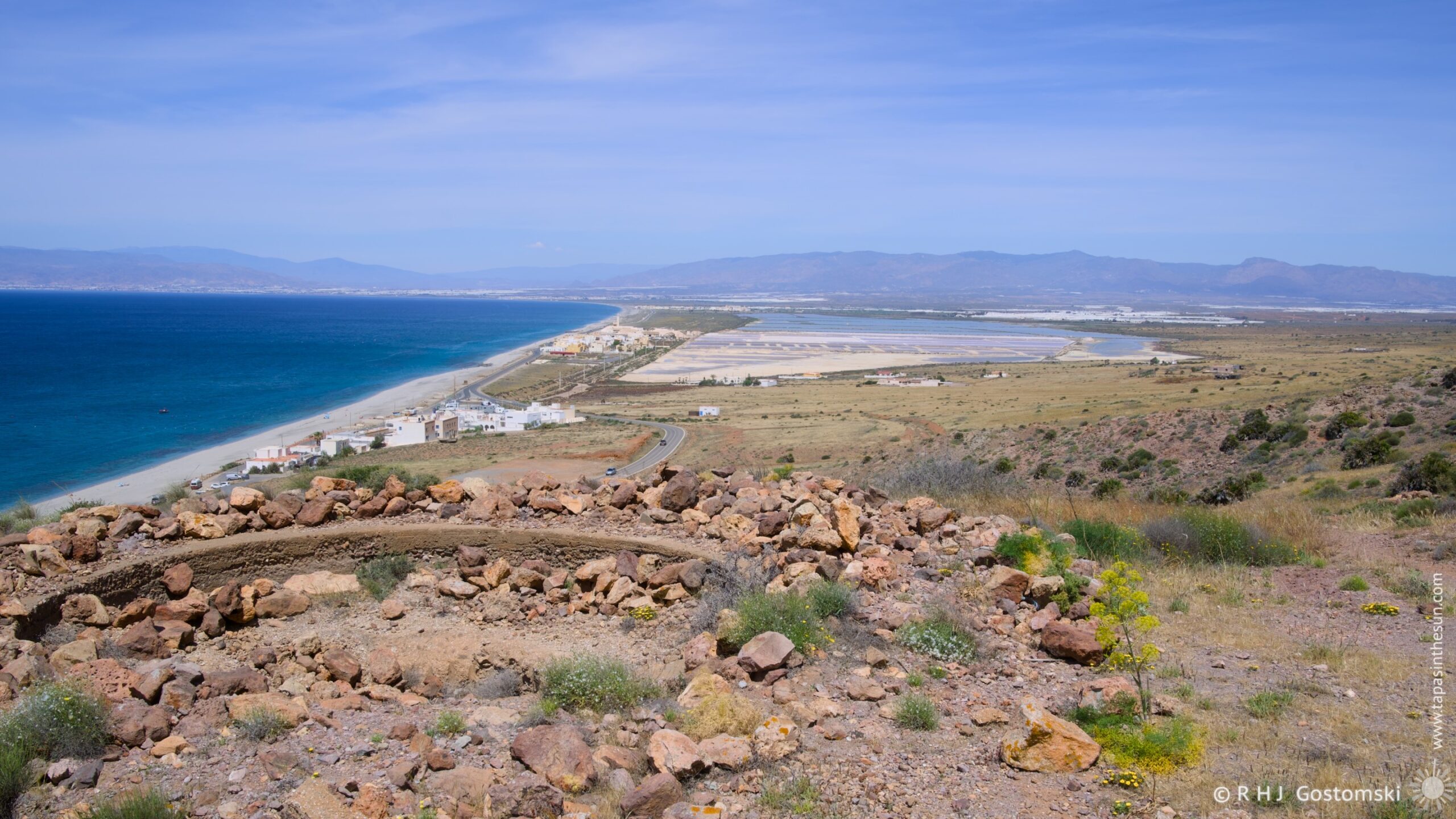
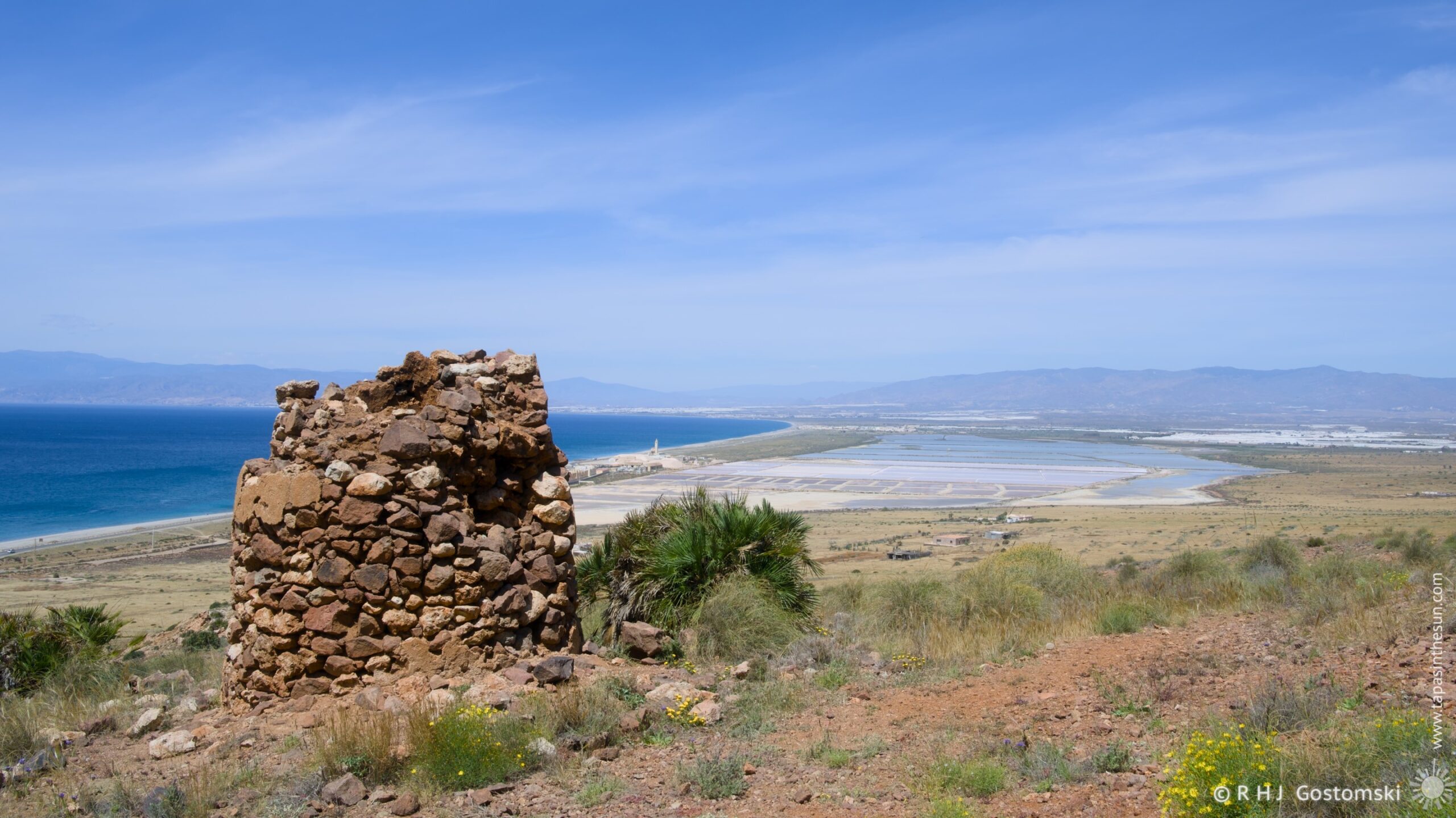
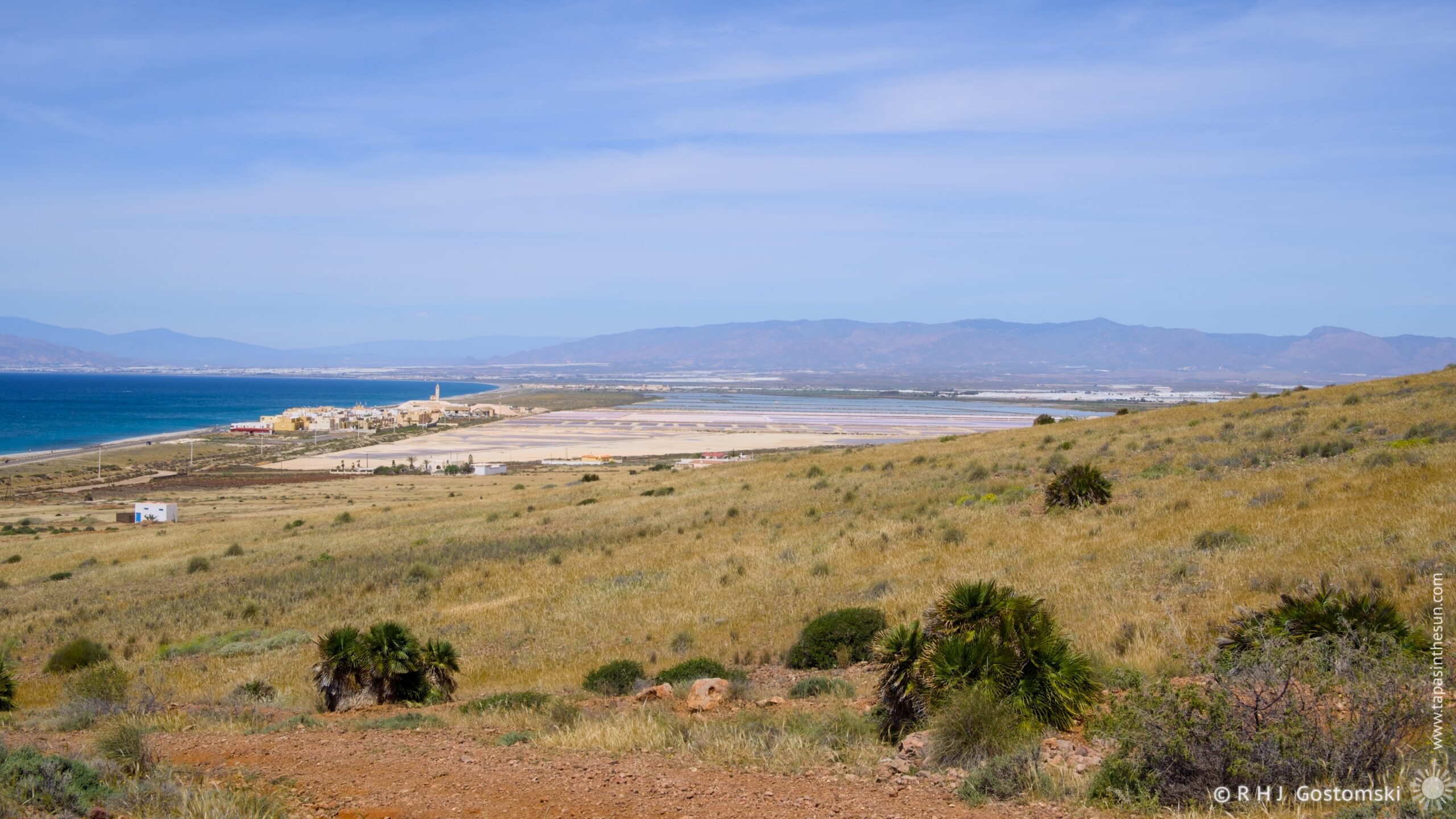
Much of the historic infrastructure remains intact, including evaporation ponds, crystallisation basins, salt mounds (“garberas”), canals, pumping systems and the old workers’ settlement at La Almadraba de Monteleva.
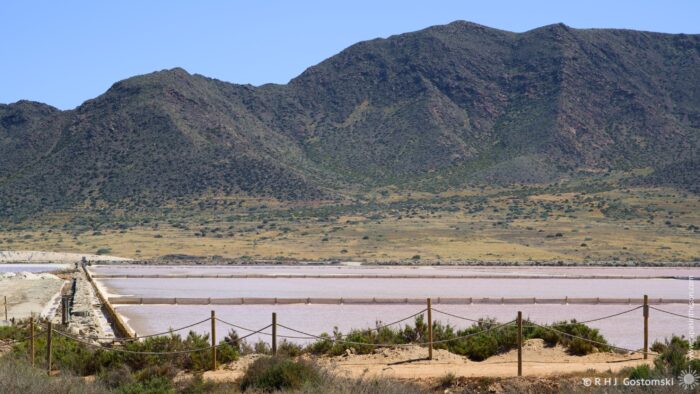
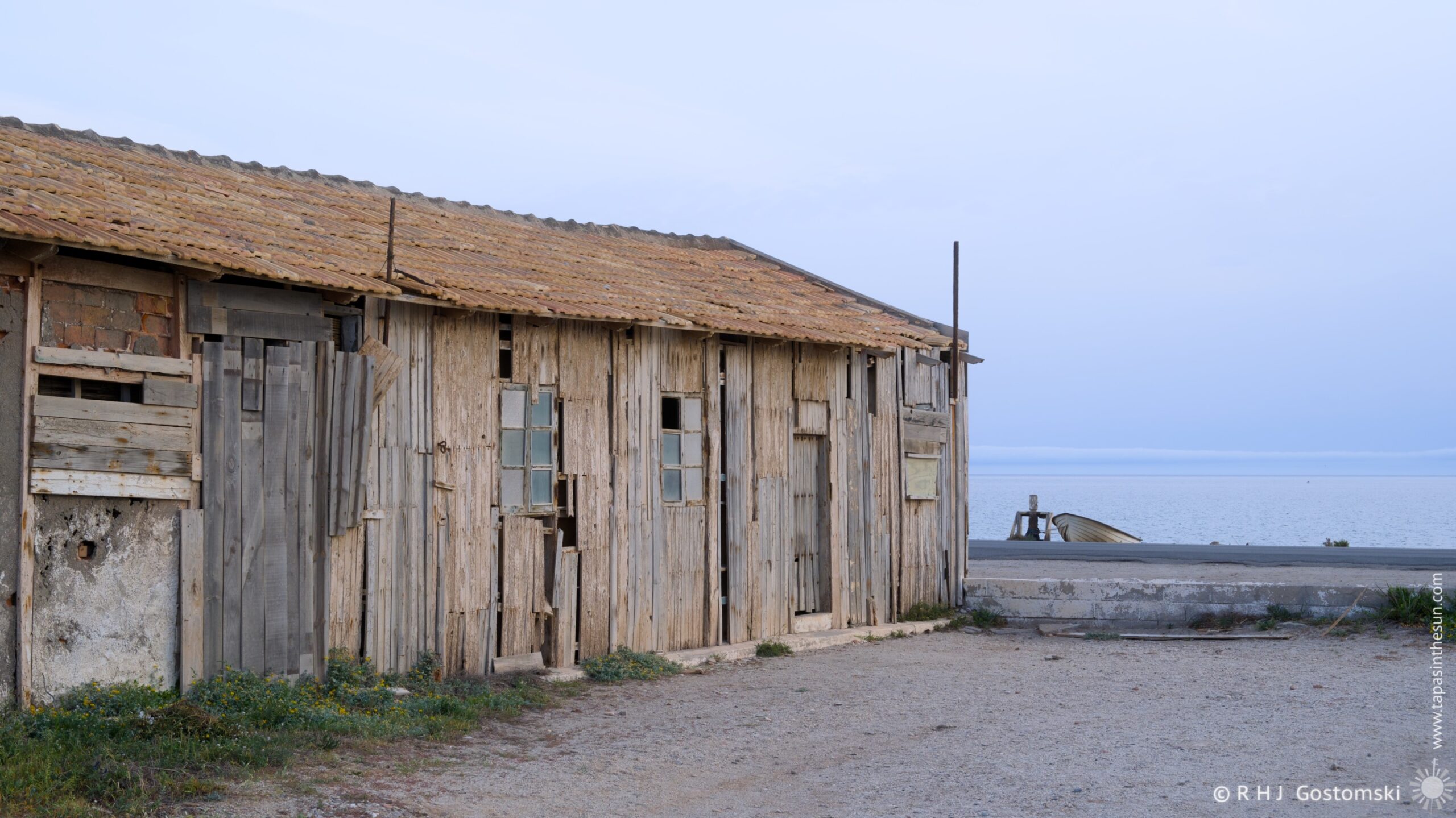
While some older industrial buildings are deteriorating or semi-abandoned, the saltworks itself remains active and well-maintained.
The Las Salinas de Cabo de Gata Salt Works
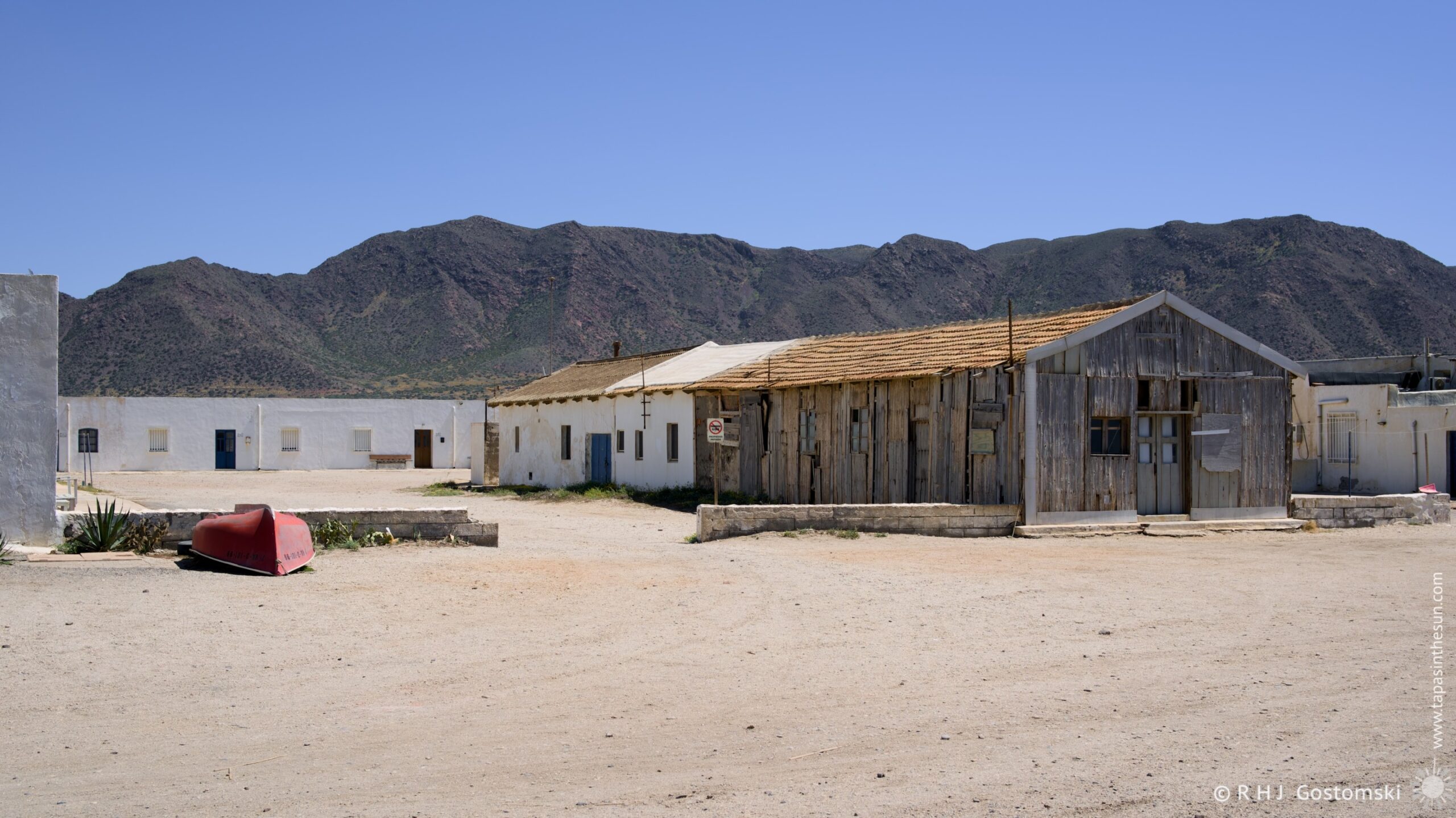
The Las Salinas de Cabo de Gata Salt Works still boasts the old administrative and operational buildings near the active salt-processing area. While most aren’t formally restored or open as museums, a drive along the road through the Salinas towards the church and working ponds reveals:
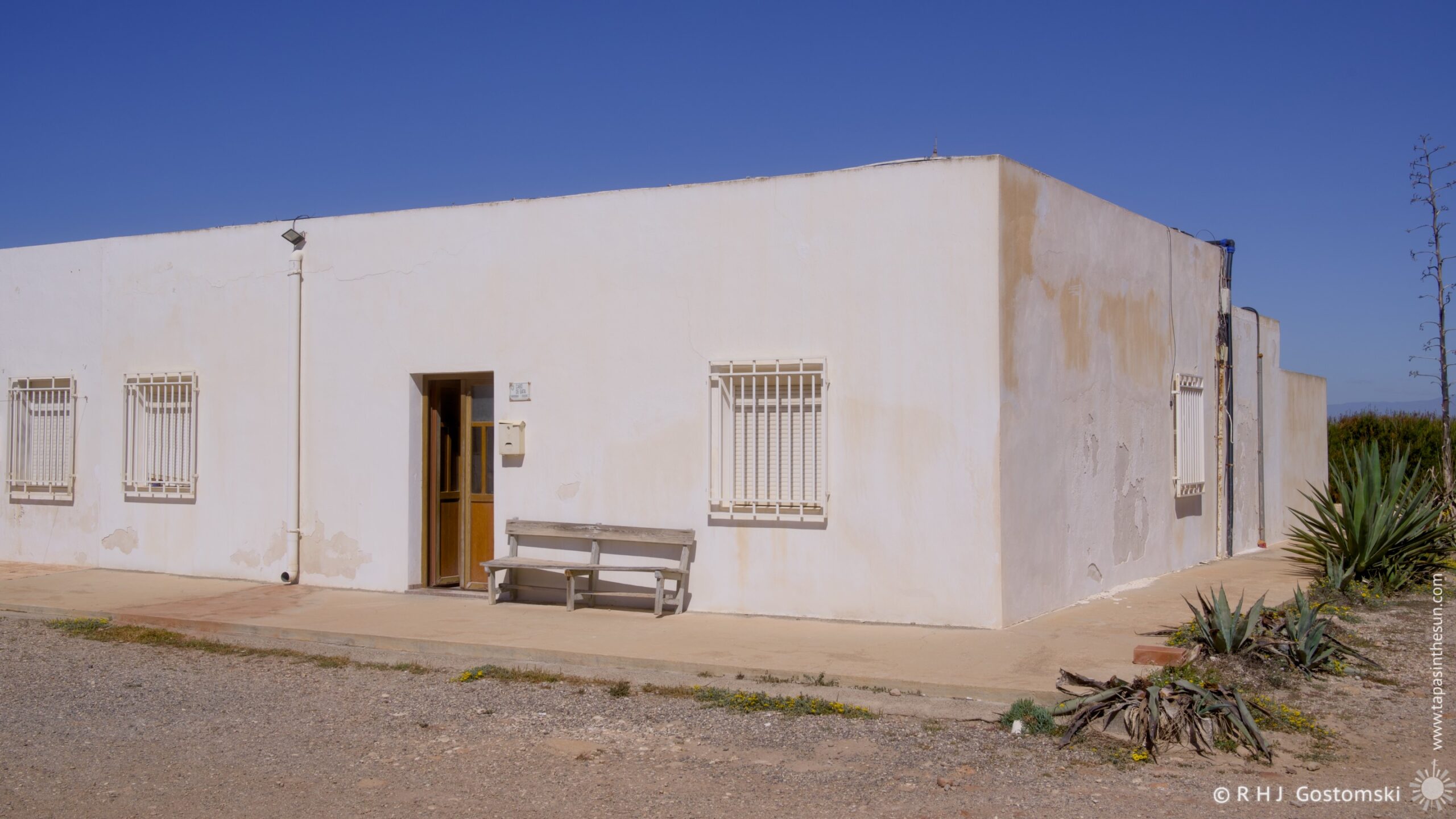
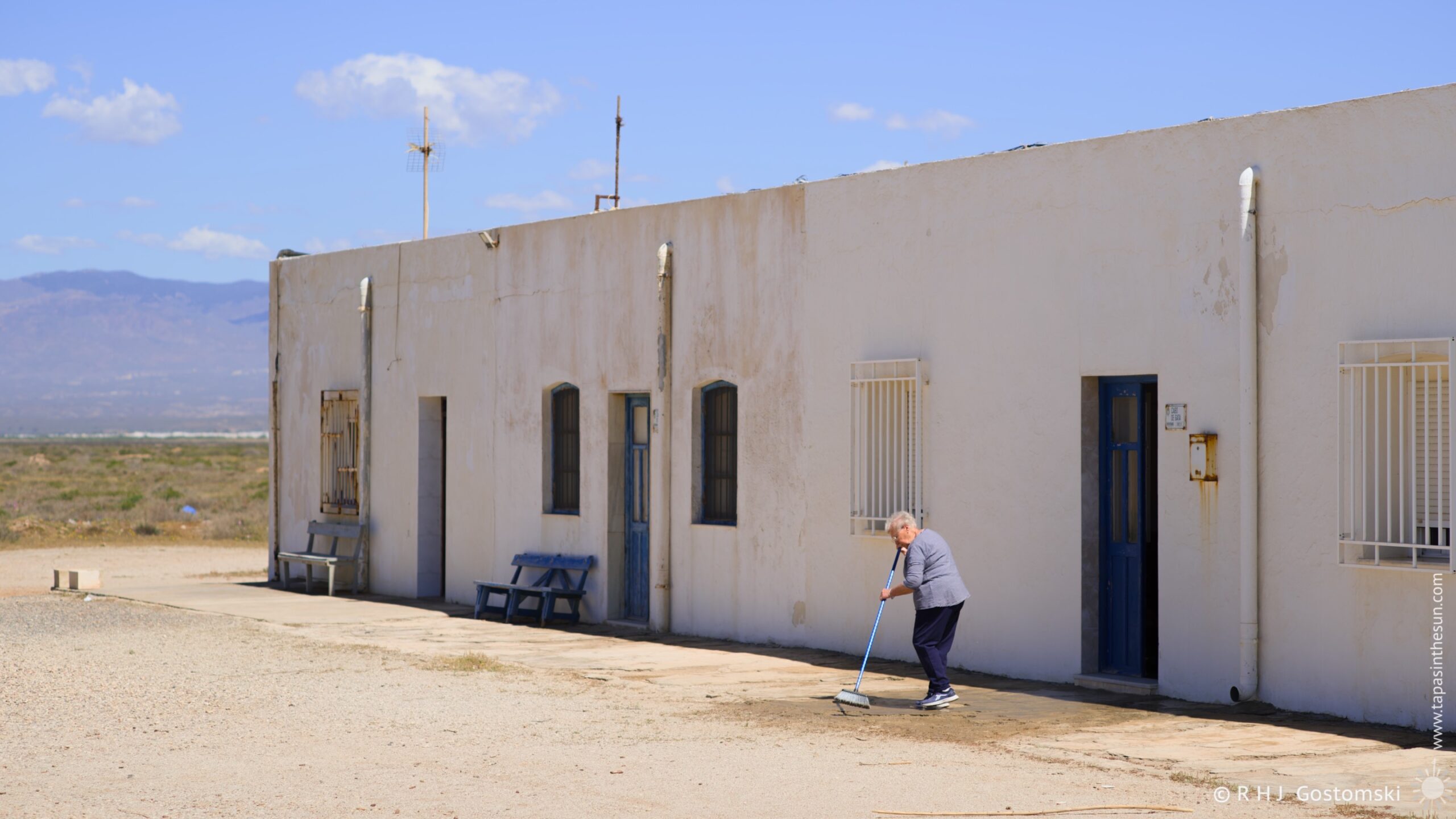
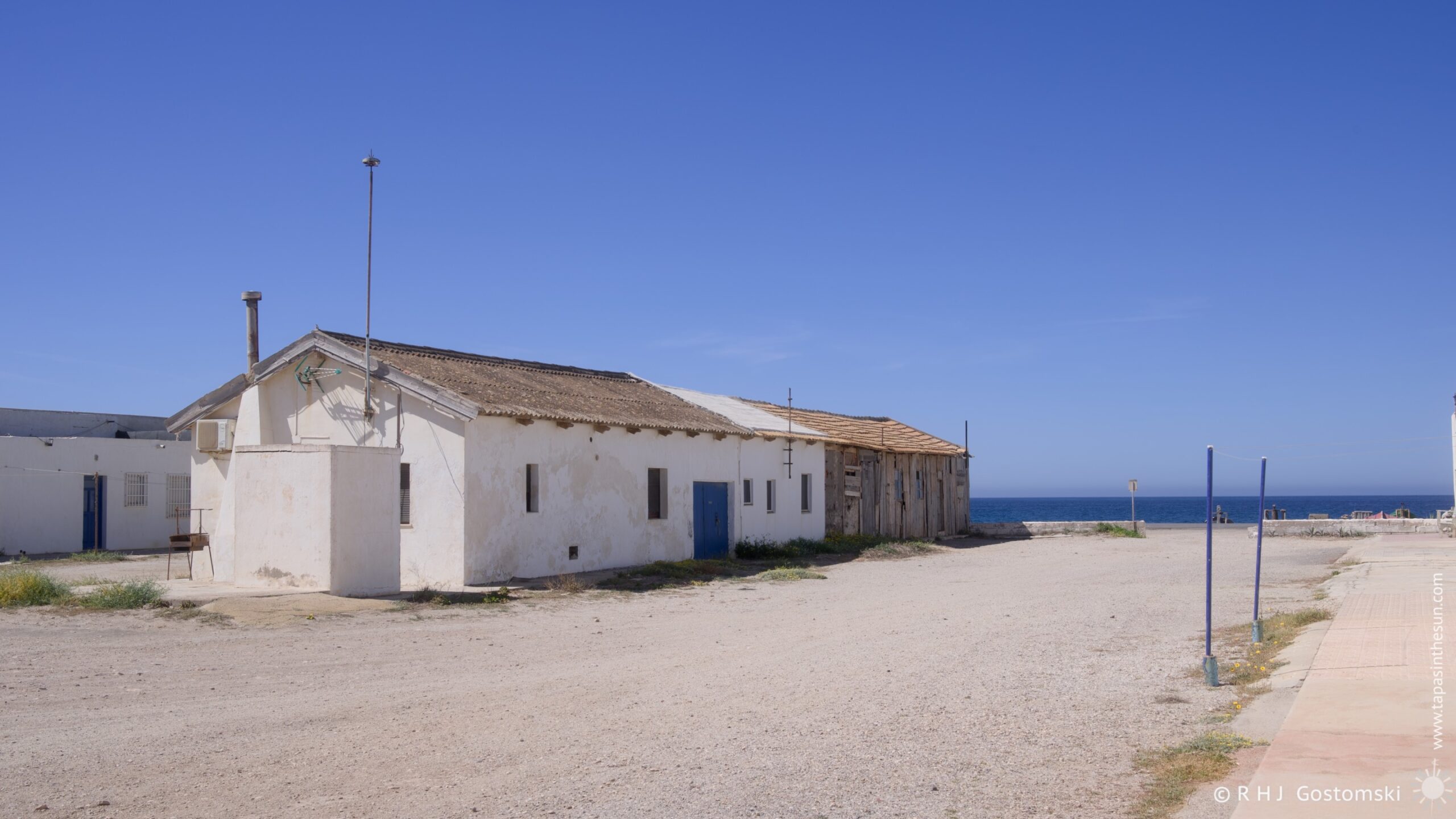
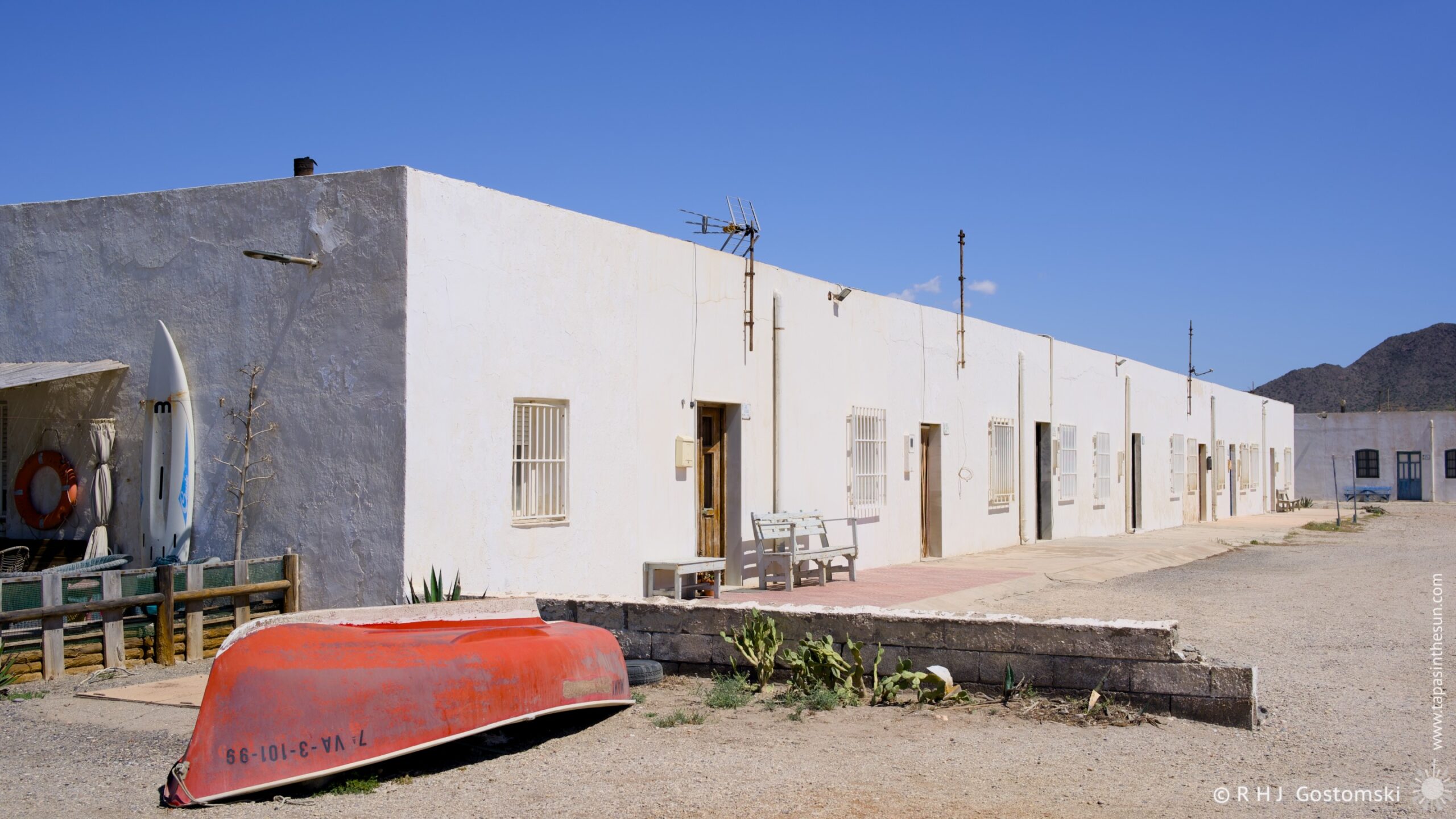
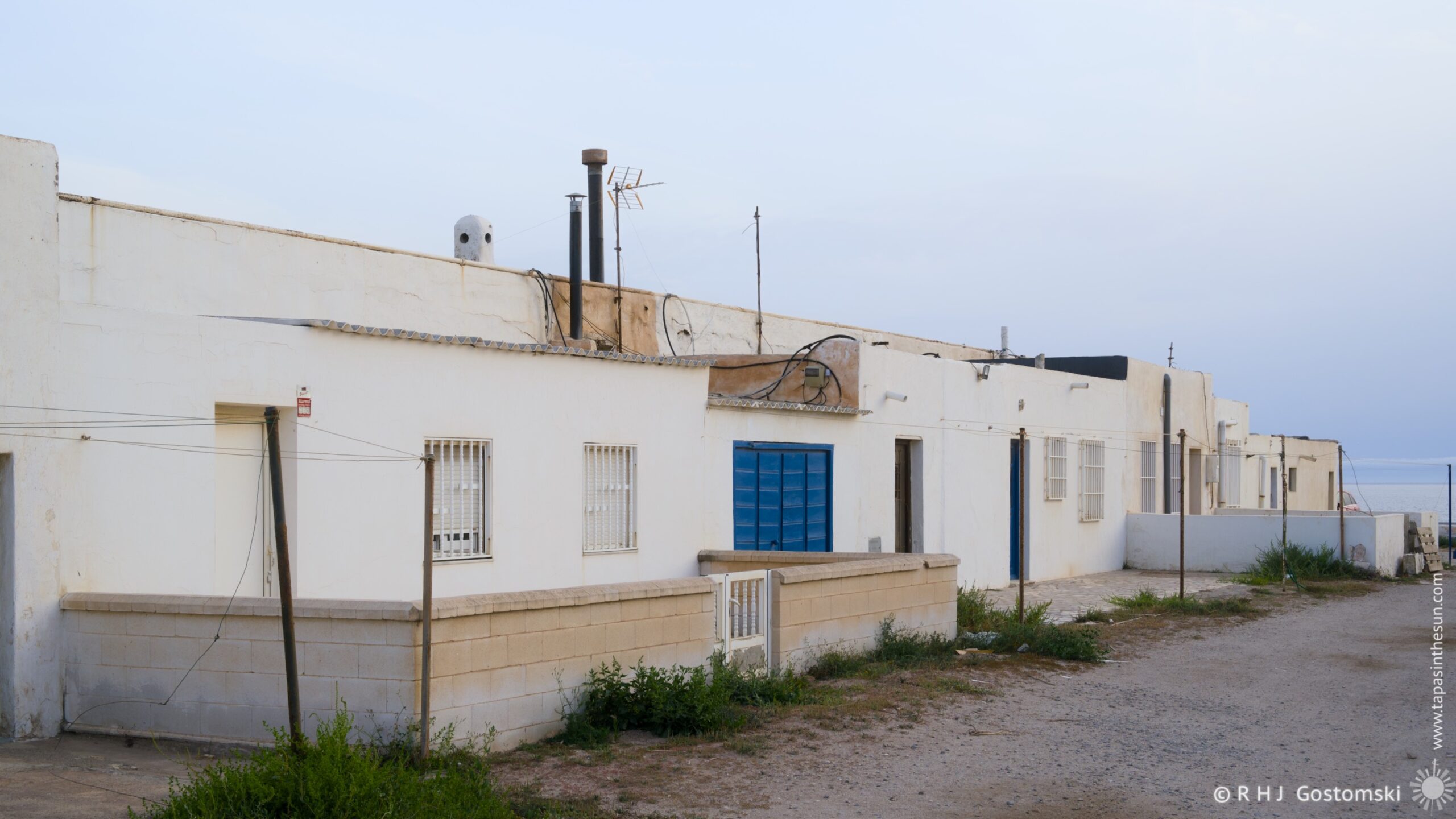
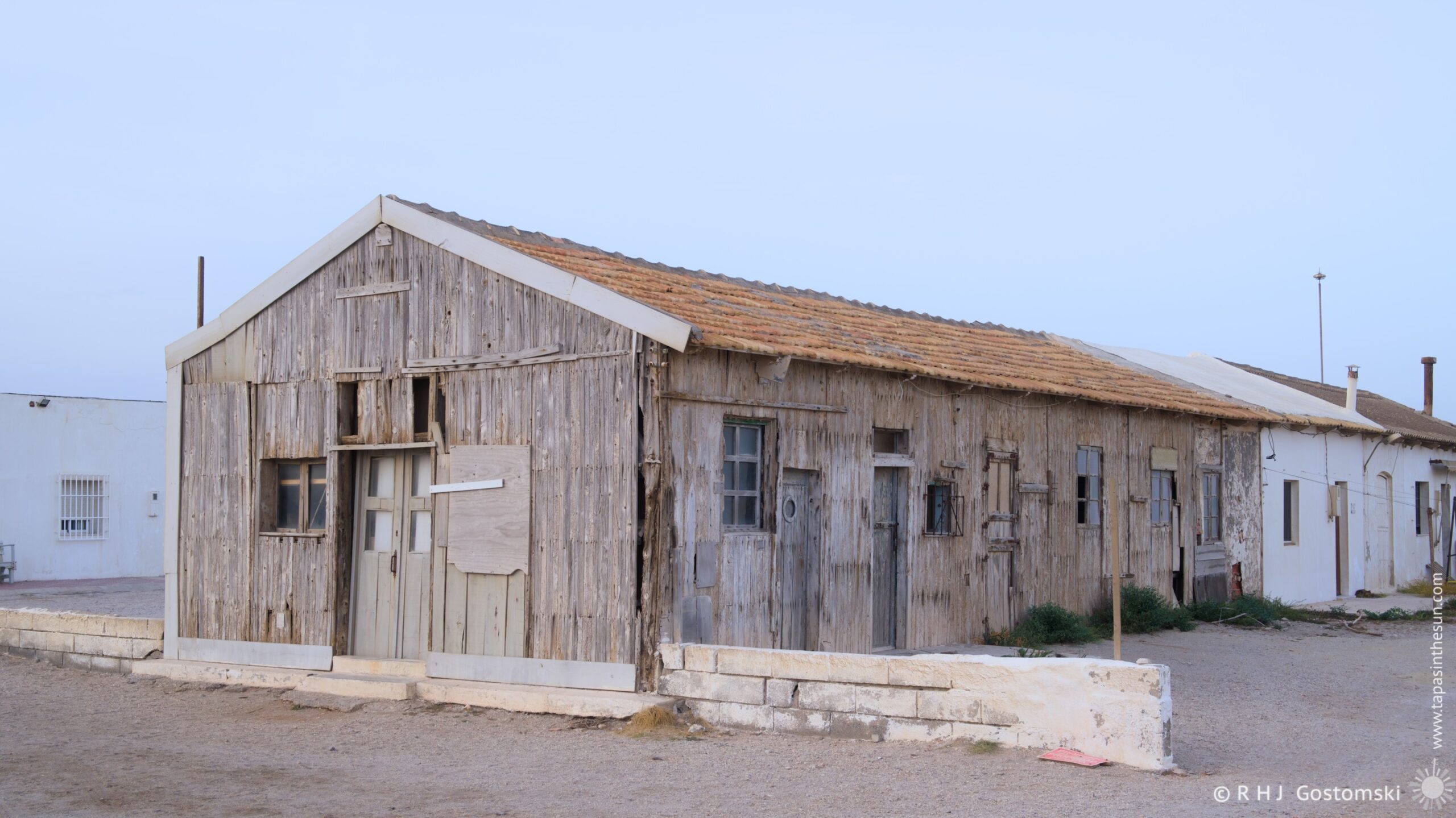
- Long, low white industrial buildings
- Old storage sheds
- Remnants of loading infrastructure
- Former company buildings linked to the “Salinas de Almería” company, established in 1904

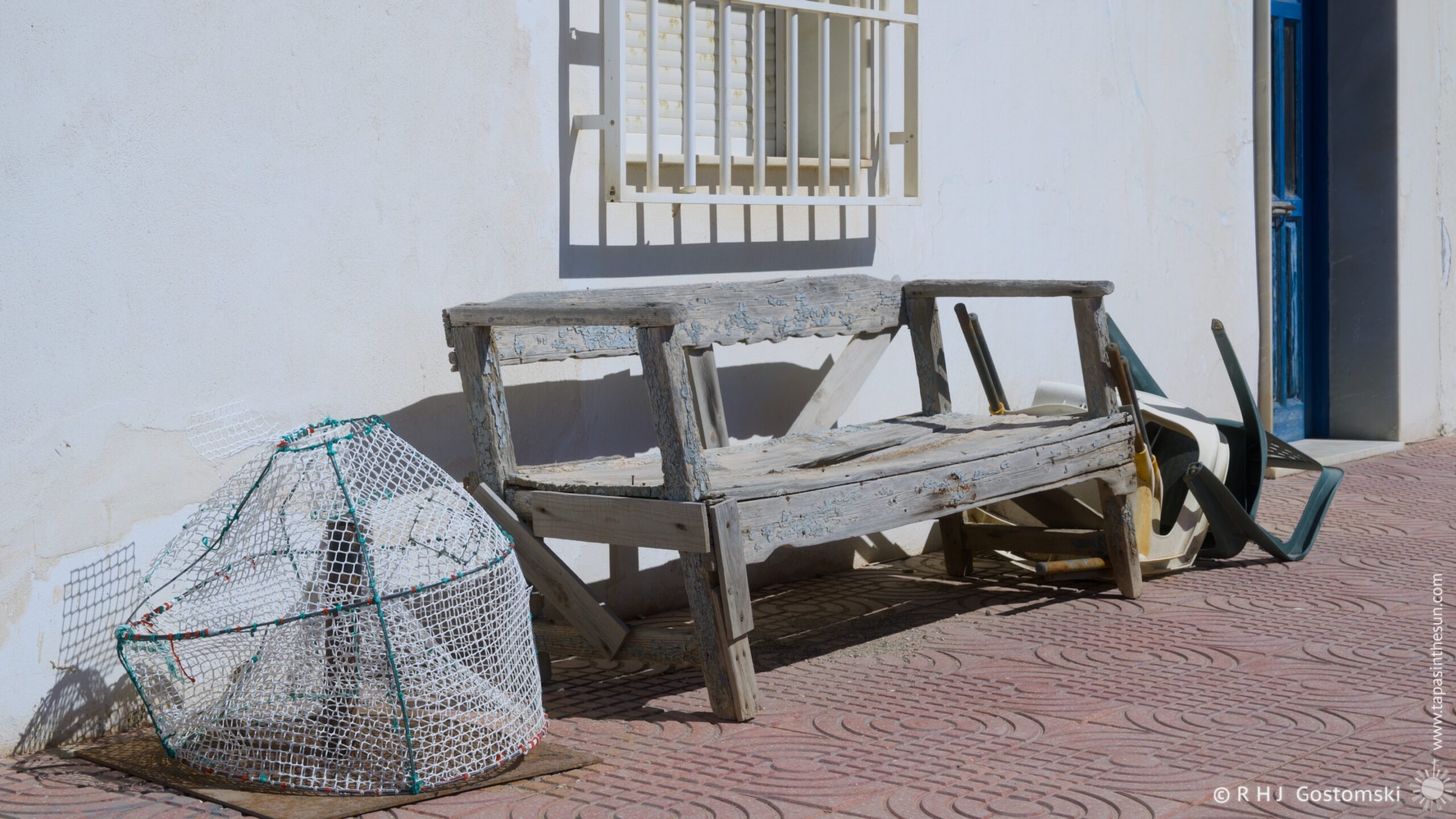
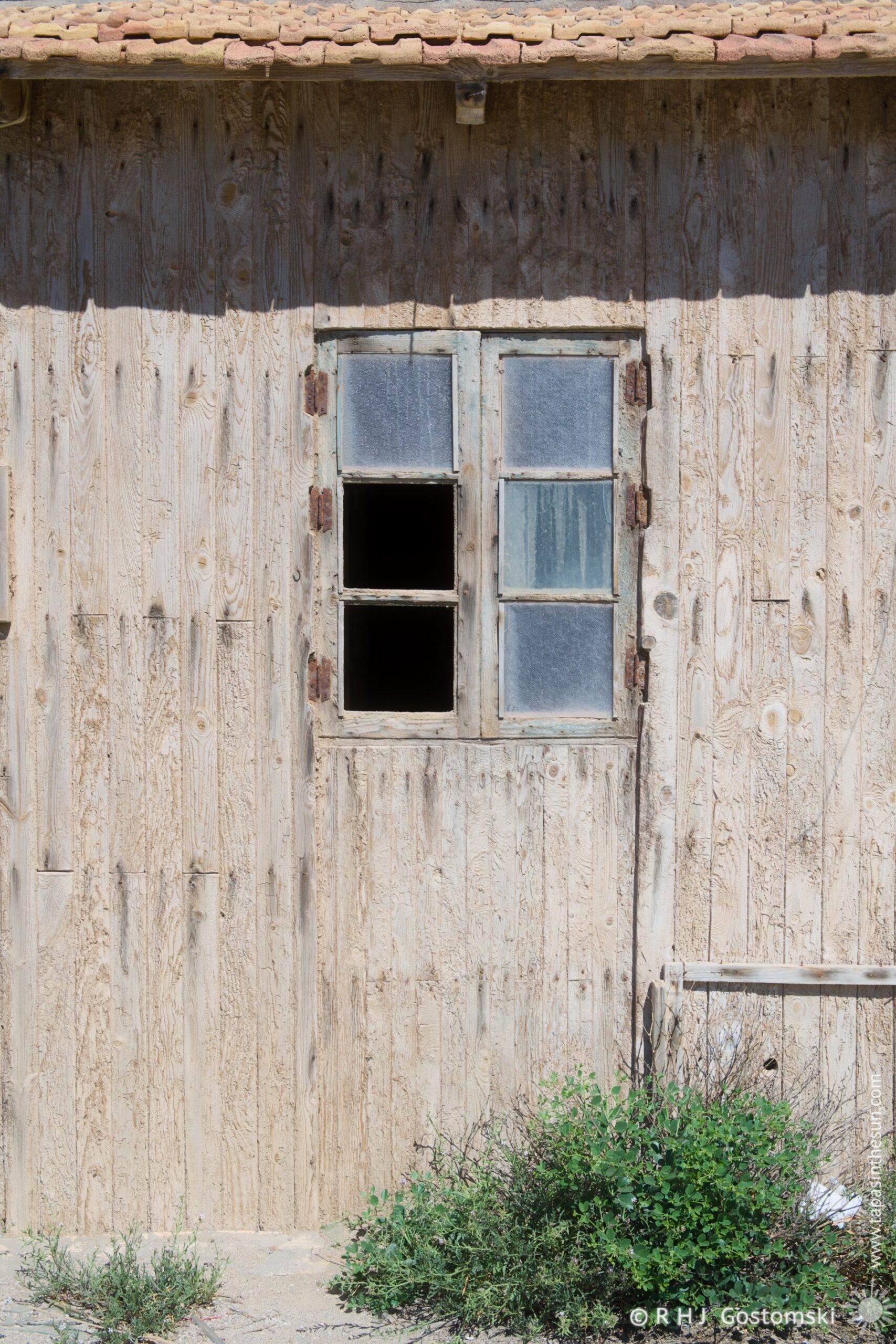
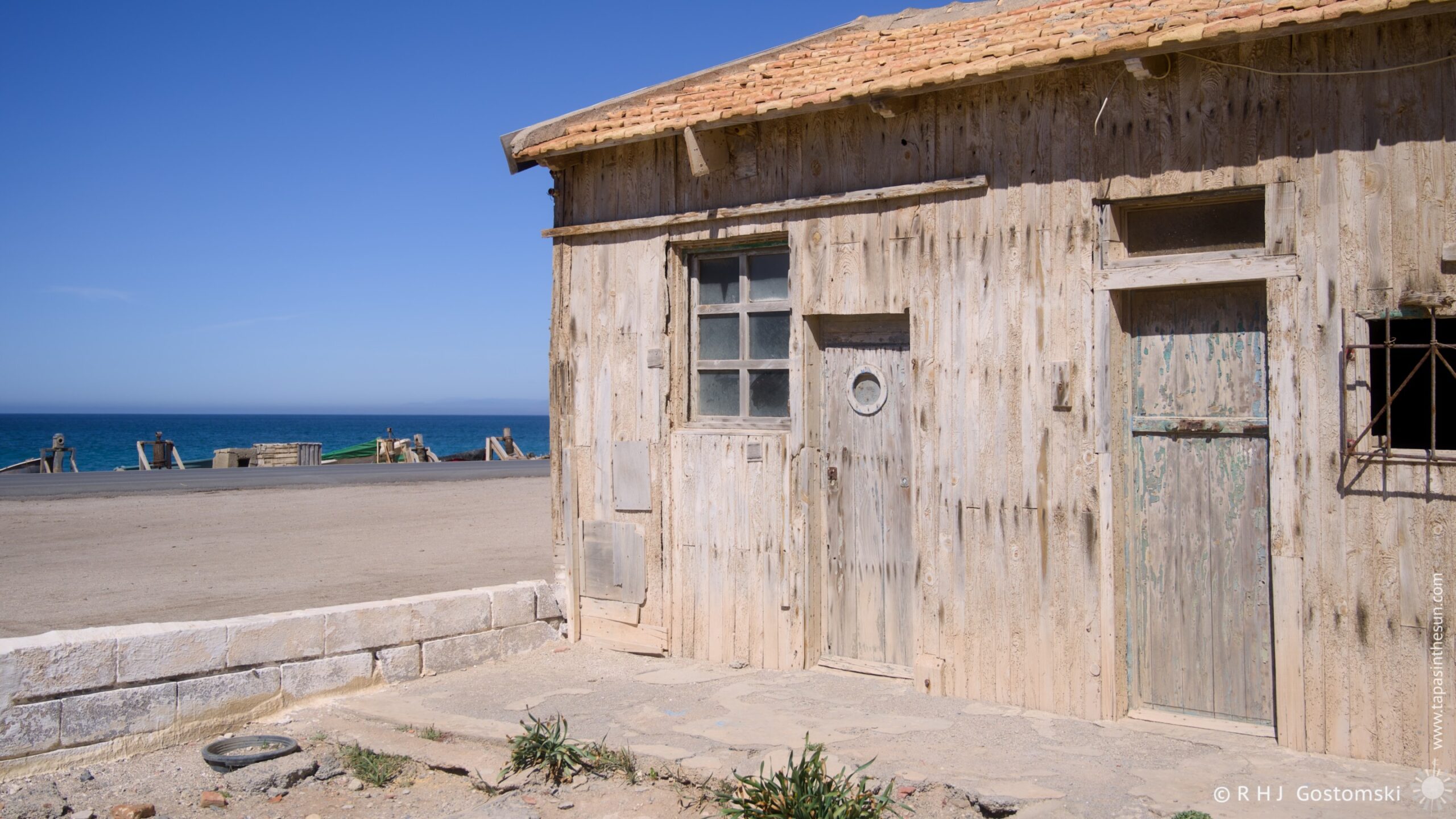
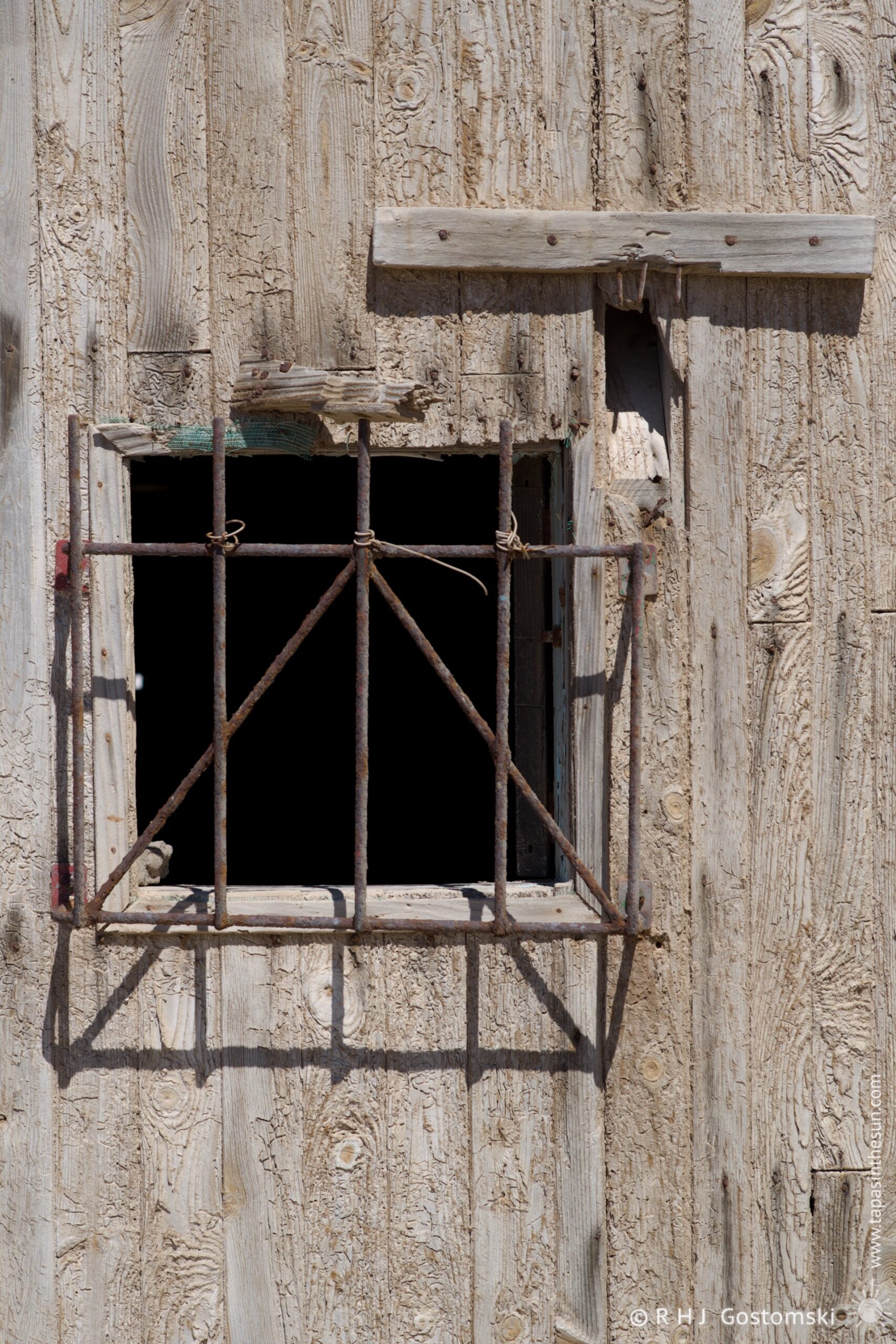
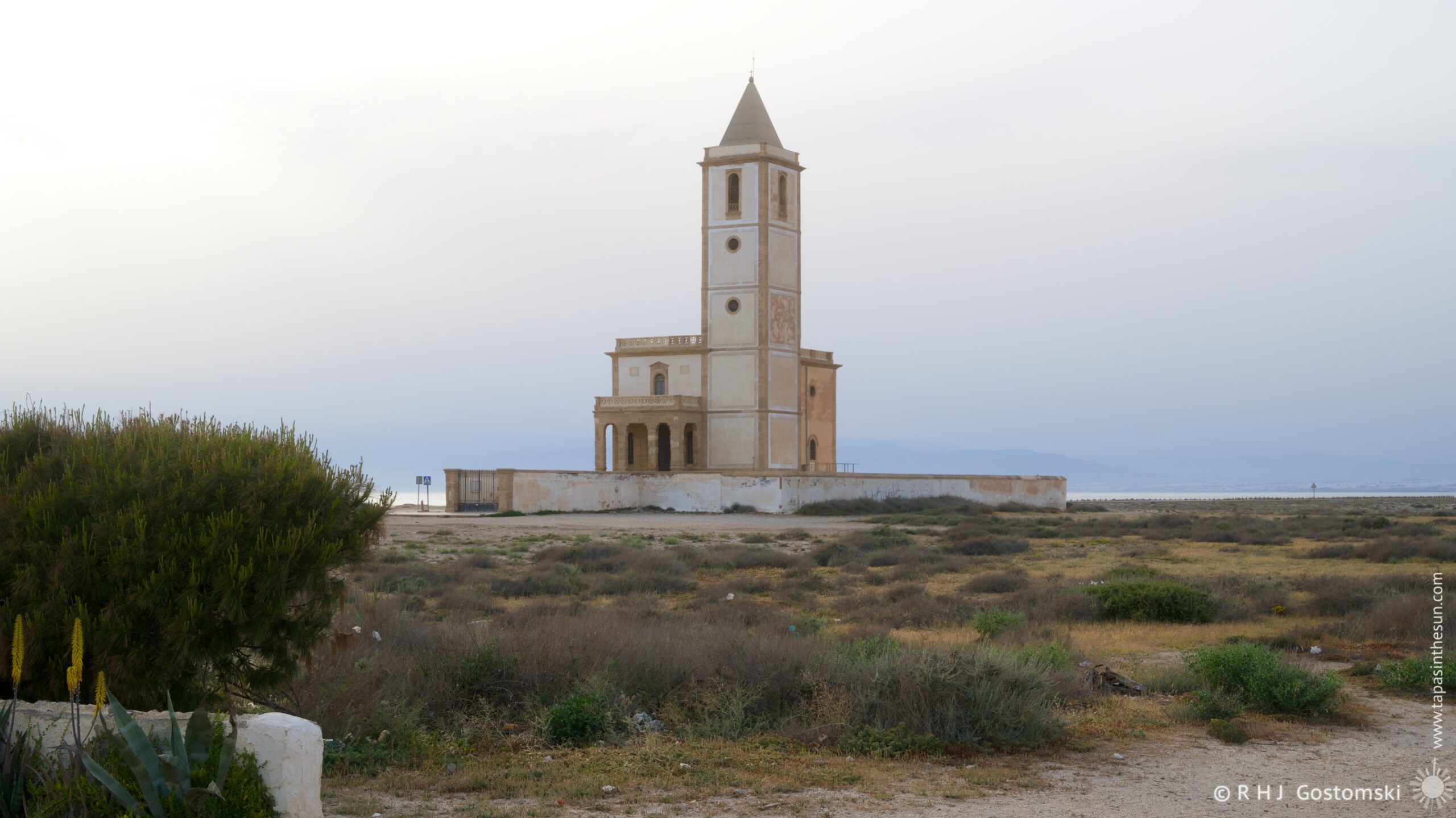
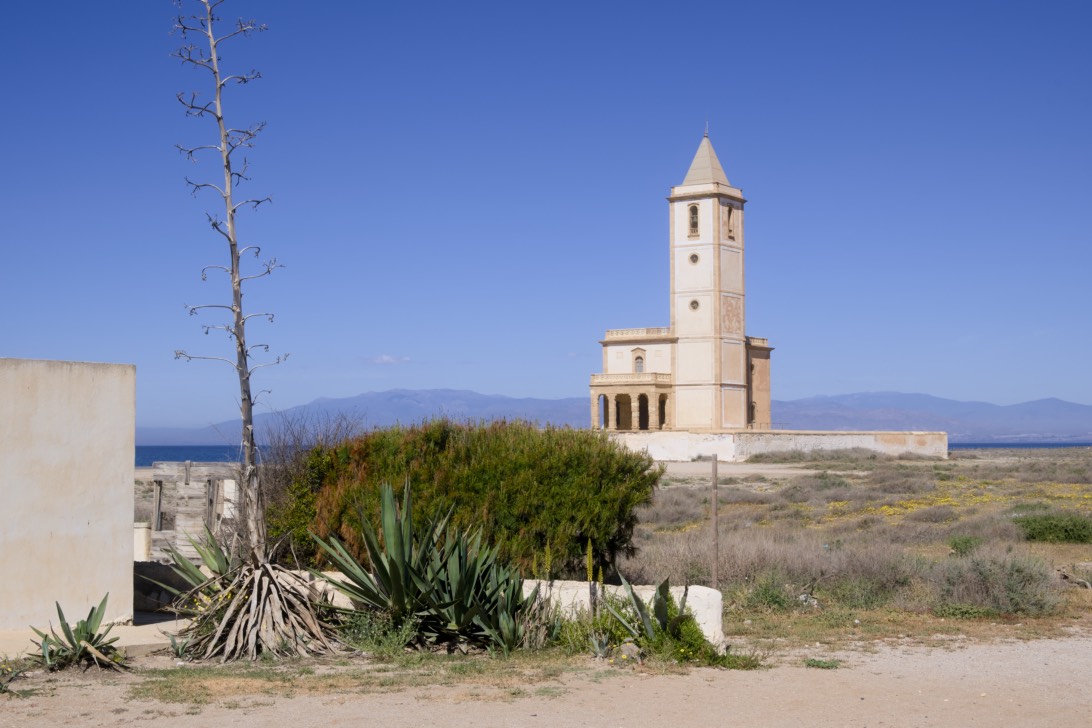
Some structures remain in practical use by the current salt operation, while others show signs of semi-abandonment or weathering from decades of salt air and wind. The iconic church of the Salinas, built in 1907 for the workers’ community, stands as the best-preserved landmark from that era and still dominates the settlement’s visual landscape.
Today, the entire area is recognised as a significant example of Andalusian industrial heritage despite uneven preservation efforts. Heritage inventories describe the salinas as containing a surviving “industrial patrimony” comprising buildings, machinery, embankments, salt mountains and the original saltworkers’ village.
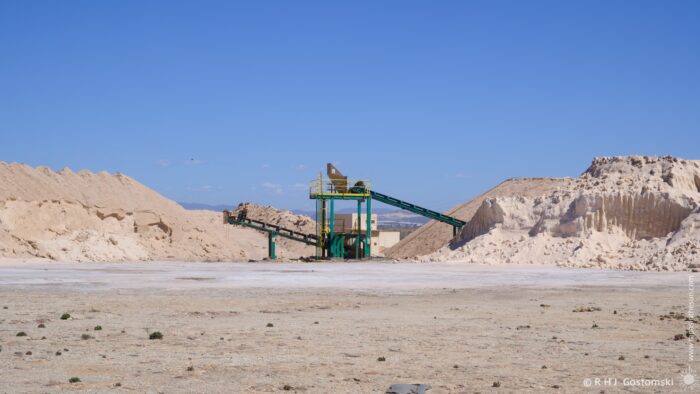
The old salt warehouses and the long embankments of the ponds still preserve the atmosphere of a working industrial landscape.
The surrounding wetlands, now protected within Parque Natural del Cabo de Gata-Níjar, have transformed the former industrial zone into one of the most visually and ecologically important places on the Andalusian coast.
Poblado Salinero (The Salt Workers’ Village)
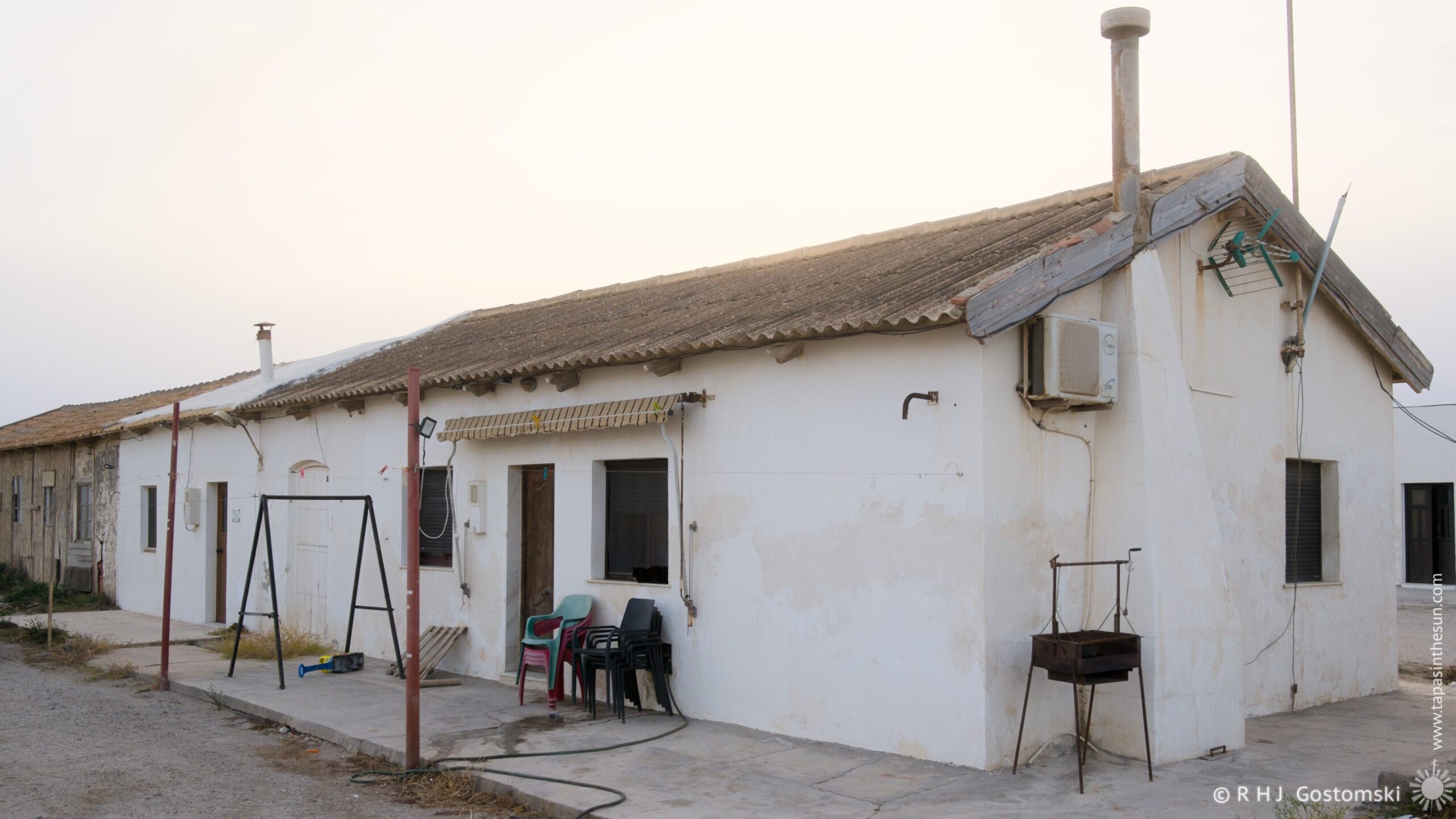
Nestled beside Las Salinas de Cabo de Gata lies La Almadraba de Monteleva, the old workers’ village, locally known as the Poblado Salinero or simply Las Salinas. Constructed in the early 20th century, primarily around 1907, this village sprang up as industrial salt production boomed along this coastal stretch. The salt company needed a permanent workforce near the evaporation ponds, so they established a self-contained settlement for labourers and their families.
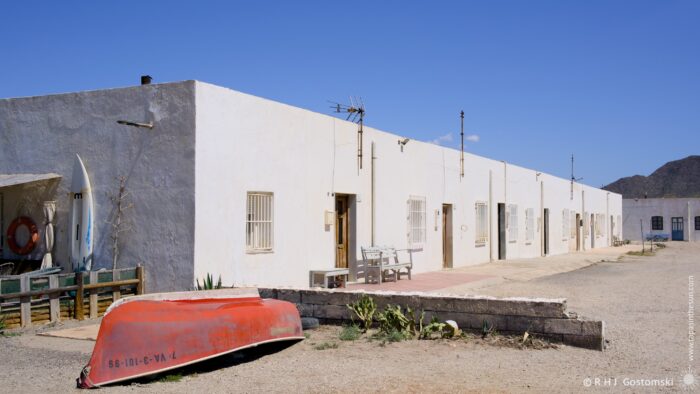
Beyond its three rows of workers’ houses, the village functioned almost like a miniature company town. It boasted modest whitewashed homes, a management house, offices, a church, a small school, a bar, an economato (company store) and even a cinema and cemetery, the latter of which was never used. Life revolved around the rhythm of the salt harvest. During the scorching summer months, workers collected and transported salt using small rail wagons on portable tracks between the ponds and the salt mounds near the shore.
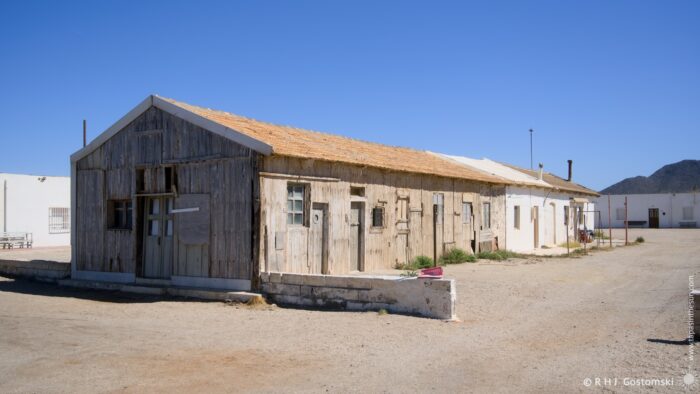
The settlement reflects the challenging realities of life in Cabo de Gata before tourism arrived. Isolated, dry and difficult to access, the area saw many families combining fishing with seasonal work in the salinas. Historical accounts reveal entire households, including women and children, participating in the labour-intensive salt industry. At its peak in the mid-20th century, the salinas produced tens of thousands of tonnes of salt annually, much of it exported for cod preservation in northern Europe.
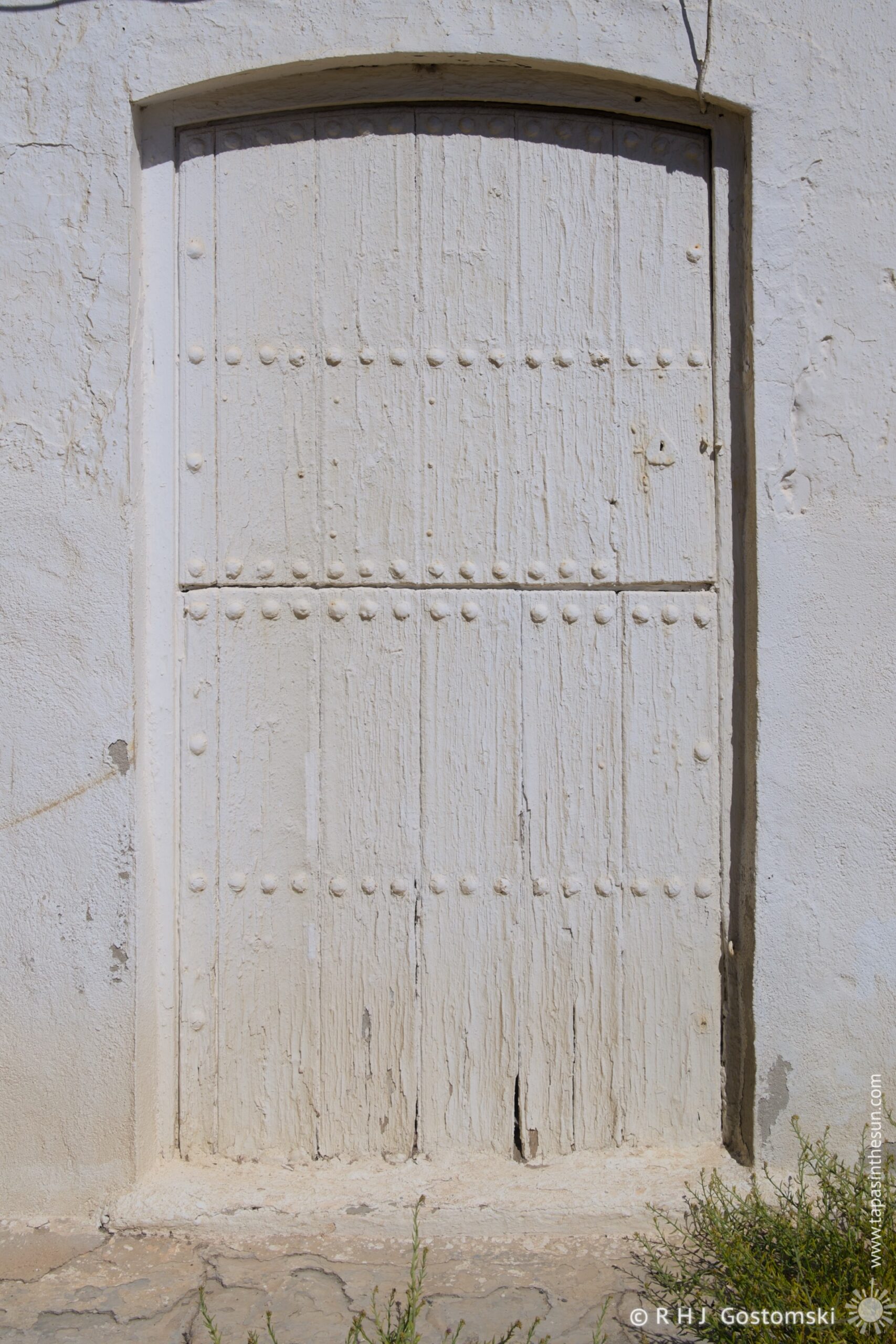
Today, much of the old village remains, albeit in a quieter state. Some buildings are still inhabited while others have been restored, preserving the village’s distinctive linear layout beside the salt flats and the sea. Walking through it offers a stark contrast to the resort towns elsewhere on the Mediterranean coast. The architecture is simple and functional, shaped by the relentless forces of wind, salt and sun.
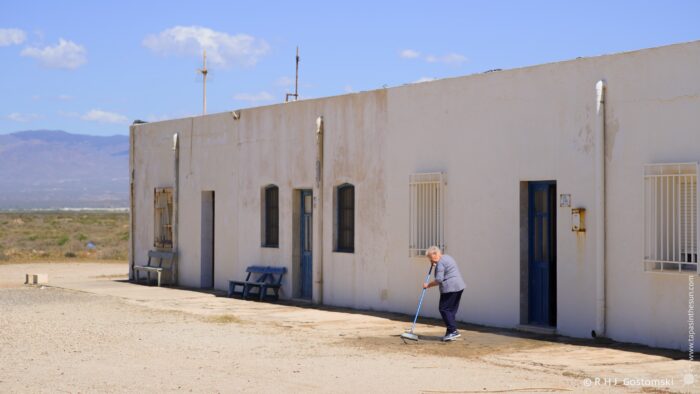
For black-and-white photographs of Las Salinas and the Workers’ Village taken with vintage cameras, visit Grainy Photos: Las Salinas de Cabo de Gata.
Las Salinas Church
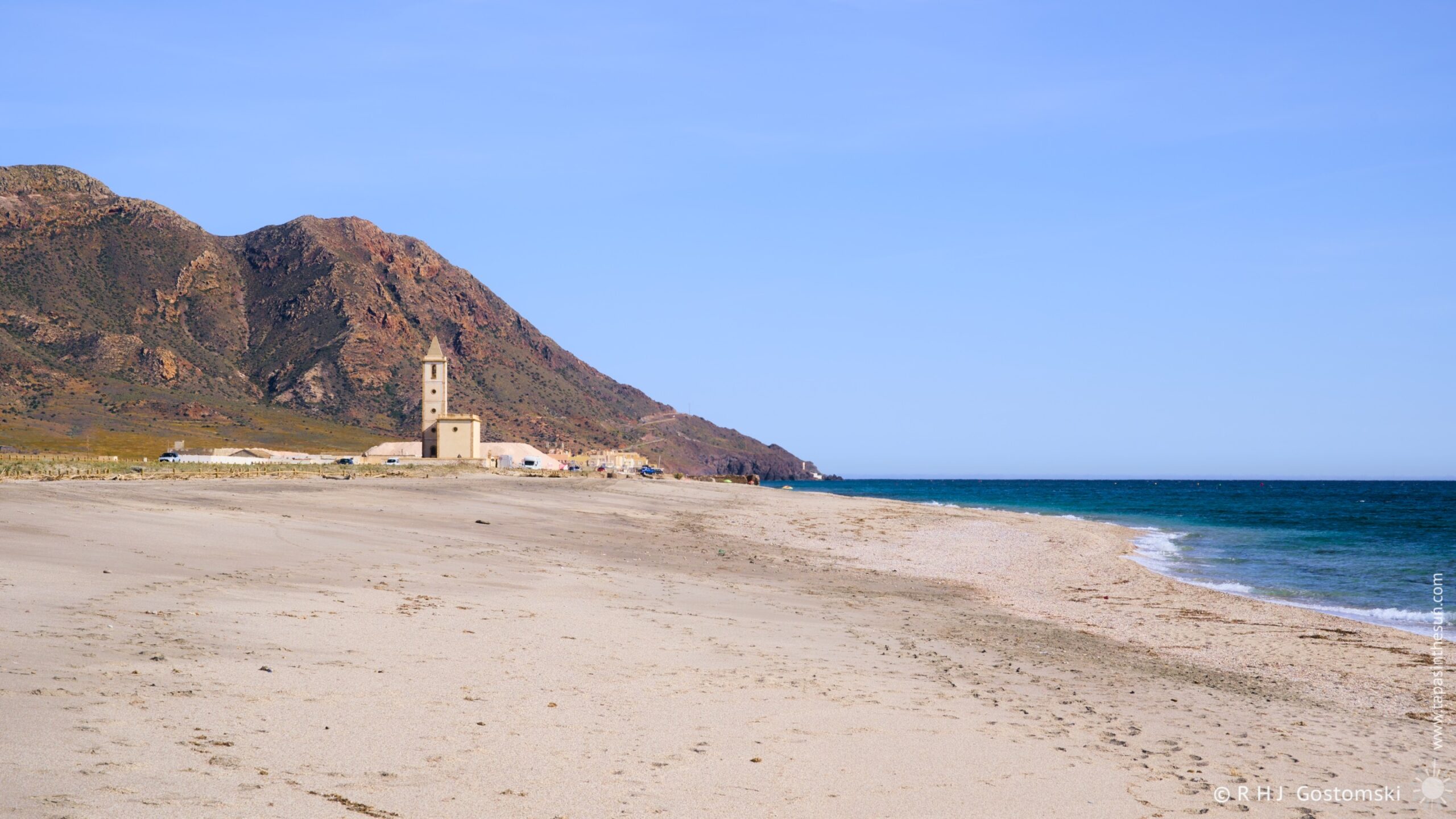
Iglesia de las Salinas stands as one of the most recognisable buildings in the old salt workers’ settlement beside the Salinas de Cabo de Gata. Officially dedicated to San Miguel, this small church was constructed in the early 20th century as part of the company village for salt industry workers. Nestled in an isolated landscape where the salinas dominated daily life, the church served as both a religious centre and a social hub for the year-round residents.

Architecturally, the church embodies the practical style typical of Cabo de Gata. Its whitewashed walls, clean geometric lines and modest bell tower reflect the region’s austere environment. Rather than ornate decoration, the church’s beauty lies in its setting: it stands between the salt ponds, dunes and sea, with volcanic hills rising in the distance. The open and flat landscape makes it a striking landmark visible from far across Las Salinas.
Historically, the church was central to a self-contained industrial community. Workers and their families attended baptisms, weddings, funerals and local celebrations there, living in relative isolation from larger towns like Almería. During the decades when salt production employed much of the local population, the church was a key part of community identity. Nearby were workers’ homes, warehouses, administrative buildings and the railway infrastructure for transporting harvested salt.
Today, the church remains a popular spot for photography, especially at sunset when its white facade contrasts with the reflective pink and gold tones of the salt flats. While the surrounding village is quieter now than in its industrial heyday, the church continues to symbolise the human history of the salinas and the generations who worked in one of Spain’s most unusual coastal landscapes.
Historical Overview
To understand the origins of the Poblado Salinero, we must examine the history of Las Salinas.
Human activity in Las Salinas likely dates back to Phoenician or Carthaginian traders. However, the earliest solid archaeological evidence stems from the Roman period, when nearby fish-salting industries heavily depended on sea salt. Salt production became economically significant as it was essential for preserving fish and meat before refrigeration.
The Nineteenth Century
During the 19th century, the salt pans were state-owned and operated under the 1869 Almería Mining Act.
A French company invested in the infrastructure but suffered financial ruin after severe floods, largely driven by torrential rains that produced heavy runoff from the Rambla de la Higuera. The flash floods overwhelmed the basin, submerging the salt-pan crystallizers for two years. This prolonged flooding, paired with poor management, destroyed salt production and caused a major financial collapse for the firm.
The Twentieth Century
Early in the 20th century, Isabel Oliver y de Cueto and later the Acosta family acquired the salt flats. They founded Salinas de Almería in 1904. Under Antonio Acosta Rodriguez, the complex underwent remodelling. This included a new northern wall to prevent flooding, a new seawater intake and canal links, evaporation ponds, and native plants for sand stabilisation and salt quality protection.
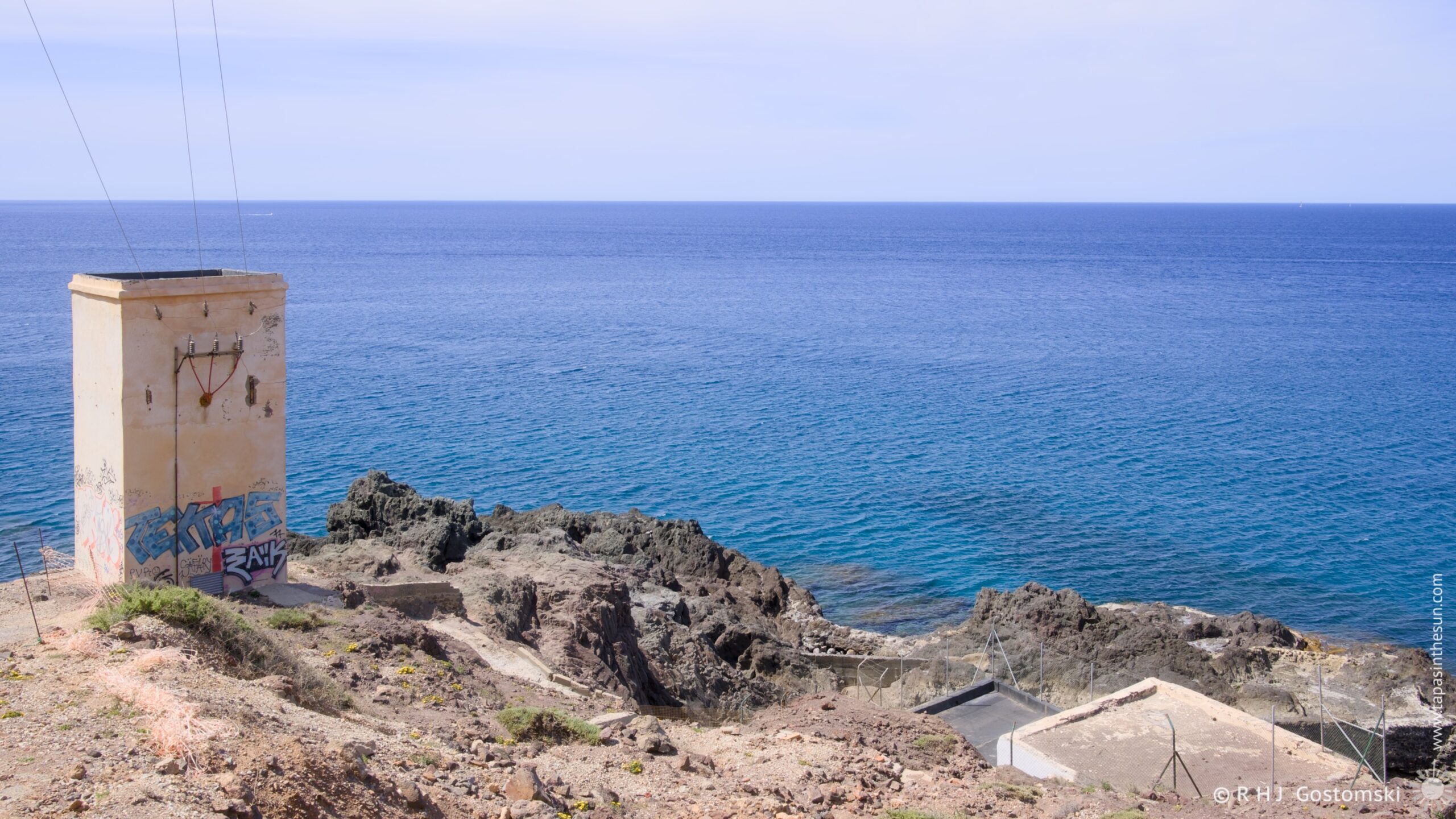
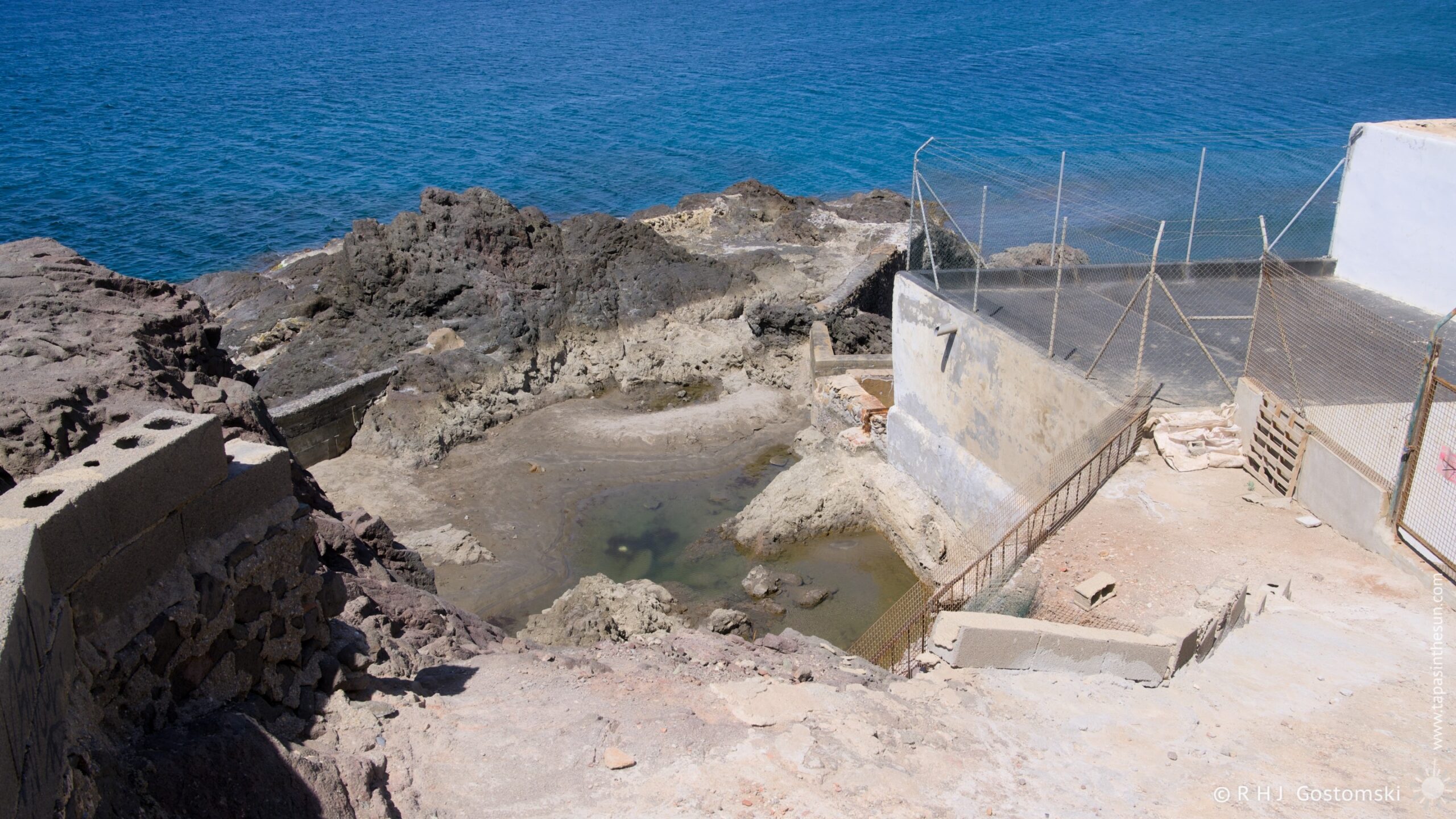
The intake was moved further south to the rocky cliffs of Cerro de la Testa (near the Cabo de Gata lighthouse). The entry mouth was bored directly into the eruptive volcanic rock of the cliffside. To connect this new intake to the existing concentration ponds, engineers had to build a massive 2,268-meter channel extension, bringing the total length of the seawater supply canal to roughly 5 to 7 kilometres.

Drawing water from the rocky, sediment-free cliffs of the cape provided cleaner, higher-salinity water compared to the sandy, shallow shoreline near the town, drastically improving the quality of the harvested gourmet salt.
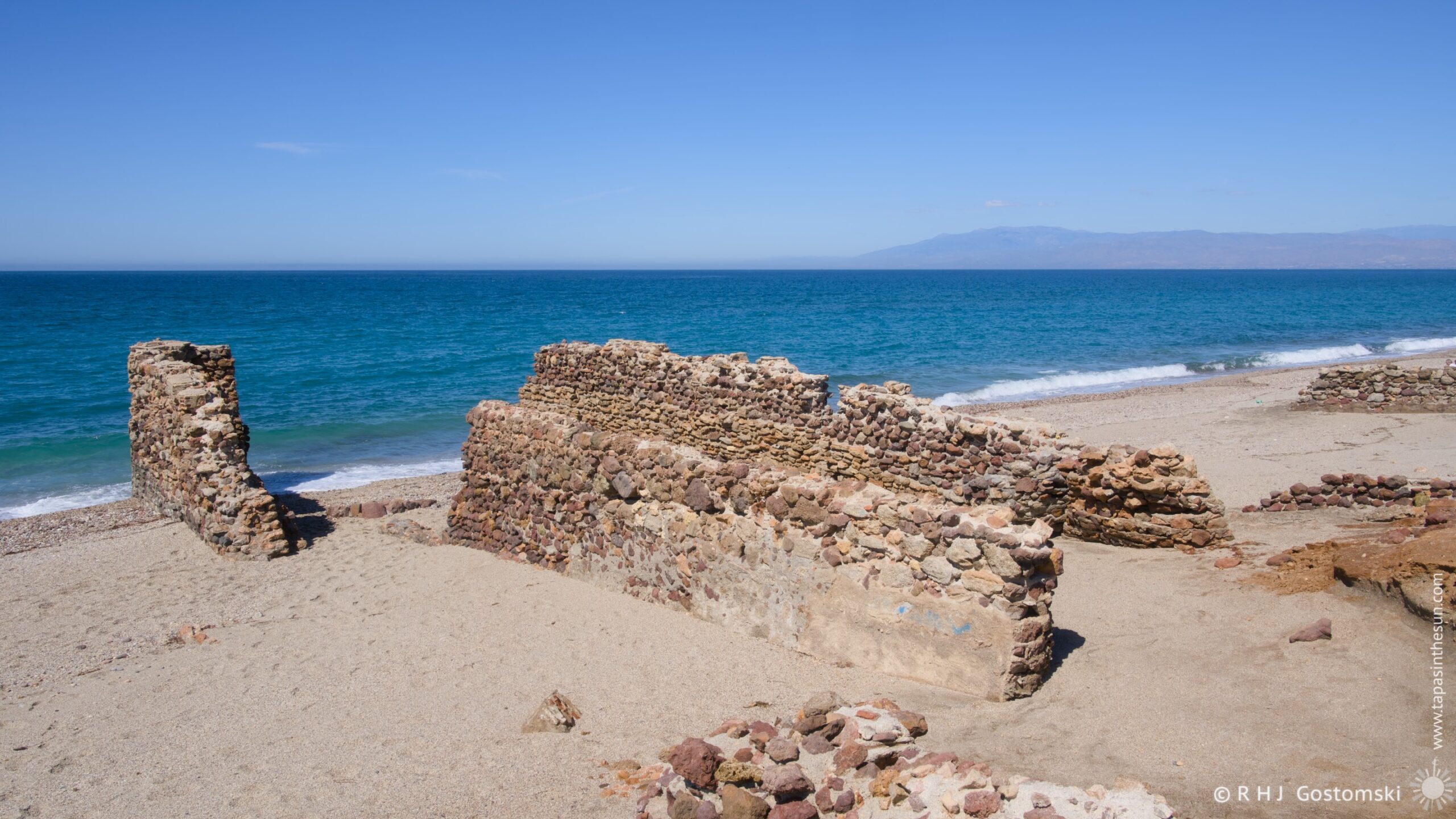
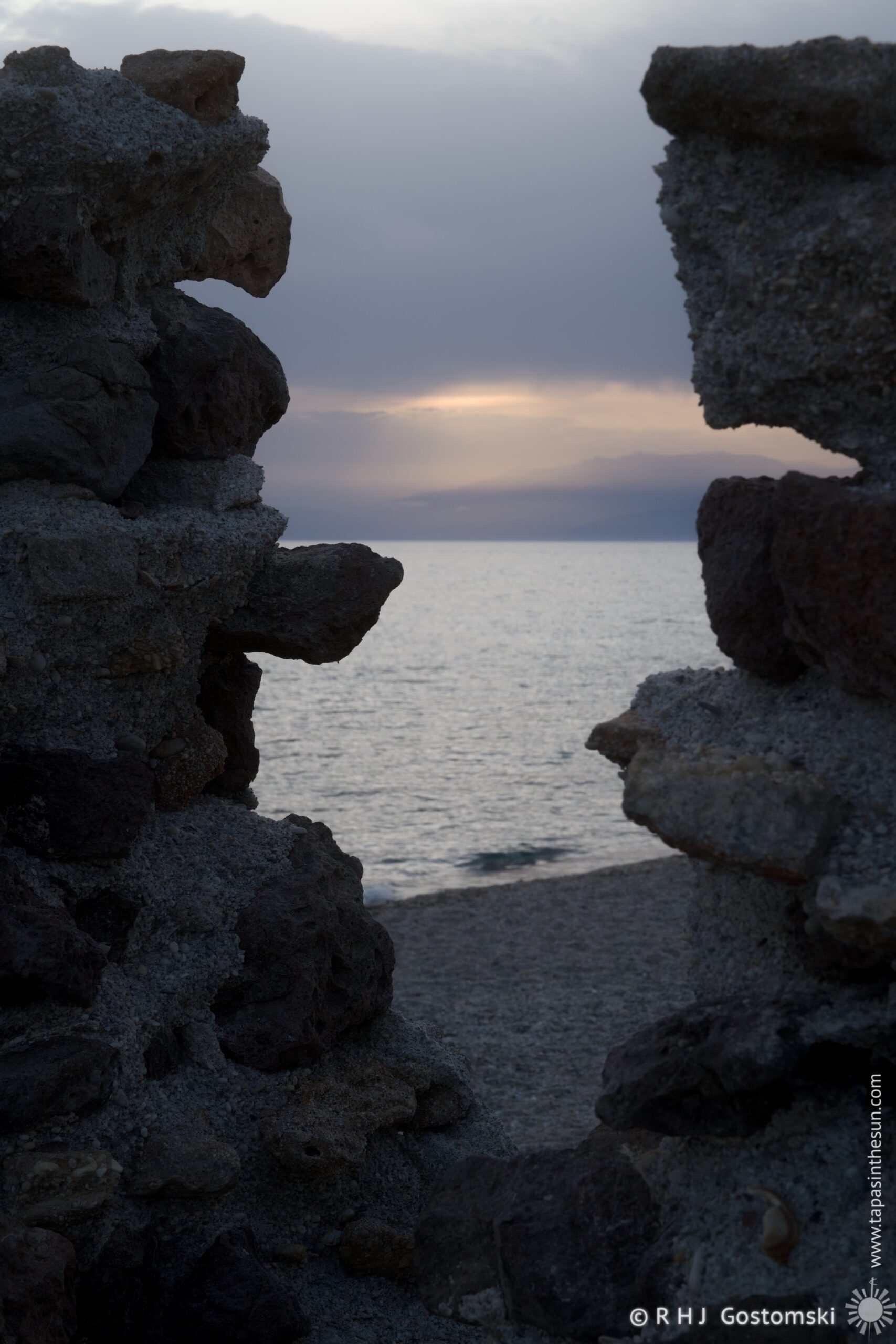
They also constructed a narrow-gauge Decauville railway system to transport harvested salt from the evaporation ponds and storage mounds (garberas) directly to the loading pier, where the salt was loaded onto boats for distribution. The remains of the loading pier can still be seen on the beach today.

In 1907, a small workers’ village was built, comprising houses for the workers, a school, warehouses and a church. This settlement eventually became known as La Almadraba de Monteleva or Poblado Salinero.
The salt pans joined the Unión Salinera de España in 1925, then transferred to the Belgian Solvay group in 1989 and finally to the French-owned company Salins España (formerly Unión Salinera) in 1996. Salt production continues on a reduced and more specialised scale, balancing commercial extraction with environmental protection inside the natural park. The site remains the only active commercial saltworks in eastern Andalusia
At its peak in the mid-20th century, the saltworks produced approximately 30,000 tonnes of salt annually, much of which was exported for preserving cod in northern Europe and Iceland.
The Current Day
In recent years, the operators and regional authorities have shifted focus towards heritage and eco-tourism. Since 2025, guided visits have opened Las Salinas to the public for the first time. Visitors can “become a salt farmer for a day” and witness the extraction process while learning about the industrial and ecological history of the site.
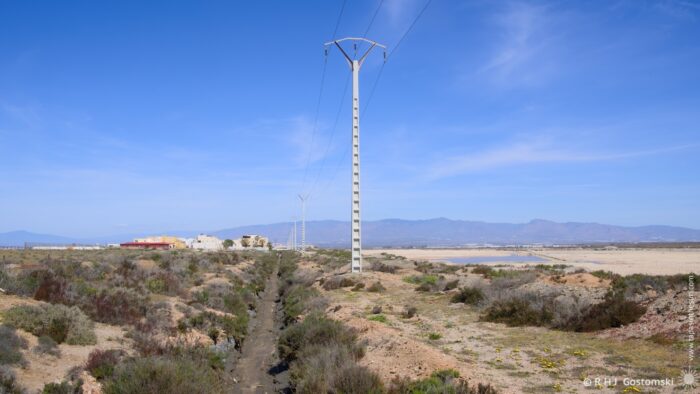
A significant challenge today is water management. The system relies on seawater flowing through canals and underground conduits, so storms and sediment buildup occasionally disrupt circulation. In 2022 and again in spring 2026 (just before my visit), collapses and blockages caused parts of the wetland to dry out. This affected flamingos and migratory birds until emergency repairs restored water flow.